South Korea Unveils Sweeping Pension Reform Plan
The reform aims to increase pension payments for the lowest-income seniors, maintain or freeze payments for higher earners, and control rising fiscal costs.
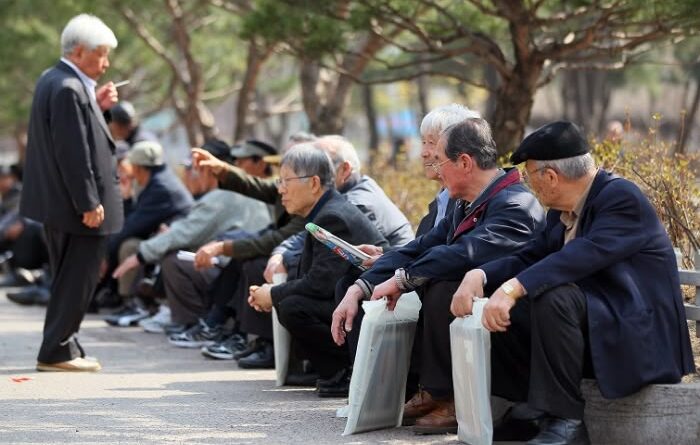
South Korea is preparing to overhaul its basic pension system for seniors, marking the most sweeping changes in more than a decade. The government’s plan, formally announced this week and reported by bntnews and NEWSIS, aims to address the country’s rapidly aging population, growing fiscal pressures, and persistent poverty among the elderly—especially women. At the heart of the reform is a shift from the current eligibility standard, which covers the lowest 70% of income earners aged 65 and older, to a new benchmark based on the national median income. This move, officials say, will better target support to those who need it most, while slowing the ballooning cost of the program.
The ‘higher support for lower income’ principle, known locally as “하후상박,” will be the guiding philosophy of the new system. Rather than distributing the same pension amount to all eligible seniors, the government plans to increase payments for the lowest-income recipients, while holding steady—or potentially freezing—increases for those at the top of the eligibility range. President Lee Jae-myung, speaking at a Blue House briefing, made his stance clear: “Cutting what people are already receiving would be problematic. For the new increases, we shouldn’t raise the top, but we should raise the bottom a lot.” According to bntnews, he added, “Now is the time to move according to income ranking. At the top, we won’t increase, and at the bottom, we’ll increase a lot.”
Minister of Health and Welfare Jung Eun-kyung echoed this approach, stating, “We are creating a reform plan under the ‘higher support for lower income’ principle and considering changing the selection criteria from the lower 70% to the median income standard.” She explained that her ministry is running simulations and discussing various redistribution models, with the aim of finalizing a government proposal before the end of 2026. This proposal will then be submitted to the National Assembly, where it will undergo further debate and require legislative changes to the Basic Pension Act.
The median income, which would become the new threshold, is defined as the income of the household at the exact midpoint of the national income distribution. For a single-person household in 2026, this figure is about 2.56 million KRW per month. Currently, the lower 70% income threshold for pension eligibility is approximately 2.47 million KRW, or 96.3% of the median. As a result, the Ministry of Health and Welfare anticipates that, initially, the number of recipients may rise slightly, but over the medium to long term, the pace of increase will be curbed, helping to rein in fiscal costs.
Fiscal sustainability is a pressing concern. The number of basic pension recipients has soared from 4.35 million in 2014 to an expected 7.07 million in 2025, with projections reaching 9.14 million by 2030 and 12.07 million by 2040, according to the Ministry. The annual pension budget has also ballooned, rising from 6.9 trillion KRW in 2014 to 27.4 trillion KRW this year. Looking ahead, the National Pension Research Institute estimates the cost could hit 39.7 trillion KRW by 2030 and a staggering 76.9 trillion KRW by 2040. The Korea Development Institute (KDI) projects that switching to the median income standard and capping eligibility at 100% of the median would reduce fiscal spending by about 5 trillion KRW by 2050, compared to current projections.
The planned reform also seeks to address gaps in coverage for low-income recipients of public occupational pensions, such as former government officials, teachers, and military personnel. Under current rules, some individuals with small occupational pensions are excluded from basic pension benefits, a situation the government now describes as unfair. The new plan would expand eligibility to include these groups, ensuring that even those with modest public sector pensions are not left behind.
Beyond pensions, the government is also considering new approaches to income support for young people. Among the ideas on the table for the second half of 2026 are basic income and participation income schemes—both of which President Lee piloted during his tenure as Gyeonggi Province governor. These proposals are still under review, but they reflect growing official recognition that income insecurity is not limited to the elderly.
Health policy is also in the spotlight. The Ministry of Health and Welfare has announced plans to limit duplicate CT and MRI scans in order to prevent health insurance fund leakage. Additionally, from 2027, special police forces will be introduced within the National Health Insurance Service to crack down on illegal medical institutions, such as so-called “office hospitals.” There is also ongoing consideration of extending health insurance coverage to obesity treatments.
South Korea’s elderly face significant challenges. The country’s senior poverty rate stands at 35.9% to 39.7%, depending on the source, which is roughly 2.5 to 2.7 times the OECD average. The National Pension Research Institute found that the future income replacement rate for an average wage earner will be just 33.4%, compared to the OECD average of 43%. The mandatory pension contribution rate is only 9%, about half the OECD average of 18.8%. This leaves many elderly Koreans reliant on work for their livelihood: public transfers make up just 29.1% of senior household income, while earned income accounts for nearly 50%.
The situation is even more stark for women. Between 2013 and 2023, total income for elderly women rose by 94.9%, yet their average monthly national pension payout in 2023 was only 243,000 KRW—one-sixth that of men, who received 1,545,000 KRW on average. There are more than five times as many men as women with pension contribution periods exceeding 20 years. For many elderly women, the basic pension is their main source of income, accounting for 22.2% of their total, and those relying solely on the basic pension average less than 9 million KRW per year. Researchers have recommended additional payments for the lowest-income 25% of seniors and a focus on supporting vulnerable groups.
President Lee has also ordered the government to step up suicide prevention efforts, particularly among youth. The Ministry of Health and Welfare will introduce psychological autopsies for adolescents in 2026, collaborating with the Ministry of Education to analyze the root causes of youth suicides—ranging from academic stress and bullying to social isolation and internet addiction. The President stressed, “We are in a situation where we need to significantly increase support to escape absolute poverty.”
Read more @evrimagaci