German pension commission proposes shift to Swedish-style fund
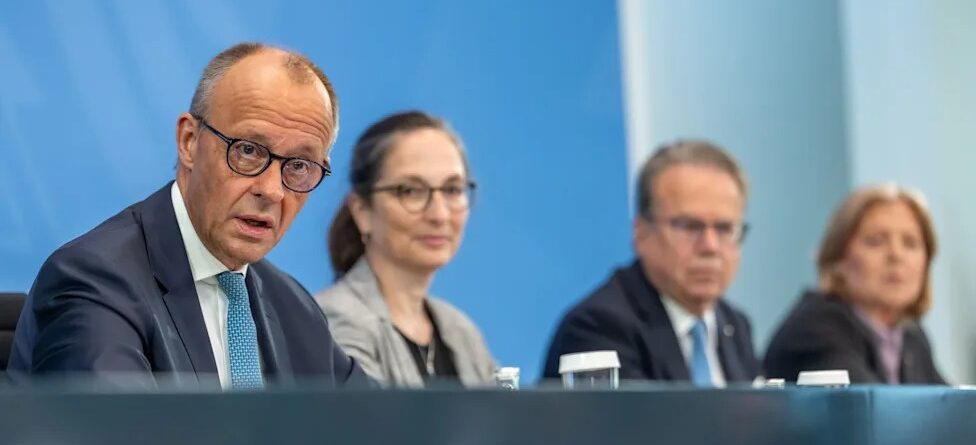
A commission appointed by German Chancellor Friedrich Merz has proposed a Swedish-style pension fund and a gradual increase in the retirement age to help stabilise the country’s pension system as the population ages.
The commission’s report, presented on Tuesday, will form the basis for a major overhaul of Germany’s pension system which the government aims to agree in the coming weeks.
It called for establishing a fund modelled on the Swedish pension system, with mandatory contributions by workers and employers that would be invested in financial assets as a complement to the current pay-as-you-go system.
“The use of the capital market in the statutory pension scheme is perhaps the key factor in determining the long-term viability and stability of our pension system,” Merz told a conference of the German BDI industry federation.
Germany’s current system, in which the pensions of retirees are paid directly from employees’ and employers’ contributions into the system, has faced increasing strains as the population ages and the proportion of workers to retirees shrinks.
Merz said the change would ensure contributions remained manageable and that younger workers would be able to count on a secure pension in future. He called for a swift agreement with his centre-left Social Democrat coalition partners to adopt all of the commission’s proposals.
Labour Minister Baerbel Bas, co-leader of the Social Democrats, backed Merz’s call for the commission’s report to be adopted in full, despite opposition to parts of the plan from some on the left of her own party.
“I want to make it clear here: I want to implement this package,” she told a news conference.
In addition to the new fund, the report proposed abolishing the option of retiring early at 63 after 45 years of contribution payments, and proposed incremental increases in the retirement age, according to life expectancy, rising to around 70 by the early 2090s. Currently, the retirement age is set to reach around 67 by the early 2030s.
FUNDS FOR ECONOMIC INVESTMENT
The report came as Merz’s struggling coalition pushes to agree a package of tax and welfare reforms before parliament breaks for its summer recess next month.
The proposals were broadly welcomed by business groups, including the DIHK industry and trade association, which said they represented “key steps towards a long-overdue reform of our pension system”.
Unions, however, criticised the proposal to abolish retirement at 63, saying it penalised workers with physically demanding jobs who could not be expected to work well into their 60s. The BDA German employers federation also said the capital funding proposal, which includes employer contributions, would add to the cost of hiring workers.
Read more @reuters