Iran conflict: markets and money questions answered
Geopolitical events can move markets quickly and unpredictably. The escalation of tensions involving Iran has prompted understandable questions from investors about what it means for markets, energy prices, interest rates and household finances.
Periods like this often bring heightened volatility as markets attempt to price in uncertainty. Investors reassess risks to global growth, inflation and trade, particularly when events affect strategically important regions such as the Middle East.
History suggests that while markets can react sharply in the short term — even if the response so far has been relatively contained — geopolitical shocks often fade into the background over time. On a long-term chart, many past crises appear as temporary setbacks within a broader pattern of growth.
| (%) As at 28 Feb |
2021-2022 | 2022-2023 | 2023-2024 | 2024-2025 | 2025-2026 |
|---|---|---|---|---|---|
| S&P 500 | 16.4 | -7.7 | 30.5 | 18.4 | 17.0 |
Past performance is not a reliable indicator of future returns
Source: LSEG, total returns from 28.2.21 to 28.2.26. Excludes initial charge.
Of course, nothing in markets is guaranteed and past performance is not a guide to future returns. But long-term data does provide useful perspective when headlines feel most unsettling.
Below, we answer some of the most common questions about how markets have responded so far and what it could mean for your investments and finances.
How have market and asset prices moved?
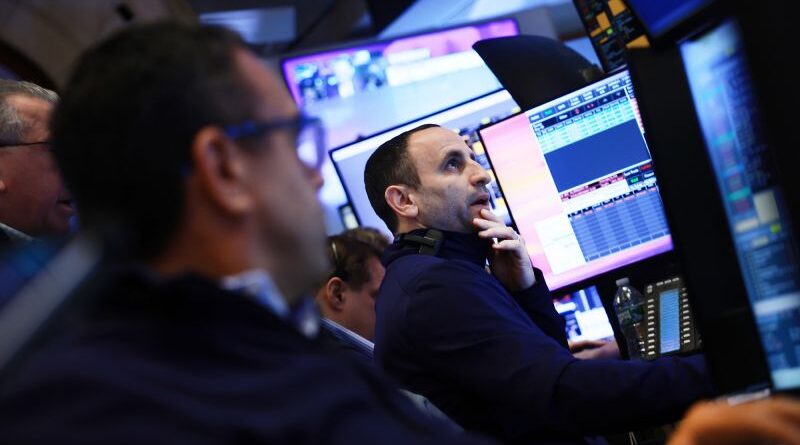
The stock market response was fairly contained in the week following the strikes on Iran. The FTSE 100 was at 10,350 by lunchtime on Friday, around 5% below where it started the week.
Asian stock markets saw more volatility. South Korea’s Kospi index, for example – which achieved fantastic growth in recent months – suffered its biggest two-day decline since 2008, dragged down by tech giants Samsung and SK hynix. Asia relies heavily on oil and gas shipped from the Middle East, which has contributed to the sell off.
Back home, FTSE 100 banks and airlines are down this week. Housebuilders such as Taylor Wimpey and Barratt Redrow are also under pressure, as investors rethink the outlook for interest rates. Airlines are particularly sensitive to higher fuel costs, while financial stocks can react to shifting expectations around interest rates and economic growth. Housebuilders have faced renewed scrutiny as investors reassess the outlook for borrowing costs and consumer confidence.
Where has the gold price gone since the conflict began?
Gold initially rose by 4% following the escalation, reflecting its traditional role as a perceived ‘safe haven’ during periods of uncertainty. However, the move has not been dramatic or sustained. After an early rise, prices have fluctuated and broadly stabilised at around $5,100 an ounce, not far from where it was a week earlier.
This relative lack of reaction may surprise some in view of gold’s status as the safe haven people turn to in turbulent times. It may be that investors had already seen trouble coming during the build-up of American forces in the region, or that the price was already seen as very high after its spectacular run of recent years. The dollar has also strengthened, which tends to dampen upward pressure on the gold price, which is priced in dollars.
Read more @fidelity