Kenya spends over half of tax revenue on debt and pensions, squeezing funds for key services
Kenya spent 51.8 per cent of its tax revenues on debt servicing and pensions in the 2025/26 financial year, leaving fewer resources for key government programmes such as infrastructure development and health services.
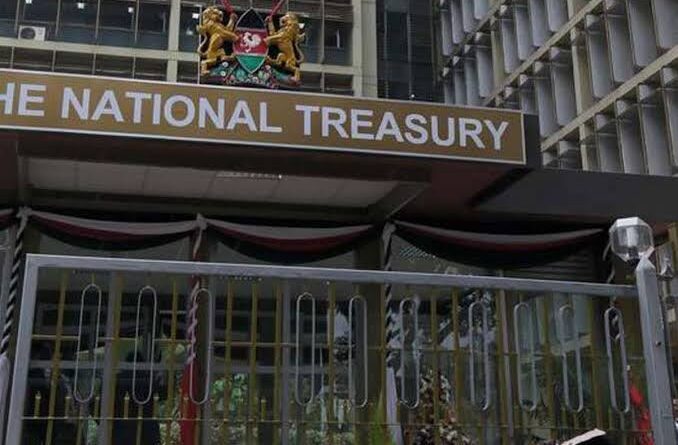
According to the National Treasury, the rising costs of loans and retirement benefits have increased pressure on public finances, as revenue collection remains below expectations.
The Treasury said spending through the Consolidated Fund Services (CFS), which caters for public debt repayments and pension payments, rose from 49.8 per cent of tax revenues in the previous financial year.
The rising cost of the two obligations has increased their impact on government finances, compared with the 2013/14 financial year when debt and pension payments accounted for 18 per cent of tax revenues.
The National Treasury linked the increase in CFS spending to higher debt servicing costs, revenue shortfalls and increased financing needs.
“The sharp increase in the CFS expenditures-to-revenue ratio reflects rising debt servicing costs, revenue shortfalls, and growing financing needs,” the National Treasury said.
“By the financial year (FY) 2024/25 and FY 2025/26 period, nearly half of ordinary revenue was used for CFS expenditures, significantly reducing fiscal space for development and other priority spending.”
Interest payments accounted for the largest share of the spending, taking up 42.7 per cent of ordinary revenues during the 2025/26 financial year, while pension payments accounted for 9.1 per cent.
During the period, the National Treasury spent Sh1.067 trillion on debt repayments, with Sh862.7 billion going towards domestic interest payments and Sh205 billion used to service external debt.
This was an increase from the Sh995.1 billion spent on debt servicing in the previous financial year.
Domestic debt interest costs have remained the biggest part of loan repayment expenses as the government continues to depend on the local credit market to finance budget deficits.
The Treasury borrowed Sh1.135 trillion domestically in the year to June 2026 to help finance a Sh1.34 trillion deficit, while external borrowing stood at Sh205.5 billion.
The pension bill has also continued to rise, with taxpayers spending Sh206.3 billion to pay retired civil servants in the 2025/26 financial year, compared with Sh15 billion in 2002.
For years, public servants did not contribute towards their retirement benefits, with pension payments being made directly from government revenues until reforms introduced a contributory system in 2021.
Under the current arrangement, public servants contribute to a pension fund that invests the money, while the government’s role is limited to making monthly contributions.
However, the Treasury said it will take decades before the effects of the contributory pension system begin reducing the pension burden under the Consolidated Fund Services account.
The rising pension costs have partly been linked to delays in implementing reforms, including the slow rollout of the contributory pension scheme.
The pressure from debt and pension obligations comes as Kenya continues to struggle with high budget deficits, with the fiscal deficit reaching 7.1 per cent of gross domestic product (GDP) in the 2025/26 financial year due to lower-than-expected revenues.
Kenya has recorded a fiscal deficit of at least five per cent of GDP since the 2018/19 financial year.
The fiscal deficit for the 2026/27 financial year is estimated at 5.5 per cent of GDP but is expected to decline to 3.1 per cent of GDP by June 2030.
The National Treasury said the government has mostly moved away from its planned fiscal consolidation path, resulting in increased borrowing and higher debt levels.
Read more @eastleighvoice