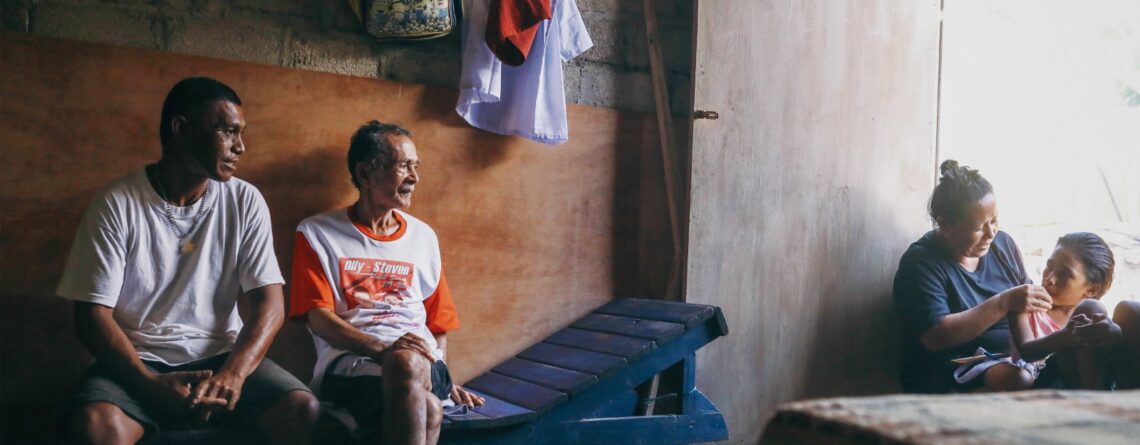
Prospective elderly residents in Indonesia are vulnerable to poverty.
The number of individuals aged 30 to 50 years, or potential elderly, in Indonesia reaches approximately 87.7 million people. About one-third of them are actively working and earning low wages. Their median wage is only two-thirds of the average wage/salary of workers, employees, and civil servants in Indonesia, which amounts to Rp 3.09 million per month.
The Deputy Head of the Central Statistics Agency (BPS), Sonny Harry B Harmadi, stated on Tuesday (26/8/2025) that such groups are generally located in rural areas. Their educational background is predominantly below junior high school (SMP) level.
All of these findings, he said, are in the latest report of the National Labor Force Survey (Sakernas) February 2025. “Many prospective elderly people, especially men, apparently have jobs that are at risk of being laid off at any time or precarious work,” said Sonny while attending the 61st anniversary event of the Demographic Institute of the Faculty of Economics and Business, University of Indonesia (FEB UI), Jakarta.
The conditions experienced by prospective elderly individuals are not much different from those of the young elderly group (60–69 years), middle elderly (70–79 years), and the elderly group (80 years and above) at present.
The majority of elderly candidates are internet users, but not many of them utilize the internet for productive purposes. Meanwhile, the total elderly population in Indonesia is approximately 33.4 million people. More than 70 percent of this elderly population does not use the internet, including for productive activities.
More than half of the total elderly population falls into the category of the workforce. The younger elderly group constitutes the largest segment of workers, followed by the middle-aged elderly and the older elderly groups.
“Regarding account ownership, the majority of the elderly group do not have bank accounts/savings. This condition is partly influenced by financial literacy. Not all elderly individuals have sufficient social protection as they generally only possess national health insurance,” he stated.
Sonny emphasized that Indonesia is now preparing to enter an aging population. Currently, the elderly population in Indonesia is over 10 percent of the total population.
If an optimistic scenario is used, the demographic bonus in Indonesia will end sooner, specifically in 2039. Meanwhile, if a trend scenario is applied, the demographic bonus will conclude in 2041.
The aging population period varies between provinces. West Papua is one of the provinces that has been entering the aging population period the longest.
Banjaran Surya Indrastomo, Chief Economist of PT Bank Syariah Indonesia Tbk, who was present at the same event, argued that the biggest challenges facing Indonesia as it prepares for an aging population are the risk of worker informality and low pension program participation. Such challenges have the potential to lead to increasingly poorer lives as people age.
In Indonesia, the dependence of the elderly on family and social assistance remains high. Participation in pension programs or financial investments is also still minimal.
Most of the community, including prospective seniors, consider preparing for old age to be limited to having health insurance and simple savings. The health insurance referred to is generally in the form of social health guarantees. Readiness to face the loss of income sources has not been widely taken into account.
Many older generations rely on property investment as a preparation for retirement. However, it remains a question whether this method is relevant and sufficient to face the challenges of old age.
Therefore, Banjaran said, the aging population requires more serious government policy and regulatory support, starting with the preparation of a retirement roadmap for the formal and informal worker sectors.
“The financial sector and digital technology can play a crucial role in expanding access, facilitating fundraising, and providing more transparent information on retirement risks,” he said.
The Head of the Demography Institute of the Faculty of Economics and Business, University of Indonesia, I Dewa Gede Karma Wisana, shares this view. In addressing an aging population, the government should consider solutions to ensure the well-being of residents in old age, both those currently working in the formal and informal sectors.
Several countries that are already in the aging population phase, such as Japan and South Korea, have extensive pension coverage so that poverty among the elderly is relatively low.
Vietnam, which is in the same region of Southeast Asia as Indonesia, has also begun to develop social pensions. “The social pension program can maintain household consumption in old age,” he stated.
The Demography Institute of FEB UI, according to Dewa, has suggested several solutions to the government. First, the integration of informal workers through micro-pension schemes and basic social pensions. Second, strengthening the design of the BPJS Employment program and pension guarantees.
Third, savings innovation. For example, a flexible, digital-based retirement savings program for MSMEs and daily workers. Fourth, the connection of retirement programs with social protection and assistance for the elderly.
“The World Bank, the International Labor Organization (ILO), and the OECD have also emphasized the importance of a safety net for the elderly,” Dewa said.
Read more @kompas