The war on Iran could send UK pensions up in smoke
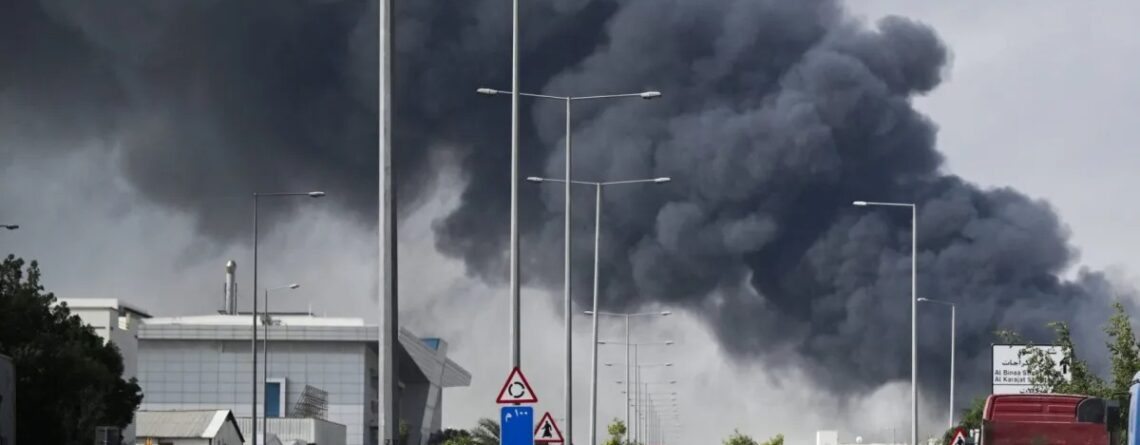
As a barrage of Iranian missiles rained down on the Fujairah oil terminal, the explosion was deafening and the destruction dramatic: a brutal fire, thick black smoke stretching into the sky – and untold damage to one of the region’s crucial pieces of fossil fuel infrastructure.
The Fujairah terminal is part of the UAE’s key oil export route because it bypasses the Strait of Hormuz, loading up ships with about 1.7 million barrels per day. The attack on 4 May was one of many the terminal has come under since the start of the war in the Middle East. Public sector pension holders in Cambridgeshire, Dorset and Leicestershire may be alarmed to discover that their savings are invested in it.
Theirs aren’t the only savings being put at risk by the ongoing war. We have found that local government pension schemes across the UK have invested almost £3bn in funds holding assets that have been hit, stranded or put in the direct line of fire. The money has been invested via opaque funds managed by firms like BlackRock – the asset manager run by billionaire Larry Fink – that make billions of dollars in fees for investing UK savers’ money.
The current conflict is putting these investments at risk in the short-term. And in the long-term, fossil fuel assets everywhere are liable to fall steeply in value as the world switches to renewable forms of energy.
That’s the reason councillor David Noland, a member of North Yorkshire’s pension fund committee, has been pushing for the fund to sell its investments in coal, oil and gas. He told us he sees the war as reinforcing that argument and was “exceedingly worried” to hear our findings.
His concerns are echoed by financial analysts. Guy Prince, head of energy supply research at think tank Carbon Tracker, says: “It raises the question about whether long-term pension savings should depend on politically unstable regions and an uncertain future energy demand.
“Fossil fuels are financially risky now and their resilience is hugely in question. Pension funds really have to consider whether these assets remain appropriate for long-term, stable returns.”
Risky assets
UK pension funds are invested in all manner of infrastructure placed in danger by the recent war: from pipelines snaking across the Arabian Desert to gas tankers stuck behind the Strait of Hormuz and a liquefied natural gas (LNG) terminal in Bahrain. Some of these have taken direct hits in recent months, while others remain at perilous risk of attack as the conflict grinds on, according to research we carried out with the Private Equity Stakeholder Project, a non-profit organisation, and investigative outlet Data Desk.
The various deals that carry money from UK pension pots to Middle Eastern fossil fuel projects are complex and hard to trace. Local government pension schemes put money into infrastructure funds, which offer a healthy return. Fund managers then seek out assets to invest in that provide a long-term and supposedly stable income. The result is that the risk of holding these assets is often transferred from oil and gas companies to ordinary public-sector workers and retirees. And sitting at the heart of many of these deals is BlackRock.
Larry Fink, BlackRock’s chairman and chief executive, has spoken out about the financial risks related to climate change. In 2020, he wrote: “The evidence on climate risk is compelling investors to reassess core assumptions about modern finance. Every government, company and shareholder must confront climate change.”
But in these deals, BlackRock assumes very little of that climate-related risk. Prince explains: “BlackRock raised the money from clients, BlackRock managed the deal, collected the management and performance fees.” But he says it’s the underlying investors – the pension savers – that ultimately carry the risk.
In 2020, for example, data sourced from PitchBook shows that BlackRock raised over $5bn from pension providers and insurance companies – including Teesside’s local government pension scheme – on the promise that it would invest that money in energy and power assets. It then took part in a $15.5bn deal to fund Saudi Aramco’s gas pipeline network for 20 years.
Read more @thebureauinvestigates