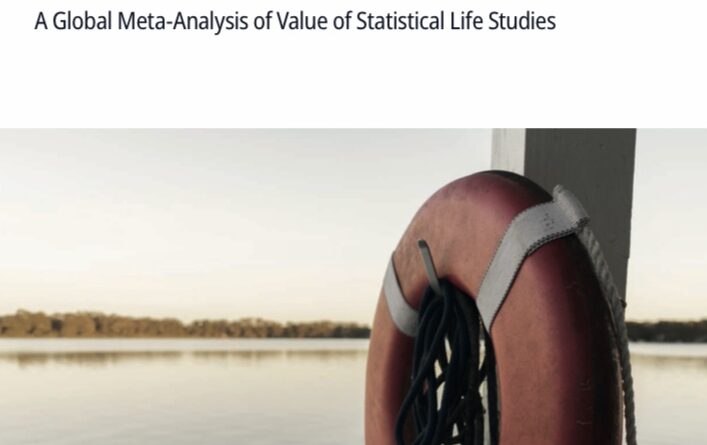
Mortality Risk Valuation in Policy Assessment. A Global Meta-Analysis of Value of Statistical Life Studies
By OECD
Policymakers are often faced with decisions affecting human health and mortality risk. For example, new vehicle fuel efficiency standards may lead to higher costs for consumers but could also save lives by improving air quality in urban areas, thus creating a trade-off between economic costs and the value of reducing mortality risk. Yet, too often, these economic trade-offs are not assessed in a systematic manner using a consistent methodology.
This report aims to equip policymakers with the methodologies and economic valuations to quantify economic benefits of avoided fatalities, also known as the “Value of a Statistical Life” (VSL). The findings are based on a meta-analysis of 277 studies and more than 4 000 VSL estimates covering six country groups with guidance on how to apply the values across countries and over time. The VSL estimates presented in this report are intended to support cost-benefit analyses and other policy assessments, covering any area where monetising and comparing mortality risk effects against the costs of such initiatives could inform decision making.
Get the report here