The Wage Illusion: Pakistan’s Informal Economy and the Crisis of Shared Prosperity
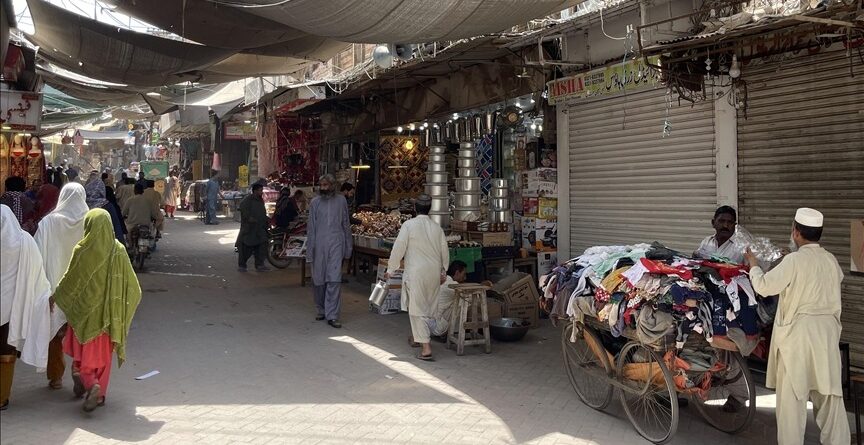
On the first of May, the world does more than commemorate labour; it measures the distance between economic growth and those who actually produce it. The origins of this day lie in the Haymarket Affair in Chicago, where a demand as basic as an eight-hour workday was met with violence, yet ultimately reshaped global labour standards. Nearly 140 years later, that legacy exists alongside a global economy in which, according to the International Labour Organization (ILOSTAT, 2023), over 60% of Pakistan’s workforce remains in informal employment, without contracts, pensions, or enforceable protections. Globally, the United Nations estimates that more than four billion people lack adequate social security coverage. The defining feature of modern labour markets is no longer employment alone, but the quality, visibility, and protection attached to it.
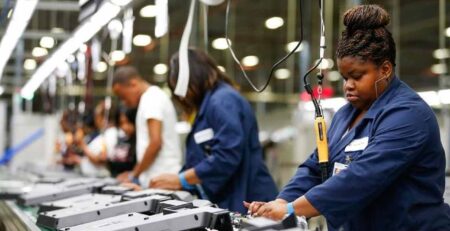
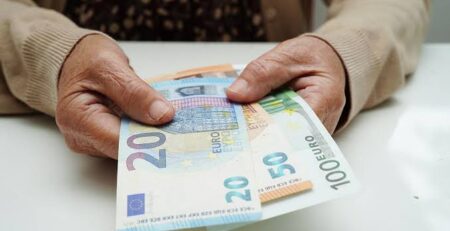
In Pakistan, the imbalance is not abstract. It is embedded in daily survival. A construction worker in Lahore earning roughly PKR 2,500 a day helps build homes he will never inhabit, while his purchasing power is steadily eroded by inflation in food, fuel, and utilities. Consumption taxes on essentials-petrol, electricity, transport, and mobile services-extract value at every transaction, quietly compressing disposable income long before savings become possible. What appears as revenue generation in fiscal terms functions, at the household level, as continuous pressure on subsistence.
The contrast becomes sharper in urban real estate markets. In high-value enclaves such as Defence Housing Authority, property routinely reaches hundreds of millions of rupees. Yet the labour force that physically constructs this capital remains structurally excluded from asset ownership. Capital appreciation and wage stagnation thus move in opposite directions within the same economy. Growth is visible, but not shared.
Wage policy alone cannot resolve this imbalance. Pakistan has repeatedly adjusted minimum wages over the past decade, yet real incomes have remained largely stagnant. The reason is structural: inflation, particularly in food and energy, has consistently outpaced nominal wage increases. In recent cycles, food inflation has exceeded 25%, driven by currency depreciation, energy price volatility, and supply chain inefficiencies in an economy still heavily dependent on agriculture. Fuel price increases cascade through transport, fertiliser, and retail markets, embedding inflation across the entire consumption structure. In this environment, wage increases function less as advancement and more as delayed compensation. Without macroeconomic stability, wage policy becomes a treadmill: movement without mobility.
May Day, therefore, is not a ritual of remembrance but a diagnostic test of economic reality.
Comparative experience underscores how institutional design shapes labour outcomes. In Portugal, large-scale migrant regularisation programmes have integrated informal workers into formal systems, extending legal protection while increasing tax compliance and productivity. The underlying logic is pragmatic: economies already depend on these workers; formalisation strengthens both equity and efficiency. In the United Arab Emirates, particularly Dubai, rapid infrastructure expansion has relied heavily on migrant labour from South Asia, including Pakistan. Mechanisms such as the Wage Protection System have improved wage transparency, yet international organisations, including Amnesty International, continue to note persistent enforcement gaps. The divergence is instructive: where institutions evolve towards accountability, labour becomes visible within the system; where they do not, it remains peripheral despite being essential.
For Pakistan, constrained domestic opportunity has also shaped external migration. Evidence consistent with reporting from the United Nations Office on Drugs and Crime highlights how economic pressure increases vulnerability to irregular migration and exploitative labour pathways. Millions of Pakistani workers continue to seek employment abroad annually, often through informal or high-risk routes. These movements are not anomalies of individual choice; they are structural responses to limited inclusion within domestic labour markets.
Read more @dailytimes