August 2026

India’s gig economy leaving its women behind, study finds

India’s gig economy, which includes 10-minute food delivery and ride-hailing apps, is creating millions of jobs. Yet, women are largely missing from it, according to a new study. Indian women have achieved near parity with men in access to basic bank accounts, but that progress isn’t carrying over to the digital economy, with women workers underrepresented in jobs at companies such as Uber Technologies, Swiggy and Urban Company, according to report by the International Labour Organization and the National Council...

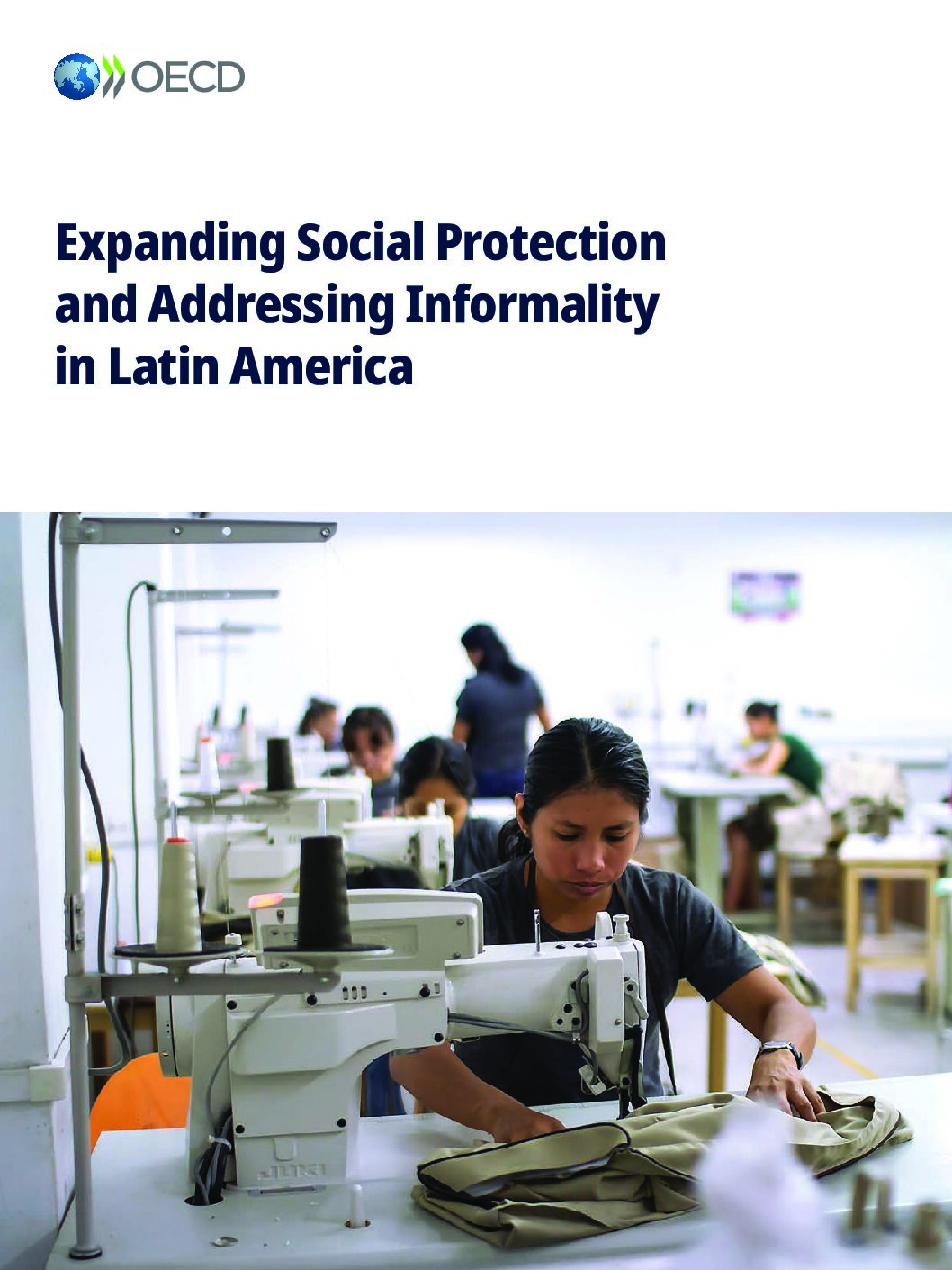
Expanding Social Protection and Addressing Informality in Latin America

By Jens Matthias Arnold, Aida Caldera & Elizabeth Friesen Informality remains a defining feature of Latin America’s labour markets, with around half of workers employed outside formal arrangements. While rates have slowly declined in some countries, progress is uneven and fragile. The many faces of informality — from self-employed vendors to domestic workers and employees in small firms — highlight the diverse realities of those without contracts, secure incomes, or access to social protection. The COVID-19 pandemic was a wake-up...

India. New Pension Scheme: Deposit just Rs 99 every month and get pension, new scheme launched

Gig workers working for e-commerce platforms like Zomato, Swiggy, Blinkit, and Urban Company can also receive pensions. A new framework has been introduced under the National Pension System (NPS), allowing these workers to start their retirement fund with a small contribution of just ₹99. The Pension Fund Regulatory and Development Authority (PFRDA) announced this new facility on Wednesday, which will directly benefit millions of gig workers. The PFRDA stated that platform workers can now invest in NPS at their convenience....

AI, Fiscal Space, and Social Protection in Four Latin American Economies: ;A Scenario-based Threshold Framework

By Vicenzo Scavino Can fiscal space from artificial intelligence finance recurrent social protection in Latin America? This paper develops a prespecified, scenario-based feasibility test that translates an AI dividend into income and fiscal capture, compares it with policy costs, and applies debt-consistency and persistence screens. For Peru, Chile, Colombia, and Mexico, no deterministic crossing occurs under non-stress scenarios because translation and capture jointly fall short. Crossings arise only under diagnostic disruption: Chilean guaranteed minimum income is conditionally feasible and debt-consistent;...

Can Latin America Formalise Work Without Deepening Inequality?

Latin America and the Caribbean face a labour-market contradiction that has persisted for decades: policies designed to protect workers can sometimes make formal employment more expensive, leaving millions outside the systems intended to support them. The Inter-American Development Bank is calling for a broad redesign of labour regulation, social protection and workforce training across the region. Its report, Making Labor Markets Work: Improving Productivity and Workers’ Welfare in Latin America and the Caribbean, argues that governments do not have to choose...

July 2026

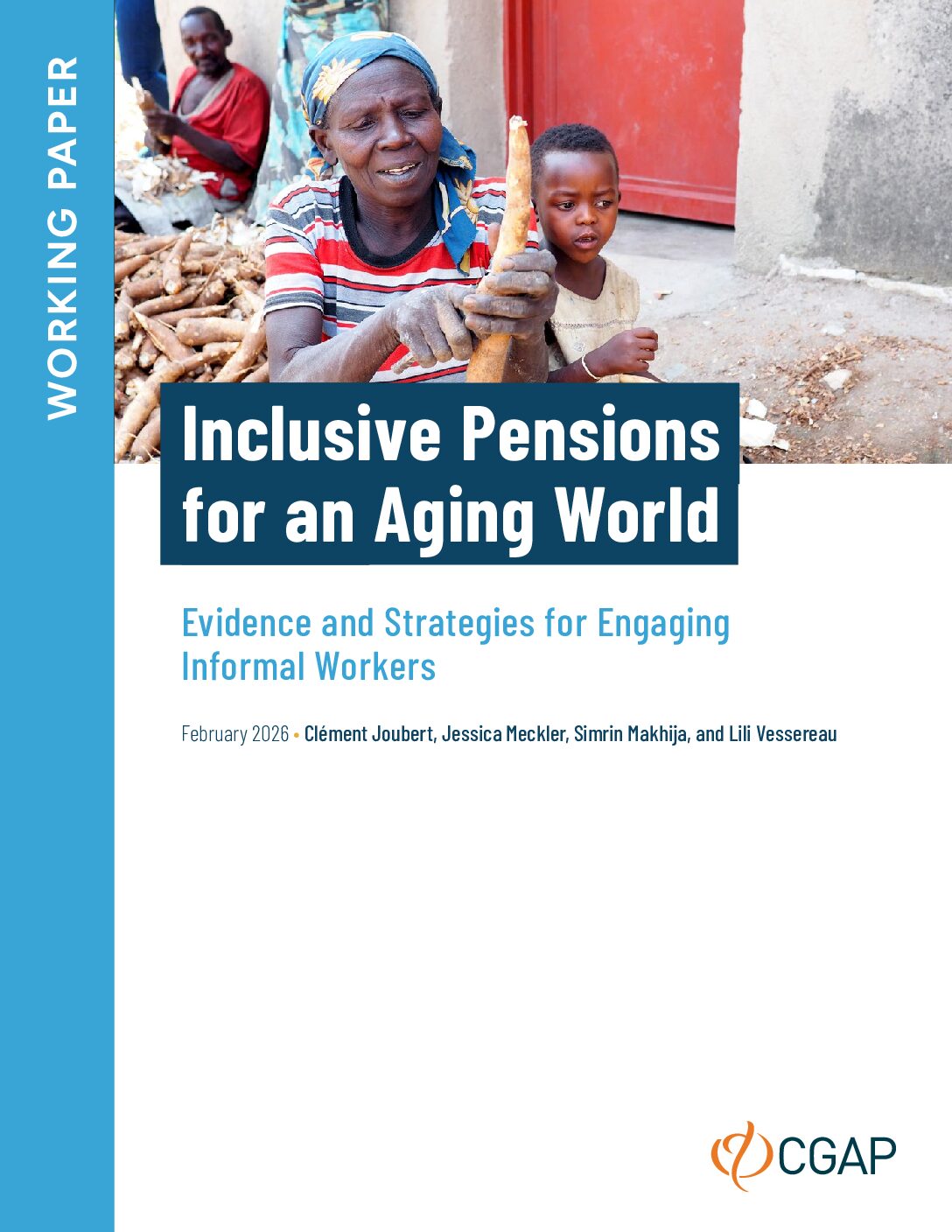
Inclusive Pensions for an Aging World: Evidence and Strategies for Engaging Informal Workers

By Clément Joubert, Jessica Meckler, Simrin Makhija & Lili Vessereau This Working Paper reviews how different countries have designed pension schemes for informal workers. It focuses on contributory schemes for the “missing middle”: informal workers who have sufficiently stable incomes to save for old age but lack access to suitable pension options. The paper draws upon public documentation and literature on how to target and scale pension schemes for informal sector workers. The world is experiencing a demographic shift in which populations...

Extending Pension Coverage to the Informal Sector in Africa

By Melis Guven  The coverage of pension systems in the Africa region is limited to the small segment of the population in the formal sector. Coverage is thin partly because traditional contributory pension schemes are not responding to the needs of the informal sector. As a result, a large share of the region’s adult population has no access to contributory pension schemes during their working lives. This means they will not be eligible for a pension. It also means the...

China’s gig economy absorbs laid off workers and strains the social safety net

In Beijing, Bao Zhang started driving for a Chinese ride-hailing service this year after losing his job as a software tester, and says the weak labor market gives him little hope of returning to the IT sector. His story is becoming increasingly common in China, where millions are moving from official employment to the gig economy due to scant unemployment insurance, a record number of graduates, and a shortage of jobs that is squeezing employment opportunities. Those who previously used taxis...

June 2026

Nigeria. Over 92% of personal pension savings accounts remain unfunded

Amidst efforts by the National Pension Commission, PenCom, to include informal sector workers in the pension scheme, the Personal Pension Plan, PPP, which caters to the informal sector, has remained stagnant. While the PPP has 215,412 registered Retirement Savings Accounts, RSAs, only 17,320 of these RSAs, which represents 8.0 per cent, have received contributions. The remaining 198,092 RSAs, which represent 92.0 per cent, are dormant. PenCom, in its fourth quarter 2025 report stated that registrations are not savings and registration without funding...

How does private pension saving change for workers moving from employee jobs into self-employment?

By Jonathan Cribb & Laurence O'Brien Self-employed workers make up a significant part of the UK workforce, with over one-in-eight workers in self-employment. However, there are long-standing concerns about low levels of pension saving among this group: only 20% of working-age self-employed workers were saving in a private pension in 2022–23, compared with around 80% of employees (Department for Work and Pensions, 2025a). The trends in pension participation differ markedly between the two groups. In the late 1990s, almost 50%...