April 2026

India’s Informal Sector and AI: Jobs, Justice, Policy

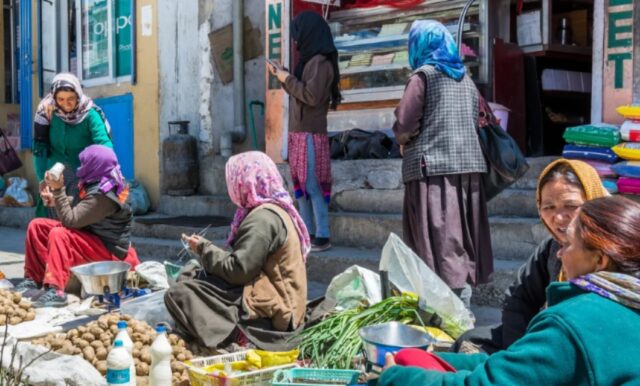
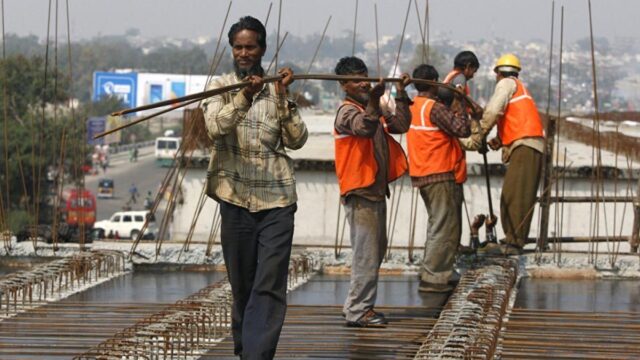
India’s informal sector is unlikely to disappear in the age of AI, but without deliberate policy interventions, it may become increasingly precarious, unequal, and exclusionary. The central issue is not whether AI will be adopted, but whether India can shape this transition to safeguard and enhance informal livelihoods rather than passively allowing technology to displace them at scale. India’s growth story still rests on informal work: over 90 percent of workers are employed in the informal sector, mostly in tiny, unregistered...

Gig Workers And Labour Law In India: Analysing The Legal Vacuum Under The Code On Social Security 2020

By Anshita Jain The rise of the gig economy in India has transformed traditional employment structures while exposing significant gaps in labour law protections. This paper analyses the legal status of gig and platform workers under the Code on Social Security, 2020, highlighting the challenges of worker classification and limited social security coverage. It argues that despite formal recognition, the absence of enforceable rights and clear accountability mechanisms leaves gig workers vulnerable. The paper concludes by suggesting the need for...

March 2026

India. PFRDA expands pool of pension agents to widen NPS distribution

The Pension Fund Regulatory and Development Authority (PFRDA) has expanded the pool of entities eligible to act as pension agents, allowing Points of Presence (PoPs) to engage a wider set of intermediaries to distribute pension schemes, including the National Pension System (NPS). In a circular, the regulator permitted PoPs to onboard additional categories of individuals and institutions under the “any other person” clause of the PFRDA (Point of Presence) Regulations, 2018. The move builds on earlier clarifications issued in September and...

February 2026

India. Report shows retirement plans can face inflation and longevity risks: How to prepare

A new analysis by OmniScience Insights Labs shows that traditional retirement strategies in India may fall short in sustaining income over long retirements. The report highlights how structural design, rather than corpus size alone, determines whether retirees can maintain their lifestyle amid rising costs and market volatility. Inflation risk: Even stable nominal income erodes purchasing power over decades. For example, ₹1 lakh monthly expenses today could rise to nearly ₹1.8 lakh in 10 years at a 6% inflation...

January 2026

India. NPS drives pension expansion, but coverage remains limited amid informality: Economic Survey 2025-26

India’s pension system has expanded steadily over the past decade, but overall coverage remains limited when measured against the size of the country’s vast workforce, the Economic Survey 2025-26 has said. While participation in formal retirement savings schemes is rising, the Survey flags high informality, irregular incomes and low awareness as the biggest structural constraints preventing broad-based pension inclusion, especially among low-income and rural households. According to the Survey, the dominance of informal employment continues to shape the contours of...

Social Protection for Informal Workers

By Abhijeet U Pai The modern working relationships require the law to recognise non-standard forms of employment and address the lack of traditional employment benefits like social protection for them. Informal employment is seen as a job-based (based on nature of job rather than status of the enterprise) concept that cuts across different sectors of economic activity and thus is defined as ‘informal economy’ rather than ‘informal sector’, in terms of employment relationship and protections associated with the job of the...

India. Central Government approves wage and pension hikes for PSGICs, NABARD and RBI

The Central Government has officially approved wage and pension revisions for employees and retirees of Public Sector General Insurance Companies (PSGICs), the National Bank for Agriculture and Rural Development (NABARD), and the Reserve Bank of India (RBI). This decision is expected to benefit approximately 46,322 employees and over 46,000 pensioners and family pensioners across these institutions. According to the government, the move 'reflects Government's continued commitment and emphasis on social security and financial well-being of employees and pensioners.' For those working...

December 2025

South Korea names former lawmaker Kim Sung-joo to lead NPS

South Korea has appointed Kim Sung-joo, a former lawmaker from the ruling Democratic Party and a long-time health policy specialist, as chairman and chief executive of the National Pension Service. The decision hands Kim a second term at the helm of the world’s third-largest pension fund during a pivotal phase for the country’s retirement system. The Ministry of Health and Welfare said Friday that Kim, 61, will begin a three-year term on Dec. 15 after receiving presidential approval, replacing current chairman Kim...

India. NPS can now invest in gold, silver ETFs: National Pension System to be more rewardee as it is now allowed to invest in these funds, Nifty 250 index

In a major update, the pension body has allowed NPS, UPS and APY schemes to invest in silver and gold ETFs as well as the Nifty 250 index. Not just that, they can now also invest in Alternative Investment Funds (Category I and II). These updates were revealed in a master circular on investment guidelines for Unified Pension Scheme/National Pension System/Atal Pension Yojana schemes pertaining to central/ state government (default), corporate CG, NPS Lite, Atal Pension Yojana and APY Fund Scheme options. The master...

The evol­u­tion of pen­sion reforms in India

India’s rap­idly age­ing pop­u­la­tion is emer­ging as a pivotal pen­sion chal­lenge. Today, over 153 mil­lion Indi­ans are aged over 60. This is pro­jec­ted to double to 347 mil­lion by 2050. While a small sec­tion of older Indi­ans has benefited from the rise of formal sec­tor retire­ment, more than 88% of today’s senior cit­izens con­tinue to work, in the sprawl­ing informal eco­nomy, without access to pen­sions or reli­able social secur­ity rather than retir­ing (Chart 1). We revisit the evol­u­tion of...