June 2026

Thailand pilots strategic compliance planning to strengthen protection for domestic workers

Labour inspection in private homes presents unique challenges. Unlike a factory or a construction site, domestic workers are dispersed across thousands of households, worker locations may not be readily available, and access may be restricted in private residences. For the roughly 125,000 registered migrant domestic workers in Thailand, largely women from Lao People’s Democratic Republic and Myanmar, and many more in irregular status — these barriers can leave them vulnerable and difficult to reach through conventional labour inspection methods. That...

May 2026

The Impact of Corporate Employment: Minimum Wage or Social Insurance Policy? — Evidence from China

By Junpeng di, Wanhe li & Mingyuan zhang China's minimum wage standards and enforcement have been on the rise, and the academic community generally believes that minimum wage increases enterprise labor costs and has an important impact on employment. However, less attention has been paid to social insurance, which is also a cost for Chinese companies. This paper considers both minimum wage and social insurance policy at the same time, and firstly analyzes the influence mechanism of the two on...

April 2026

Communicating for action: Rewriting the social security engagement

By ISSA Social security institutions are shifting from traditional outreach into establishing leveraging communication tools and approaches that drives action from individuals. Through multi-pronged strategies they are engaging with individuals and creating meaningful connections that empower people to understand their rights, navigate services confidently, build trust and actively engage with social protection systems. Empowering individuals to know about and claim social security benefits and services is as much a delivery challenge as it is a communication one. People may have limited...

January 2026

Social Protection for Informal Workers

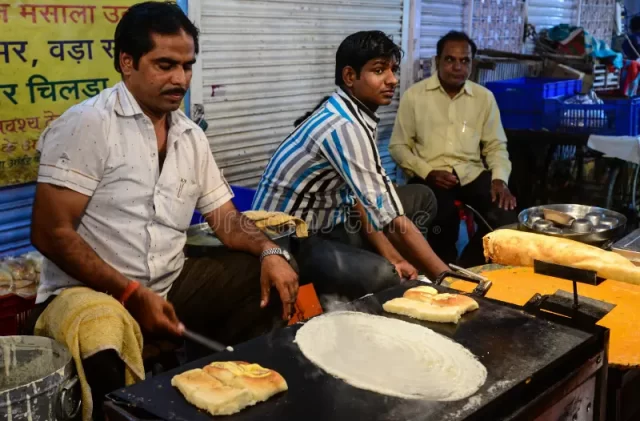
By Abhijeet U Pai The modern working relationships require the law to recognise non-standard forms of employment and address the lack of traditional employment benefits like social protection for them. Informal employment is seen as a job-based (based on nature of job rather than status of the enterprise) concept that cuts across different sectors of economic activity and thus is defined as ‘informal economy’ rather than ‘informal sector’, in terms of employment relationship and protections associated with the job of the...

December 2025

Nigeria to extend social protections to 60 million in the informal sector

The minister made this disclosure in Abuja during a two-day national dialogue on expanding social protection to informal workers. He said the Federal Government is taking concrete steps to address decades of exclusion affecting millions of Nigerians who earn a living in markets, farms, workshops, roadside enterprises and other informal settings. “Today, we write a new chapter in our collective journey to give dignity, inclusion, and protection to the over 60 million Nigerians who make up our informal economy,” the minister...

November 2025

Financial sustainability for the expansion of non-contributory pension systems and the eradication of old-age poverty

By Alberto Arenas de Mesa, Ernesto Espíndola & Juan Ignacio Vila Income protection is a substantive factor and a priority of social protection systems in Latin America and the Caribbean, in particular at either end of the life cycle (i.e. childhood and old age). This is due to the greater vulnerability and lower earning capacity of these population segments compared with other age groups, among other factors (Santos Garcia, Farías and Robles, 2023). In these circumstances, pension systems, in particular...

September 2025

Germany proposes a solution to the pension crisis: a monthly ‘salary’ for children aged 6 and over

“The welfare state we have today is no longer financially sustainable,” German Chancellor Friedrich Merz stated at a CDU event at the end of August. His remarks follow the government’s agreement to push through a reform of the pension system, aimed at containing the deficit. To address this, Merz proposed incentivizing private savings from an early age as a potential solution. The “Early Start Pension” initiative suggests that children aged six to 18 attending school would receive €10 per month from the German government, which would...

Mortality and the Provision of Retirement Income

By Organisation for Economic Co-operation and Development This report analyses the development of mortality assumptions to build mortality tables to better protect retirement income provision. Mortality assumptions are necessary to ensure the sustainability of lifetime incomes. It explores considerations and traditional approaches for developing mortality tables, as well as provides an international overview of longevity trends and drivers over the last several decades, including the impact of the COVID-19 pandemic. The report also details the standard mortality tables developed across...

August 2025

Pensions in Aging Asia and the Pacific: Policy Insights and Priorities

By Rafal Chomik, Philip O’Keefe & John Piggott This paper looks at how pension systems across Asia and the Pacific can overcome common challenges of low contributory coverage, inadequate social pensions, and failure to include the informal sector. Pension systems in the region also exhibit gender inequities, a lack of policy flexibility and attention to labor incentives, and underdeveloped governance. The paper reviews the structure and performance of regional pension systems, and makes proposals for an expanded role for social pensions...

June 2025

Enabling Entrepreneurship and Job Creation Through Social Protection in the Democratic Republic of Congo (DRC)

How can social protection programs in the Democratic Republic of Congo (DRC) be transformed into powerful engines for entrepreneurship, job creation, and income diversification? This question is explored here by examining innovative social protection initiatives through real-life success stories that are driving inclusive and sustainable economic growth across the country. The DRC stands at a critical juncture today, facing rapid demographic growth and severe economic challenges. The population is getting close to 100 million people, about 73.5% of whom live...