
November 2025

Financial sustainability for the expansion of non-contributory pension systems and the eradication of old-age poverty

By Alberto Arenas de Mesa, Ernesto Espíndola & Juan Ignacio Vila Income protection is a substantive factor and a priority of social protection systems in Latin America and the Caribbean, in particular at either end of the life cycle (i.e. childhood and old age). This is due to the greater vulnerability and lower earning capacity of these population segments compared with other age groups, among other factors (Santos Garcia, Farías and Robles, 2023). In these circumstances, pension systems, in particular...

September 2025

Germany proposes a solution to the pension crisis: a monthly ‘salary’ for children aged 6 and over

“The welfare state we have today is no longer financially sustainable,” German Chancellor Friedrich Merz stated at a CDU event at the end of August. His remarks follow the government’s agreement to push through a reform of the pension system, aimed at containing the deficit. To address this, Merz proposed incentivizing private savings from an early age as a potential solution. The “Early Start Pension” initiative suggests that children aged six to 18 attending school would receive €10 per month from the German government, which would...

Mortality and the Provision of Retirement Income

By Organisation for Economic Co-operation and Development This report analyses the development of mortality assumptions to build mortality tables to better protect retirement income provision. Mortality assumptions are necessary to ensure the sustainability of lifetime incomes. It explores considerations and traditional approaches for developing mortality tables, as well as provides an international overview of longevity trends and drivers over the last several decades, including the impact of the COVID-19 pandemic. The report also details the standard mortality tables developed across...

August 2025

Pensions in Aging Asia and the Pacific: Policy Insights and Priorities

By Rafal Chomik, Philip O’Keefe & John Piggott This paper looks at how pension systems across Asia and the Pacific can overcome common challenges of low contributory coverage, inadequate social pensions, and failure to include the informal sector. Pension systems in the region also exhibit gender inequities, a lack of policy flexibility and attention to labor incentives, and underdeveloped governance. The paper reviews the structure and performance of regional pension systems, and makes proposals for an expanded role for social pensions...

June 2025

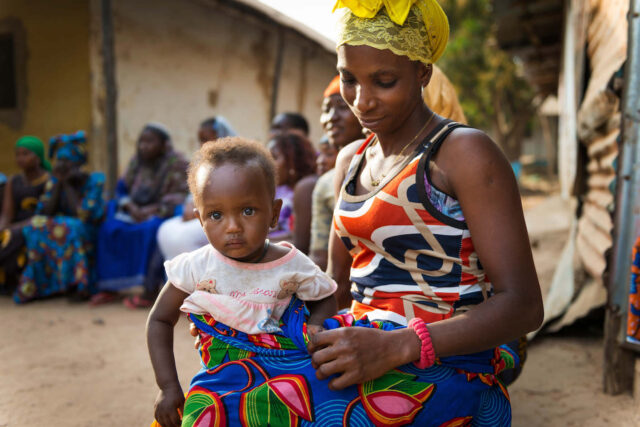
Enabling Entrepreneurship and Job Creation Through Social Protection in the Democratic Republic of Congo (DRC)

How can social protection programs in the Democratic Republic of Congo (DRC) be transformed into powerful engines for entrepreneurship, job creation, and income diversification? This question is explored here by examining innovative social protection initiatives through real-life success stories that are driving inclusive and sustainable economic growth across the country. The DRC stands at a critical juncture today, facing rapid demographic growth and severe economic challenges. The population is getting close to 100 million people, about 73.5% of whom live...

May 2025

Eyes on delivery – improving implementation for effective social protection for all

By Abhijit V. Banerjee Effective implementation is the missing link in the drive toward inclusive, reliable social protection. In recent decades, social protection systems have expanded rapidly across the developing world. Today, more than 2.5 billion people benefit from programmes like cash transfers, food subsidies, and social pensions. Yet despite this progress, the goal of social protection for all remains out of reach. Too many eligible people still slip through the cracks—excluded by complex procedures, poor targeting, or weak delivery...

UK. Starmer announces U-turn on winter fuel payment cuts

Sir Keir Starmer has announced plans to ease cuts to winter fuel payments, in a U-turn following mounting political pressure in recent weeks. More than 10 million pensioners lost out on the payments, worth up to £300, when the pension top-up became means-tested last year. Speaking at Prime Minister's Questions, Sir Keir said ministers would change the threshold to allow "more pensioners" to qualify again. But it remains unclear how many will regain their entitlement for the payments, or when the changes...

April 2025

Pensions at a Crossroads: Building Inclusive Retirement Systems for an Aging World

The World Bank’s Social Protection and Jobs Global Practice, in collaboration with the ASPIRE team and informed by research from the International Labour Organization (ILO) and the United Nations Department of Economic and Social Affairs (UN DESA), delivers a timely and comprehensive report. This document scrutinizes the global state of pension and social insurance systems, offering insight into their adequacy, sustainability, and coverage in a world experiencing rapid population aging. As the share of elderly citizens rises sharply across...

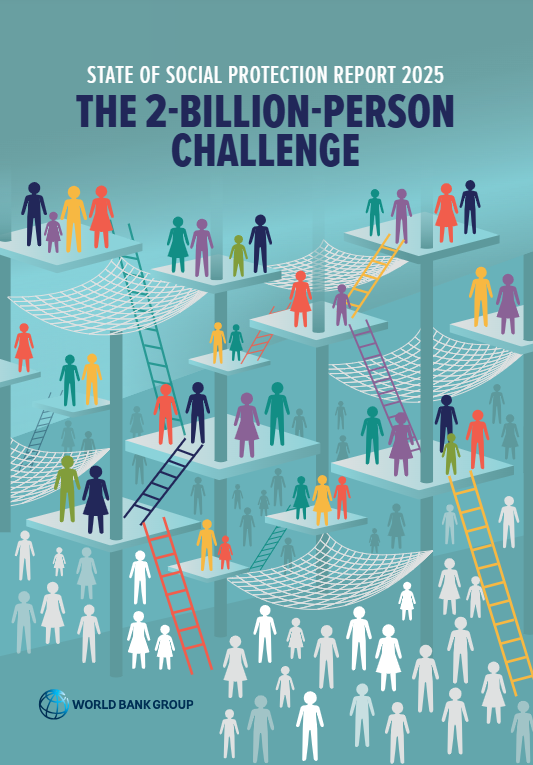
State of Social Protection Report 2025: The 2-Billion-Person Challenge

By The World Bank   Today, more people have access to social protection now than at any point in history. Over the last decade, 4.7 billion people across low- and middle-income countries gained access to social protection. However, critical gaps remain. Two billion people in those countries remain uncovered or inadequately covered by social protection. The State of Social Protection Report 2025: The 2-Billion-Person Challenge documents advances and challenges to strengthening social protection and labor systems across low- and middle-income countries and...

The World Bank publishes “State of Social Protection Report 2025: The 2-Billion-Person Challenge”

Social protection goes well beyond cash transfers; it includes policies and programmes that bridge skill, financial, and information gaps, aiding people in securing better jobs. The three pillars of social protection—social assistance, social insurance, and labour market programmes—support households and workers in handling crises, escaping poverty, facing transitions, and seizing employment opportunities. But despite a substantial expansion over the past decade, 2-billion people remain uncovered or inadequately covered across low- and middle-income countries. Drawing from administrative and household survey data from...