Côte d’Ivoire Expands Social Protection Coverage for Informal Workers
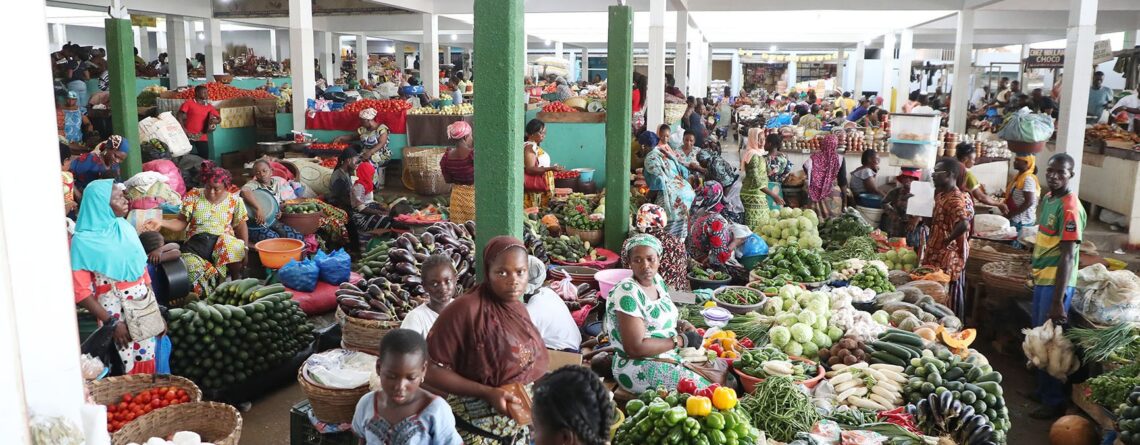
- Côte d’Ivoire has expanded access to health insurance, pensions and social benefits for informal workers, a group that accounts for more than 92% of total employment.
- The government estimates that 1.6 million informal workers are now eligible for retirement pensions through the Social Scheme for Independent Workers (RSTI).
- Authorities enrolled more than 23 million people in the Universal Health Coverage (CMU) system by December 2025, but participation and benefit utilization rates remain low.
The Ivorian government has taken another step in its social inclusion agenda. On June 16, the Government Information and Communication Center (CICG) brought together journalists and sector professionals at the administrative district of Abidjan-Plateau for its weekly program, “Tout Savoir Sur” (TSS).
During the event, Aubin Tapé, Chief of Staff to the Minister of Employment, Social Protection and Vocational Training, outlined the priorities of the 2026 Social Roundtable initiative and the government’s strategy for expanding local social services.
The government broadcast the event live on its digital platforms. Authorities said the initiative aims to strengthen transparency in public action and improve public awareness of major national reforms.
More Than 1.5 Million Informal Workers Targeted
The discussion focused on extending social rights to workers in the informal economy. Tapé highlighted the impact of the measures already implemented. “We potentially have 1.6 million workers in the so-called informal sector who can now claim a retirement pension when they reach the age of 60,” he said, referring to the Social Scheme for Independent Workers (RSTI).
The challenge remains substantial. According to the International Labour Organization (ILO), informal employment accounts for more than 92% of total employment in Côte d’Ivoire. Most of these workers operate without adequate legal protection or social security coverage.
The government launched the Social Roundtable initiative in 2021 to target these underserved populations. The program deploys a mobile one-stop service center that allows workers to enroll directly in Universal Health Coverage (CMU), the RSTI pension scheme and complementary retirement programs.
To broaden participation, the government introduced an exceptional measure in May 2025 known as “Zero-Contribution CMU,” which exempts informal workers from making contributions to the national health insurance scheme.
The policy generated an immediate increase in enrollment. The National Health Insurance Fund (CNAM) reported 23,014,322 enrolled individuals as of December 15, 2025, compared with 3.6 million in April 2021, when Minister Adama Kamara took office.
Rights on Paper, Contributors Still Needed
The sixth edition of the Social Roundtable forms part of the National Development Plan 2026–2030, which identifies social protection as its fourth strategic pillar. The benefits available to enrolled workers are substantial. An informal worker affiliated with the CMU receives coverage for 70% of medical expenses. A worker enrolled in the RSTI becomes eligible for a lifetime retirement pension from the age of 60.
The system also provides daily sickness allowances and maternity coverage equal to 100% of declared income. These benefits were historically reserved for employees in the formal sector. The reforms now extend them to farmers, traders and artisans. However, experiences elsewhere in the region suggest that enrollment alone does not guarantee effective coverage.
In Senegal, decades of investment in community health insurance programs have produced only limited improvements in effective coverage rates. According to research conducted by scholars at the French National Institute for Demographic Studies (INED), reductions in unmet healthcare needs have remained modest.
Read more @ecofinagency