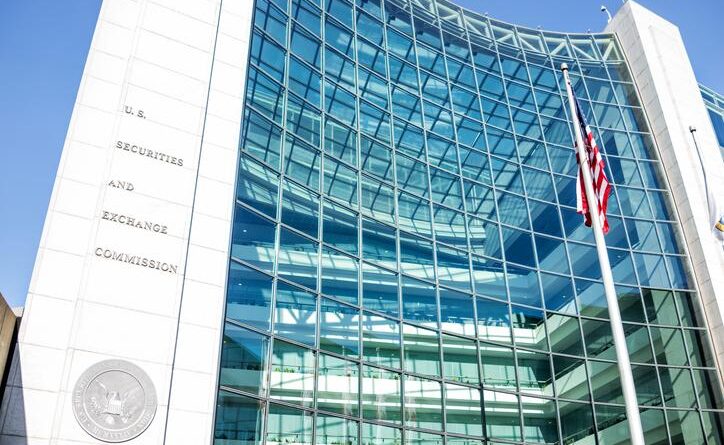
US. Pension giants warn SEC climate rule rescission will cost investors
The SEC announced its rescission proposal in May, saying the rules exceed the scope of its statutory authority and are “unnecessary and inconsistent” with a registrant-specific, materiality-based approach to disclosure.
In the proposal document, the US financial regulator also said it expects the market-driven flow of information to continue following a rescission of the rules.
Several major pension funds have submitted responses in recent days, including US heavyweights CalPERs, and the New York City and Maryland comptrollers, as well as Sweden’s AP7.
Across the board, asset owners have warned that the absence of mandatory, standardised disclosures means investors will have to rely on fragmented voluntary reporting and third parties, increasing costs.
In CalPERS’ response, the $632.6 billion pension fund acknowledged the commission’s concerns about compliance costs but said a full recission would “fundamentally alter the cost-benefit equation by shifting the financial burden directly onto investors”.
“For an asset owner of our scale, this market inefficiency can weaken our ability to assess risk accurately, price it appropriately, and act as an informed steward consistent with our fiduciary duty,” it added.
CalPERS also warned that without a unified federal standard, companies and investors will be left to navigate an emerging patchwork of state-level disclosure requirements.
“These fragmented state mandates shift the burden of compliance and multiple filing fees across different jurisdictions onto companies.”
‘More costly, less reliable’
New York City comptroller Mark Levine also warned that with inadequate disclosure, analysis becomes “more costly, less reliable, and less comparable across companies”.
His Maryland counterpart, Brooke Lierman, noted that the recission could put smaller investors and public funds at a disadvantage compared with market participants with greater resources to purchase private data or conduct independent analysis.
Meanwhile AP7, which has SKr1.5 trillion ($155 billion; €135.9 billion) in assets under management, told the SEC that climate-related disclosures from US companies “are often less complete and comparable than disclosures from peers in other jurisdictions”.
“This forces AP7 to obtain, reconcile, and verify data through external providers and direct engagement, at significant cost,” it added in its response.
Rescission, it continued, would “make decision-useful information harder and costlier to obtain”.
Smaller contributions
Other smaller funds also weighed in on the proposal.
Canada’s University Pension Plan (UPP) Ontario said it was concerned that full rescission would “move the US disclosure regime further away from the emerging global baseline for climate-related financial disclosure”.
The C$13.5 billion ($9.6 billion; €8.38 billion) fund would have to rely on voluntary disclosures, third-party estimates and modelled proxies, which “are fragmented, inconsistent across methodologies and jurisdictions, and less reliable for integration into risk management”, it added.
Read more @responsible investor