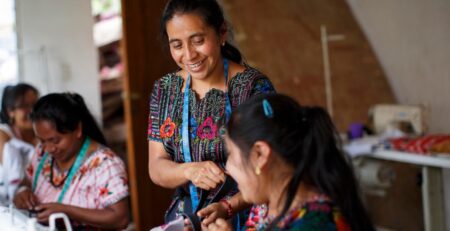
An aging population in China inspires a new industry: Adult children for hire
Available for rent to a lonely grandparent: the companionship of an adult child.
In China, where a low fertility rate and a rapidly aging population are swelling the number of lonely elders, young men and women are hiring themselves out as “shared” or “outsourced” children.
These surrogates, mostly in their 20s and 30s, provide companionship rather than specialized medical care, visiting, chatting, helping clients set up smartphones or accompanying them to medical appointments. Advertisements abound on Chinese social media, where rates range from $29 to $88 for a three-hour session.
Sun Shuyang, 28, works for Happy Home, a start-up in the northern city of Tianjin. Most of the company’s clients live alone while their adult children work in distant cities, he said, and struggle with feelings of isolation and fear of death.
“By talking to young people like us,” he said, “they can regain a sense of vitality and feel more energetic.”
It’s not clear how widespread such services are. But the economist Bingqin Li, who teaches social policy at the University of New South Wales in Australia, said they “respond to a real social need.”
The number of people in China over 60 is set to increase to 402 million by 2040, the World Health Organization projects, growing to 28 percent of the country’s total population. Under a government policy in effect from 1979 to 2015, many were limited to having one child. More than half were living in empty-nest households in 2021, the National Committee on Aging found, and by 2030, researchers project, China will face a shortfall of 5.5 million elder care nurses.
Aging in itself is not problematic if it means a healthier, longer life, the demographer and statistician Huang Wenzheng said, but the low fertility rate is. “We don’t have that many young people,” he said.
By 2031, China will be a super-aged society, one in which 20 percent or more of the population is over 65, according to Li Xunlei, chief economist at Zhongtai Financial International.
“A rapid increase in my country’s aging population rate is inevitable before 2050,” he wrote. “Even if the birth rate rebounds significantly, it would do little to slow the acceleration.”
The U.S. population is aging, too, and while elderly people may hire household helpers or companions, The Washington Post was unable to find any American business that marketed them as surrogate children.
Chinese authorities this year proposed mutual aid elder care services to cover 70 percent of regions by 2030. Tech companies are racing to develop and train elder care robots to handle tasks ranging from giving massages to playing chess.
Those initiatives, however, will take time. For now, at least, the burden of care continues to fall on the so-called sandwich generation — middle-aged adults who are raising children and supporting aging parents at the same time.
Liu Cheng established Time Bank in Suzhou to hire out shared children. He drew inspiration from Papa, a U.S. business that pairs companion workers with seniors for errands.
“We have both elderly parents and young children to support,” Liu said. “A lot of the time, when we focus on taking care of the younger ones, we end up unable to look after the old.”
Supporters say it fills a relevant social need, but critics have raised safety concerns.
“It is easy for ‘outsourced children’ to gain access to older people’s important documents including asset records, ID documents and property ownership certificates,” commentator He Yong wrote in the state-run Jingshen Wenming Bao newspaper. Many providers lack professional medical training, he wrote, and may be unprepared to handle common health emergencies.
Read more @washingtonpost