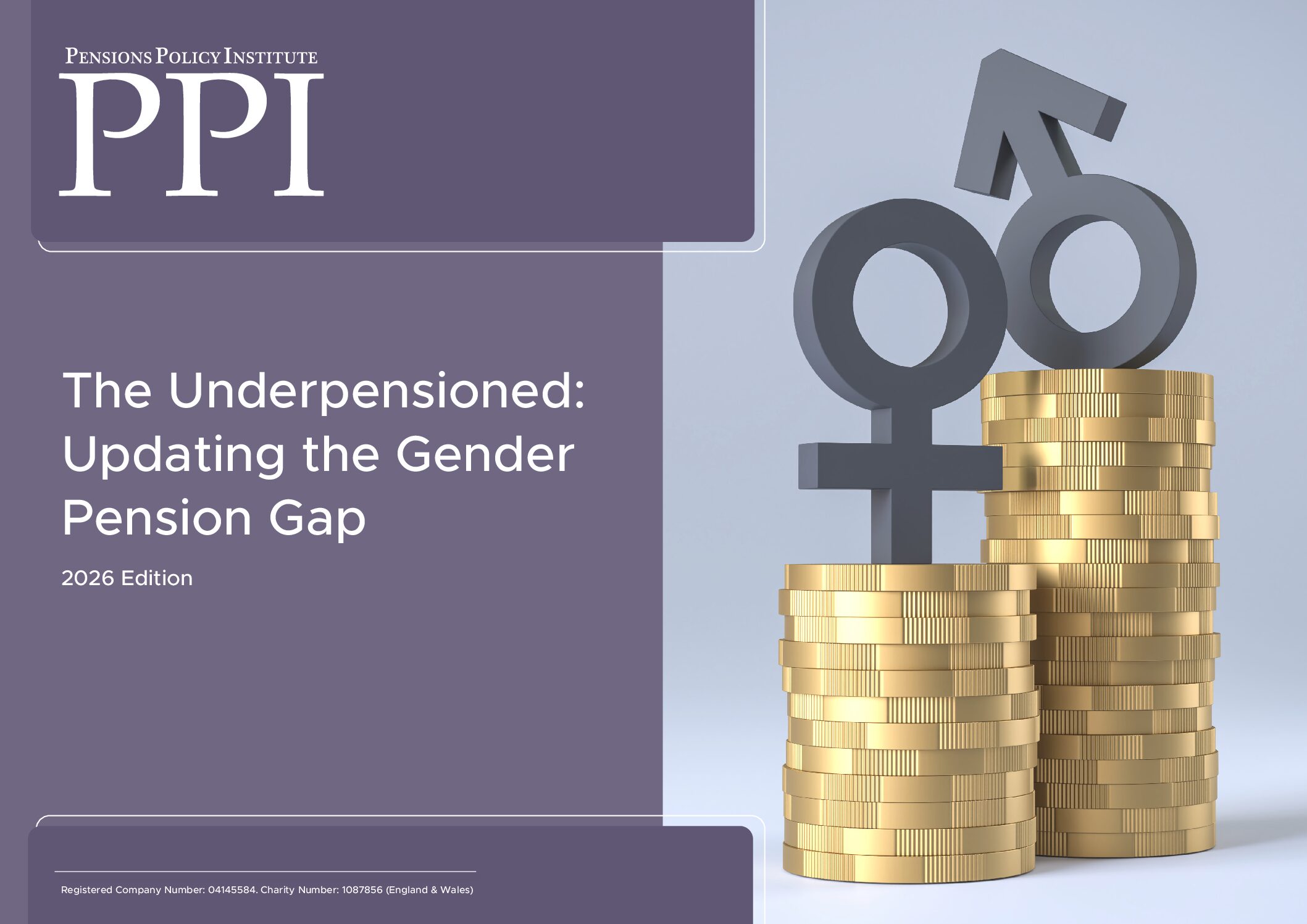
The Underpensioned: Updating the Gender Pension Gap
By Pensions Policy Institute
The Gender Pension Gap (GPG) is a measure of difference, or inequality, in pension outcomes for men and women.
This can be considered in terms of either the disparity in the pension wealth accumulated or by the income they receive in retirement as a result of that pension wealth. It has been suggested that the GPG should be subject to statutory reporting requirements, in the same way as the Gender Pay Gap.8 While the GPG is widely recognised, there has been a lack of clear consensus on its definition, magnitude and potential solutions. This can make it harder to accurately measure the gap and track trends over time, as well as implement feasible solutions to narrow the gap. Until 2023 there was no official government measure of the GPG to be used in public and policy discussions and the publishing of official statistics on the GPG.9 Since then the Department for Work and Pension (DWP) has reported on the Gender Pension Gap in private pensions, defining it as: ‘the percentage difference between female and male uncrystallised median private pension wealth around normal minimum pension age for those individuals with private pension wealth.’ There have been a number of different approaches used in the past for measuring the GPG, which can be useful in highlighting differing issues, as well as a range of datasets from which it can be assessed:
Pension wealth: Looking at the difference in pension wealth between men and women allows for the GPG to
be assessed for different age groups, including those still in accumulation. The age band looked at will impact
the magnitude of the GPG. Assessing the GPG at different ages has two benefits. Firstly, it can identify the age
at which the gap begins to accelerate, which can help to distinguish the risk factors and causes of the GPG.
Secondly, it allows for comparison between different cohorts, which can provide insight into the way that the GPG
is likely to evolve for future generations.
Retirement income: Looking at the inequality of retirement incomes between men and women presents a clearer
picture of the impact of the GPG on later-life experiences. However, it is to some extent backward, rather than
forward, looking. Inequality in retirement incomes can only be measured for people currently in retirement, so
does not reflect the GPG for people currently in accumulation. While it is useful to track changes in retirement
income inequality over time, it is not necessarily indicative of what the GPG will look like in the future or where
policy measures may be most effective in narrowing the gap.
Constituent parts: While it is useful to measure the overall magnitude of the GPG, a more detailed and nuanced
approach may better support the development of effective policies to reduce the gap. Understanding what
proportion of the gap is caused by labour market inequalities, in comparison to differences stemming directly
from the pensions landscape, can help to determine which policies are likely to be most effective and whose
input may be required to implement them.
Get the report here