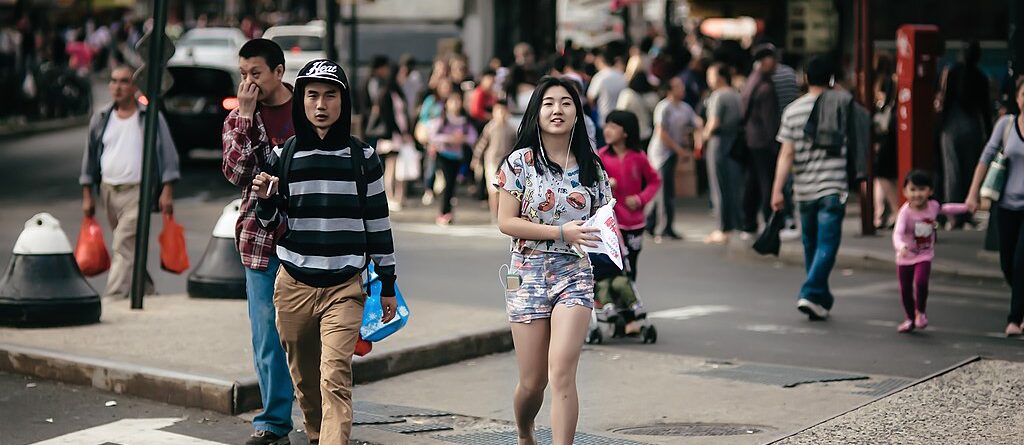
Asia’s ageing population needs investment, not alarm
Across Asia, people are living longer than ever before. This is one of the region’s greatest development successes. As policymakers, researchers and civil society leaders gathered in Hangzhou at the end of October for the Asia-Pacific Regional Conference on Ageing, they did so at a time when public debate too often focuses on ageing as a problem, highlighting rising pension and healthcare costs while overlooking the contributions older people make to families, communities and economies.
The challenge facing governments is not simply how to manage ageing populations. It is how to ensure that longer lives are matched by greater security, dignity and opportunity.
Millions of people across Asia have spent their working lives in informal employment and reach older age without reliable income security. Tax-funded social pensions can provide a foundation for financial security, and they need not be prohibitively expensive. HelpAge International’s analysis of 94 social pensions found that 60 cost less than 1 per cent of gross domestic product, while a further 18 cost between 1 and 2 per cent.
These investments can generate wider economic benefits. Research on China’s rural pension scheme estimated that it increased GDP by 2.4 per cent. Pension income enabled many older people to take on caring responsibilities at home, allowing younger family members to pursue better-paid employment elsewhere.
Older people are not simply beneficiaries of public spending. They are contributors to families, communities and economies. They provide care, support families, volunteer in their communities and continue contributing to society in countless ways. When governments invest in pensions, community-based care and support for family caregivers, they are strengthening the social and economic foundations on which all generations depend.
Longer lives are a major human achievement. Whether they become a story of greater security and opportunity, or one of deepening inequality, depends on the choices governments make today. The real risk is not population ageing itself, but failing to invest in policies that enable people to age with dignity, security and purpose.
Asia’s ageing societies do not need alarm. They need investment.
Events will shape US-China ties, whoever’s in power
Shortly after the US midterm elections on November 3, your paper ran several articles and commentaries on how the results might affect China.
During a US election, whether a midterm election or presidential election, Chinese leaders and analysts might prefer a certain politician or political party as being beneficial to China, but events can be the arbiter of how the newly elected US government affects China.
An example is the US presidential election in 1948. Chiang Kai-shek, then the Nationalist leader of China, preferred the Republican candidate Thomas Dewey. Unexpectedly, the Democratic candidate Harry Truman defeated Dewey.
Early in his presidency, Truman was hostile to Chiang and his Nationalist government. In November 1948, when Chiang’s wife Soong Mei-ling visited the US to seek further US aid for the Nationalist army, which was then losing the civil war to the Chinese Communists, US president-elect Truman refused to give aid to Chiang’s regime. Truman said Chiang and his family were corrupt.
However, when the Korean war broke out in June 1950, Truman reversed his policy and protected Chiang’s Nationalist government in Taiwan against the Communist government which by then ruled mainland China.
This shows events can cause a US president who is initially hostile to a Chinese leader to change course and support that leader. Of course, when Truman decided to support Chiang, he was no longer the leader of China but of the breakaway island of Taiwan.
Involve the public early in tourism plans
I refer to the article, “Hong Kong scraps lighting attraction at The Peak after public outcry” (October 29).
The government made the right choice to listen to the public and stop the project. This shows that public feedback matters. But I also think the consultation came too late. If the government had talked to residents and experts earlier, it could have avoided the problem. Hong Kong needs night tourism, but it should not degrade the natural environment and, in this case, undermine the charm of The Peak.
The government should learn from this and talk to the public early before starting similar projects. Tourism and nature can work together, but only if people are treated as partners, not as an afterthought.
Read more @scmp