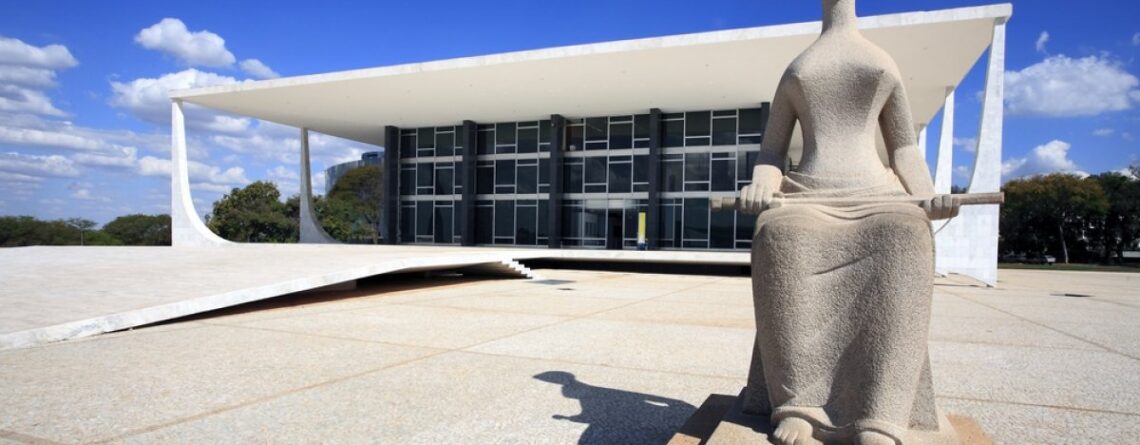
Brazil’s Supreme Court (STF) has scheduled for December 18th the trial that could increase benefits in 2026.
The Supreme Federal Court set a date for December 18, 2025 the trial that could directly affect minimum age for special retirement, with significant implications for workers exposed to harmful conditions and for those who have already reorganized their lives after retirement.
Beyond the minimum age for special retirementThe agenda involves the possibility of resuming full retirement benefits and allowing the conversion of special time into common time, forming a set of decisions that, if they move forward, could alter retirement planning, values, and dates.
O that the Supreme Federal Court will judge on December 18
The trial scheduled for December 18 brings together three center pointsThe first one is end of the minimum age for special retirement.
the second is the return to full retirement benefitsThe third is the possibility of convert special service time into common service timeincluding in scenarios discussed after the pension reform.
In practice, what is at stake is whether rules that tightened access to special retirement benefits can be reviewed, reopening avenues for those who lost their entitlement, those who had to postpone leaving work, or those who started receiving less than expected.
Why the minimum age for special retirement has become the most sensitive issue.
A minimum age for special retirement It is considered the most sensitive issue because it directly affects the retirement date of those who worked under risky, unhealthy, or dangerous conditions.
If there is a change, can bring forward retirements Compared to the current scenario, reorganize requirements strategies.
This is also why the attention of workers, unions, and social security lawyers is growing, since decisions of this type do not appear frequently and tend to have a broad impact on application and review procedures.
Full retirement benefits and conversion of special time into common time.
In addition to the minimum age for special retirement, the discussion about full retirement It focuses on the calculation method and the benefit level.
The conversion of special time together This is relevant for those who do not meet the requirements for special retirement benefits, but can use the converted time to qualify for retirement under another rule.
In the source material, the expectation is that these three points will be analyzed together, with the possibility of a complete or partial result.
Three possible scenarios and how they affect your planning.
Since the outcome can vary, retirement planning tends to work with three scenarios, as described in the base. Full approval, with a complete review of what currently applies as the rule. Complete negative, maintaining the current scenario.
Ou partial approval, accepting one or two points and rejecting others, requiring finer adjustments.
In any scenario, the practical advice is to attend the session on December 18th and avoid making hasty decisions without understanding how any potential change relates to your contribution history and special activity record.
Read more @clickpetroleoegas