Ghana Financial Sector Assets Jump 23.3% in 2025
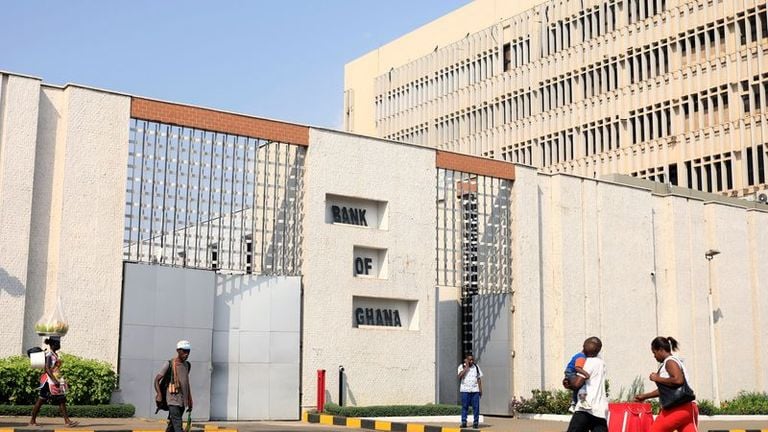
Ghana’s financial sector assets rose 23.3 per cent to GH¢647.25 billion in 2025, equal to 45.1 per cent of Gross Domestic Product (GDP), regulators said in their maiden stability review.
The expansion was driven by steadier macroeconomic conditions, stronger capital buffers, and heavy bank holdings of government instruments, according to the Bank of Ghana (BoG). Profitability and solvency positions strengthened across all four supervised industries, namely banking, insurance, securities, and pensions.
The figures were unveiled at the maiden launch of the annual Financial Stability Review by the Financial Stability Council (FSC), held under the theme From Stress to Stability, Staying on Course. The report frames Ghana’s pivot toward integrated supervision as regulators position themselves to police emerging risks without choking the recovery.
Second Deputy Governor of the BoG, Matilda Asante Asiedu, said the sector has moved “from stress to stability” after years of macroeconomic shocks and debt restructuring strain.
She told the gathering that financial institutions have begun rewriting their business models to fit the new environment, a move she described as essential to protecting the fragile stability the sector has only recently regained.
Asante Asiedu outlined several FSC initiatives aimed at deepening oversight. Chief among them is a conglomerate supervision framework that allows joint risk assessment across banking, insurance, and capital market operations within a single group, designed to close the gaps that regulatory arbitrage has historically exploited.
The Council has also stood up a risk matrix for the virtual asset services space following the passage of the Virtual Asset Services Providers Act, 2025 (Act 154), giving the regulator its first formal tool to monitor crypto exposure inside the formal financial system.
Dr John Kwame Dadzie of the FSC Secretariat described the report as a collaborative product, noting that member institutions across all four industries drafted the initial chapters before review by an interagency committee and final refinements by Council members.
Dadzie said the layered drafting process was central to the report’s credibility on data quality and consistency, and credited the technical committees and communications team for the publication.
Read more @newsghana