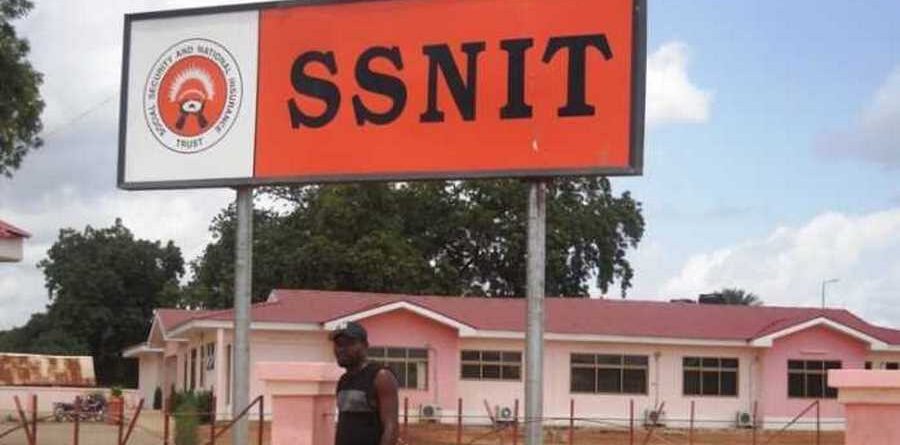
Ghana. SSNIT, Sustainability and the Transparency Question: Strengthening Pension Confidence
Ghana’s national pension scheme, established under the National Pensions Act, 2008 (Act 766), operates as a partially funded system. In such a structure, pensions are financed primarily from ongoing contributions by active workers, supplemented by returns on invested funds. Unlike a fully funded scheme, where benefits are paid strictly from accumulated savings for each contributor, a partially funded system relies on a mix of current inflows and accumulated assets. In this context, “reserves” do not function as a simple vault from which monthly pensions are drawn. Rather, they represent actuarial buffers — the margin between projected long-term obligations and projected resources under specific economic and demographic assumptions. This distinction matters. When SSNIT states that pensions are not funded from reserves, it is describing the structural design of the scheme. But when contributors ask about reserves, they are often asking something slightly different. How large is the actuarial cushion? How resilient is it under stress? And how far into the future does it sustain projected obligations? These are governance questions, not allegations.
Short-Term Performance against Long-Term Sustainability
Financial soundness can mean different things. In the short term, a pension institution may be considered sound if:
- Monthly pension payments are made on schedule.
- Contributions continue to flow.
- Investments generate returns.
- Financial statements show positive net assets.
But pension sustainability is inherently long-term. It requires examining whether projected contributions and investment income, combined with existing assets, can meet projected benefit payments over decades. That analysis depends on actuarial assumptions about inflation, wage growth, demographic trends, investment returns, and life expectancy. SSNIT’s assurance that it can meet obligations beyond 2036 implies that actuarial projections remain favorable under its baseline assumptions. For public confidence to deepen, however, it is helpful for those assumptions, and the resulting sustainability horizon, to be clearly communicated in accessible terms.
The Inflation Shock: A Real-World Stress Test
Between 2022 and 2024, Ghana experienced one of the most severe inflationary episodes in its recent history. At its peak, inflation exceeded 50%. For pensioners on fixed incomes, this translated into significant erosion of purchasing power. From an actuarial perspective, high inflation presents complex effects. On one hand, nominal investment returns may rise if interest rates increase. On the other hand, benefit adjustments, wage growth assumptions, and real return expectations can be disrupted. Global best practice, as often emphasized by the International Labour Organization, encourages pension systems to conduct stress testing under adverse macroeconomic scenarios. The inflation surge of 2022-2024 effectively constituted a real-world stress test.
The questions that naturally follow include:
- Have actuarial projections been updated to reflect the inflation shock?
- Did the episode materially shorten the sustainability horizon?
- Were investment returns sufficient to compensate for macroeconomic volatility?
If the system absorbed the shock without significant long-term impairment, that would be a powerful affirmation of resilience. Publishing a simplified summary of such findings could substantially strengthen confidence.
The Domestic Debt Exchange and Investment Exposure
Ghana’s fiscal restructuring under the International Monetary Fund programme included the Domestic Debt Exchange Programme (DDEP), which re-profiled government securities. Pension funds typically hold significant allocations in domestic government bonds, given their perceived safety and regulatory treatment. Changes in coupon rates or maturity structures can affect long-term yield assumptions. Even when principal values remain intact, the present value of future cash flows may shift, influencing actuarial balances. The key issue is not whether SSNIT participated in the exchange, that is a matter of public record. But how the restructured bond profile affects long-term sustainability projections. Have reserve buffers been recalibrated? Have yield assumptions been revised? Have stress scenarios been updated accordingly? Clear communication on these technical adjustments can prevent speculation from filling information gaps.
Solvency and Adequacy: Two Different Conversations
A pension scheme can be solvent but still face adequacy challenges. Solvency refers to the ability to meet obligations as they fall due. Adequacy refers to whether benefit levels are sufficient to maintain reasonable living standards. During the recent inflationary surge, many pensioners experienced a decline in real purchasing power. Even if SSNIT maintained actuarial solvency, adequacy concerns emerged. This distinction is important in policy discussions, including calls for relief measures such as a 13th-month payment or temporary adjustment mechanisms. Whether such measures are feasible depends on liquidity conditions, actuarial margins, and projected investment performance. These are technical determinations. But the underlying debate reflects a broader social question: How should the system balance long-term sustainability with short-term relief during extraordinary macroeconomic stress? A transparent framework for evaluating such trade-offs would elevate the conversation from speculation to policy analysis.
Oversight Mechanisms and Public Accountability
Ghana’s pension system is not unregulated. The National Pensions Regulatory Authority supervises compliance. The Auditor-General audits financial statements. Parliamentary oversight exists. Citizens also retain rights under the Right to Information Act. However, regulatory oversight and public communication are not identical. Technical actuarial reports may satisfy compliance requirements while remaining inaccessible to the broader public. In financial systems, transparency often enhances stability rather than undermines it. Banks publish capital adequacy ratios. Listed companies publish quarterly results. Central banks publish monetary policy reports. These disclosures reduce uncertainty and support informed debate. Similarly, pension transparency need not involve disclosure of commercially sensitive investment details. It can take the form of simplified sustainability dashboards: reserve coverage ratios under conservative assumptions, sensitivity analyses for inflation shocks, and projected funding horizons under varying return scenarios. Such communication does not create instability. It builds trust.
Demographics and Structural Pressures
Beyond macroeconomic shocks, long-term sustainability depends on structural variables. Life expectancy trends, formal sector participation, contribution compliance, and wage growth patterns all influence actuarial projections. Ghana’s demographic profile is evolving. As life expectancy rises, benefit payment periods lengthen. If formal employment growth does not keep pace, contribution density may be affected. These dynamics are not unique to Ghana. Pension systems globally confront similar pressures. The policy tools available — contribution adjustments, retirement age calibration, benefit indexation reforms are well known. The key determinant of success is early, transparent dialogue rather than reactive measures under crisis conditions. If structural reforms ever become necessary, initiating discussion while the system remains stable is far preferable to acting under stress.
Read more @modernghana