Should Ghana introduce a universal pension for elderly citizens?
As Ghana continues to debate the future of its pension system, an important question is emerging in public policy discussions: Should every elderly Ghanaian receive a basic state pension, regardless of whether they contributed to a formal pension scheme?
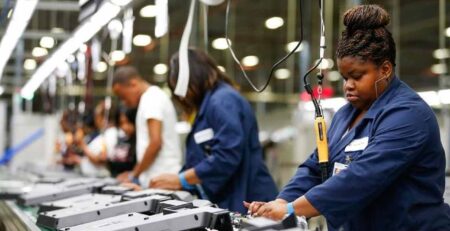
The question is both timely and necessary. Across Ghana, thousands of elderly citizens who spent their productive years farming, trading, fishing, artisan work, caregiving, and other forms of informal employment now find themselves facing old age without any reliable source of income. While the country has made significant progress in pension reform through the three-tier pension system, millions of older Ghanaians remain outside the safety net.
The issue, therefore, is not whether Ghana should care for its elderly citizens. The real debate is whether the nation can afford not to.
The Reality of Old Age in Ghana
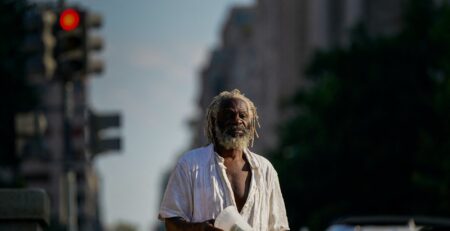
Old age should be a period of dignity, rest, and security. Unfortunately, for many elderly Ghanaians, it has become a period of uncertainty and hardship. Many older citizens depend heavily on their children, relatives, churches, mosques, and community support systems. Others continue to engage in physically demanding work despite declining health because they simply cannot afford to stop working.
Walk through any market in Ghana, and one is likely to encounter elderly women still selling vegetables, smoked fish, or second-hand clothing well into their seventies and eighties. Visit rural communities, and one will find ageing farmers still cultivating land because retirement is not an option.
The challenge is particularly severe for individuals who have spent their entire working lives in the informal economy. Unlike workers in the formal sector who contribute to the Social Security and National Insurance Trust (SSNIT), many informal sector workers have no structured retirement income. As a result, old-age poverty remains a significant social challenge.
What Is a Universal Pension?
A universal pension is a non-contributory pension paid by the government to all citizens above a specified age, regardless of their employment history or pension contributions. Unlike traditional pension systems, which depend on contributions made during employment, a universal pension is based on citizenship and age.
Countries such as New Zealand, Botswana, Mauritius, Namibia, and several others have implemented versions of universal pension schemes with varying degrees of success.
Under such a system, a Ghanaian citizen who reaches a specified age, perhaps 65 or 70, would receive a modest monthly income from the state to cover basic living expenses.
The objective is not to make retirees wealthy. Rather, it is to ensure that no elderly citizen falls into extreme poverty.
The Case for a Universal Pension
Ghana is not entirely unfamiliar with providing direct income support to vulnerable older persons. Through the Livelihood Empowerment Against Poverty (LEAP) programme, the government currently provides cash transfers to extremely poor households, including elderly persons aged 65 years and above who have no productive capacity. While LEAP has undoubtedly improved the lives of many beneficiaries and demonstrated the positive impact of targeted social protection interventions, its coverage remains limited to the poorest segments of the population, and the support amounts are often insufficient to guarantee long-term income security in old age.
The experience of LEAP nevertheless offers an important policy foundation for a broader national conversation on universal pensions. It demonstrates that Ghana already possesses some of the institutional structures, payment mechanisms, and administrative experience required to support elderly citizens financially. The question, therefore, is whether the country should build upon the lessons of LEAP and gradually evolve towards a more comprehensive system that guarantees a minimum level of income security for all elderly Ghanaians, regardless of their employment history or economic background.
The Strongest Argument For A Universal Pension Is Social Justice.
Many of today’s elderly citizens contributed significantly to Ghana’s development despite never participating in formal pension schemes. Farmers produced the food that fed the nation. Traders kept local economies functioning. Fisherfolk supplied protein to communities. Artisans built homes, schools, roads, and businesses.
Although they may not have contributed to formal pension arrangements, their labour contributed to national development. A universal pension would therefore represent society’s recognition of its lifelong contribution.
Another compelling argument is poverty reduction. Research worldwide has shown that cash transfers to elderly citizens can significantly improve household welfare. In many Ghanaian families, older persons support grandchildren, pay school expenses, and contribute to household survival. A modest monthly pension could improve nutrition, healthcare access, and educational outcomes within entire families.
Universal pensions can also reduce inequality between formal- and informal-sector workers. Currently, workers who participate in formal pension systems enjoy retirement benefits, while many informal workers receive nothing at all.
The Economic Benefits
Beyond social protection, a universal pension could stimulate local economies.
Elderly beneficiaries are likely to spend their pensions within their communities on food, healthcare, transportation, and other necessities. This spending supports local businesses and generates economic activity.
Furthermore, reducing poverty among older citizens can ease pressure on families and communities, enabling younger family members to invest more in education, entrepreneurship, and productivity.
A universal pension can therefore be viewed not merely as social expenditure but also as an investment in economic stability and social cohesion.
The Challenges
Despite its attractions, a universal pension would not be without challenges. The most obvious concern is cost. Ghana already faces significant fiscal pressures, including debt-servicing obligations, infrastructure demands, healthcare expenditures, and education financing. Funding a nationwide pension for all elderly citizens would require substantial public resources.
Questions would inevitably arise regarding affordability, sustainability, and funding sources. Critics may argue that the government should instead strengthen existing pension arrangements and expand participation in the informal sector rather than introduce a completely new entitlement.
Others may question whether limited public resources should be directed toward all elderly citizens, including wealthier retirees who may not require state assistance. These concerns deserve serious consideration.
A Practical Approach for Ghana
The debate should not be framed as a choice between a universal pension and the existing pension system. Both can coexist.
A practical solution may involve introducing a modest basic pension for elderly citizens over a certain age while maintaining contributory pensions for formal-sector workers. The programme could initially prioritise citizens aged 70 years and above before gradually expanding coverage as fiscal conditions permit.
Funding could come from a combination of general taxation, efficiency gains in public expenditure, dedicated social protection funds, and innovative financing mechanisms. The government could also leverage digital identification systems and mobile money platforms to improve targeting and reduce administrative costs.
The Way Forward
Ghana’s population is ageing. Improvements in healthcare and life expectancy mean that the number of elderly citizens will continue to grow over the coming decades. The country, therefore, needs a long-term strategy for ageing and retirement security.
Read more @thebftonline