The evolution of pension reforms in India
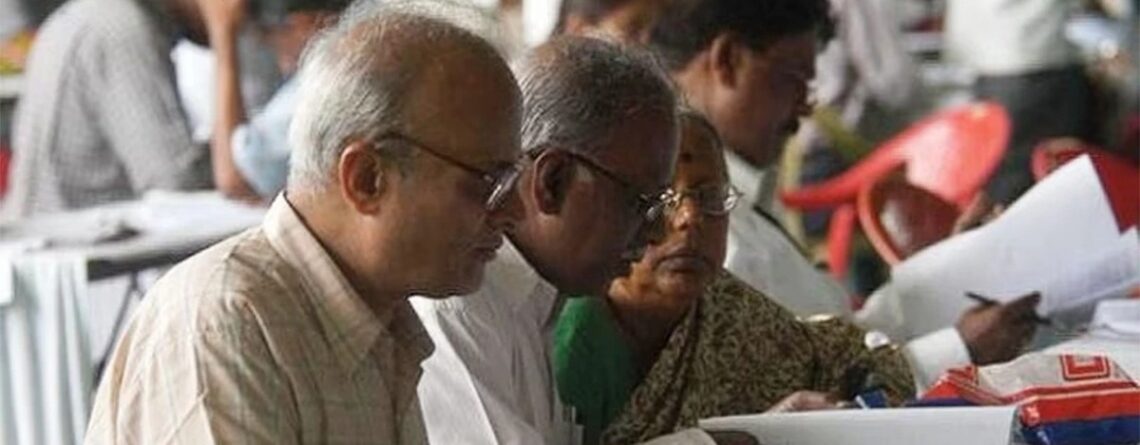
India’s rapidly ageing population is emerging as a pivotal pension challenge. Today, over 153 million Indians are aged over 60. This is projected to double to 347 million by 2050. While a small section of older Indians has benefited from the rise of formal sector retirement, more than 88% of today’s senior citizens continue to work, in the sprawling informal economy, without access to pensions or reliable social security rather than retiring (Chart 1). We revisit the evolution of pension schemes for financial inclusivity of the Indian informal sector.
The Indira Gandhi National Old Age Pension Scheme (IGNOAPS) is a social assistance programme launched in 1995 for persons aged over 65, living below the poverty line (BPL). Subsequent changes expanded scheme eligibility and strengthened financial support, leading to a significant rise in enrolment. It is a first among nationallevel efforts taken to provide a direct, regular source of income to the older population in the unorganised and economically vulnerable section of society. Similarly, formal sector government employees were covered under the governmentsponsored Old Pension Scheme (OPS).
Research finds that unlike social benefit schemes, contributory pension schemes in developing countries encourage household formal savings behaviour. Announced in Budget 201516, the Atal Pension Yojana (APY) is a contributory pension scheme for individuals aged 1840, where periodic contributions are made to a pension account. At retirement, the accumulated amount, including returns, is disbursed, with the government guaranteeing a minimum pension if returns fall short.
Taking into consideration the seasonal nature of informal sector income, especially agriculture, the APY allows for not just monthly but also quarterly and halfyearly instalments.
For the formal sector, OPS was replaced by the contributorymodel New Pension Scheme (NPS) in 2004. The NPS also has a corporate sector model which extends to all corporate sector employees with a savings account. Recently, the NPS 2.0 was launched allowing total allotment to 100% equity and a flexible multiple scheme framework (MSF) — an attractive change for younger highrisk, highrewardtype investors. The APY and NPS models form a comprehensive longterm financial security framework that ensures inclusion in the formal financial system, despite the sectoral divide.
The Labour Codes introduced a uniform definition of ‘wages’, requiring that basic pay make up at least 50% of total earnings. This closes a longstanding loophole that allowed employers to shrink basic pay by inflating allowances. With pension, gratuity, and social security benefits now calculated on a higher base, workers stand to gain stronger financial protection.
The progression of pension schemes in India reflects a hierarchical pattern in which each stage builds on the needs identified before it. Through an equity and socialwelfare lens, the government first introduced IGNOAPS and OPS to meet the basic needs of older adults. Having secured social protection, the focus shifted to more sophisticated goals such as financial inclusion and savings and investment behaviour through the NPS and the NPS 2.0. To bridge sectoral divide, similar behavioural nudges were extended to informalsector workers via the APY.
Many of these schemes are explicitly targeted at BPL individuals, and are therefore designed to extend coverage to informalsector workers who lack access to formal retirement provisions. However, there still exists a gap in awareness of schemes amongst the eligible population. Our findings from the Longitudinal Ageing Survey of India (LASI) show that as of 201718, 42% of individuals aged over 55 were still unaware of NPS and its eligibility criteria and requirements (Chart 2).
Many of these schemes are explicitly targeted at BPL individuals, and are therefore designed to extend coverage to informalsector workers who lack access to formal retirement provisions. However, there still exists a gap in awareness of schemes amongst the eligible population. Our findings from the Longitudinal Ageing Survey of India (LASI) show that as of 201718, 42% of individuals aged over 55 were still unaware of NPS and its eligibility criteria and requirements (Chart 2).
To tackle limited awareness and fragmented access to welfare programs, the eSHRAM portal was launched as a national database for informal sector workers. Through this, workers can register and obtain information about social security schemes for which they are eligible. Our analysis of the LASI data shows that over age 55, about 75.6% of women and 68% of men work in this sector.
Read more @pressreader