
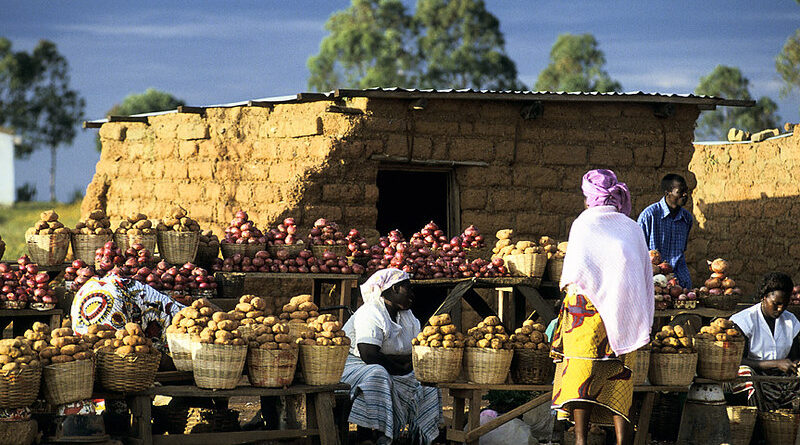
The Poverty Trap: Why Nigeria’s Informal Workers Are At Risk
Millions of Nigerians who spend their working lives running businesses, providing essential services and supporting the economy could face financial uncertainty in old age, with only 242,690 of the country’s estimated 84.9 million informal sector workers enrolled in the Personal Pension Plan (PPP).
The National Pension Commission (PenCom) disclosed this at its 2026 Annual Media Conference, exposing a significant gap in Nigeria’s retirement protection system and raising questions about how millions of people outside formal employment will sustain themselves when they can no longer work.
The figures mean that approximately 84.66 million informal sector workers remain outside the Personal Pension Plan, representing pension coverage of just 0.29 per cent as of July 2026.
The situation presents a major challenge for an economy in which informal employment accounts for about 93 per cent of the workforce and contributes an estimated 58 to 65 per cent of Gross Domestic Product (GDP).
For millions of traders, artisans, farmers, mechanics, transport operators, domestic workers and selfemployed professionals, retirement security depends largely on personal savings, family support and the ability to continue earning income.
Unlike employees in organisations covered by conventional employerbacked pension arrangements, most informal workers do not have employers deducting pension contributions from their salaries or making corresponding contributions on their behalf.
Consequently, those who fail to build personal retirement savings during their productive years could find themselves without a reliable income when old age, illness or physical limitations reduce their ability to work.
PenCom’s presentation, titled “Expanding Pension Coverage to the Self-employed and Informal Sector Workers: The Journey So Far,” identified the informal sector as a critical frontier in efforts to expand pension participation in Nigeria.
The challenge is not simply getting workers to register for pension accounts but persuading them to set aside part of their earnings consistently in a system designed to provide benefits much later in life.
Daily earnings, uncertain future
Many informal workers, income for them is neither fixed nor guaranteed. A market trader’s earnings depend on sales, an artisan’s income on available jobs, and a farmer’s returns on harvests and prevailing market conditions.
This uncertainty makes long-term financial planning difficult, particularly when daily earnings must cover food, rent, transportation, school fees, healthcare and business expenses. In many cases, saving for retirement becomes a secondary consideration because immediate household needs take priority.
However, the consequences of postponing retirement planning could become more severe as workers age. er who can no longer stand for long hours, a construction worker whose physical strength has declined or a driver unable to work because of illness may experience a sudden loss of income without pension savings to cushion the transition.
In the case of those without adequate savings or income-generating assets, retirement could mean dependence on children and other relatives, continued work under difficult conditions or reduced access to essential services.
The pressure could extend to younger household members, who may have to divert income meant for their own families, education or investments towards supporting ageing parents and relatives. Such dependence could become particularly difficult for households already struggling with the rising cost of living.
The challenge also has significant gender implications. PenCom’s presentation indicated that 96 per cent of employed women work in the informal sector, placing a substantial proportion of the female workforce outside conventional retirement arrangements.
Women engaged in petty trading, small-scale farming, domestic work and other informal occupations may have limited capacity to save consistently where earnings are low or unpredictable.
Flexible pension plan struggles for acceptance
The Personal Pension Plan was introduced under Section 2(3) of the Pension Reform Act 2014 to extend retirement savings to self-employed people and workers who are not covered by conventional employerbacked pension schemes.
Under the arrangement, eligible contributors can make payments daily, weekly, monthly or whenever their income permits. Registration requires a National Identification Number and a phone number, while contributions can be made through mobile money, USSD codes and direct fund transfers.
The scheme also permits contributors to withdraw 50 per cent of their contributions as a contingent portion, subject to prescribed conditions. The remaining 50 per cent is reserved for retirement benefits, accessible from age 50 or earlier in cases of medical incapacitation.
Despite these provisions, uptake remains limited, suggesting that flexibility in the payment structure has not sufficiently addressed the financial and behavioural barriers confronting prospective contributors. Apart from irregular earnings, obstacles include inadequate awareness, distrust of financial institutions, preference for immediately
The challenge is not simply getting workers to register for pension accounts but persuading them to set aside part of their earnings for contributions accessible savings and gaps in digital literacy.
Read more @newtelegraphng