The US homeless population is aging. Cities must brace for new challenges
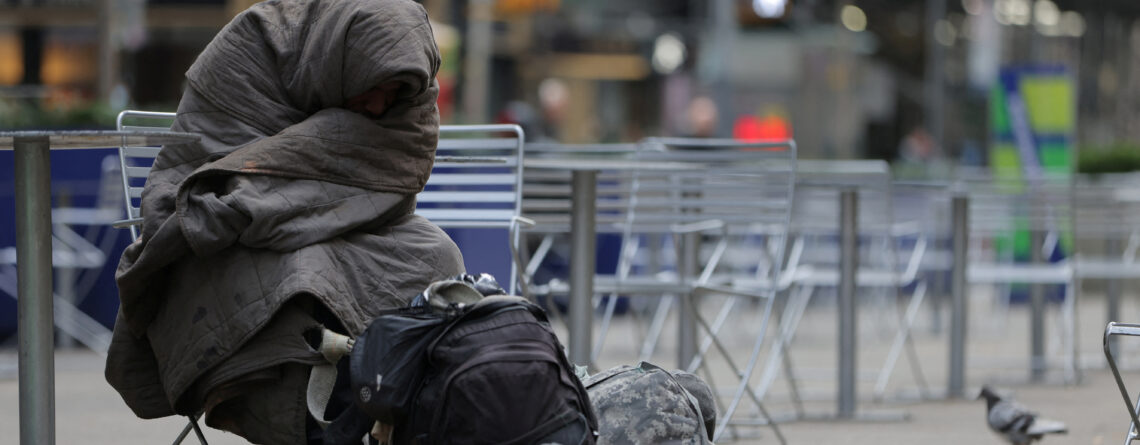
As cities and counties struggle with upticks in homelessness, they’re facing yet another challenge: an aging population.
By the mid 2030s, the U.S. will have more older adults than children for the first time in its history, the U.S. Census Bureau predicts. The fastest-growing group of people experiencing homelessness is those aged 65 and older, according to the Harvard Joint Center for Housing Studies.
And as the oldest baby boomers turn 80 this year, the aging population is coming up against a “perfect storm of stressors,” Jennifer Molinsky, director of the Housing an Aging Society Program at JCHS, said during a recent panel on aging homelessness.
“We’re talking about it at a time when the older population is growing so much, and we have had a lot of cuts to the social safety net, and we are about to see more cuts to Medicaid,” she said. “The consequences I worry about are that there’ll be more housing instability and homelessness.”
Housing policy decisions
Many cities’ housing markets are not set up to accommodate an aging population’s housing needs, Beaverton, Oregon, Mayor Lacey Beaty said during the webinar.
“Leaders before me hadn’t thought about aging in place gracefully,” she said. “We had not designed any housing for people to downsize from their four-bedroom home where they’d raised their kids.”
Housing policy choices can help, Beaty said. Those might include creating housing seniors can more easily transition into such as cottage clusters, co-ops and smaller one-story cottages that can foster community. This would also open up larger housing options for young families, she said.
“Housing and homelessness are so interconnected, and the best impact a mayor can have is by making the housing market look different,” Beaty said.
Focusing on prevention
Short-term solutions can involve identifying people who are vulnerable to homelessness, said Molinsky, including those who are doubling-up — staying with friends or family due to economic hardship — a type of homelessness that is not included in the U.S. Department of Housing and Urban Development’s point-in-time counts.
“Those folks are kind of invisible, but oftentimes it is not a huge amount of money that will help them weather [until] the next thing,” she said. “There’s a lot of people who are unstably housed who are on waiting lists, years-long waiting lists for public housing or housing vouchers, subsidies that could help them get from today to that housing without losing that housing.”
Educating aging communities about local, state and federal programs designed to assist them is also key, according to panelists. Generational differences can prevent older adults from seeking aid.
“They are taught to weather the storm,” Beaty said. “We have a generation of people that are not going to ask for help.”
Niki Wilkerson, a social justice advocate, said assistance is often associated with weakness or failure, and it’s important to preserve dignity and take care in how help is offered.
“If you don’t ask the question, you won’t know,” she said. “And a lot of the times, people feel they’re taking advantage when maybe the situation they’re facing is overwhelming.”
Read more @smartcitiesdive