OECD: Mexico’s Pension System Remains a Work in Progress
Mexico has made substantial progress reforming its pension system over the past decade, but the work is far from finished, according to Pablo Antolín, Head of Insurance and Pensions, Organization for Economic Cooperation and Development (OECD). The FIAP-WPA International Seminar 2026, held July 22–23 in San José, Costa Rica, Antolín says the system must continue adapting to shifts in the labor market and technology to remain effective for future retirees.
“Pension systems will always keep evolving. The labor market evolves, technology evolves,” says Antolín. He notes that the reforms Mexico has implemented in recent years align closely with recommendations the OECD has issued to member and partner countries, and that the multilateral organization views them favorably.
Antolín points to the country’s previous contribution rate as a structural weakness, explaining that a system funding retirement accounts, known as Afores, at a fraction of workers’ salaries made high pension payouts effectively unattainable.
Mexico’s most significant recent overhaul, the 2020 pension reform, is gradually raising mandatory employer contributions toward a target of 15% of salary by the early 2030s. Contributions climbed from 8.5% of salary in 2024 to 9.5% in 2025 and are scheduled to reach 10.5% in 2026, according to Mexico Afores Reach 23.8% of GDP as Pension Costs Mount.
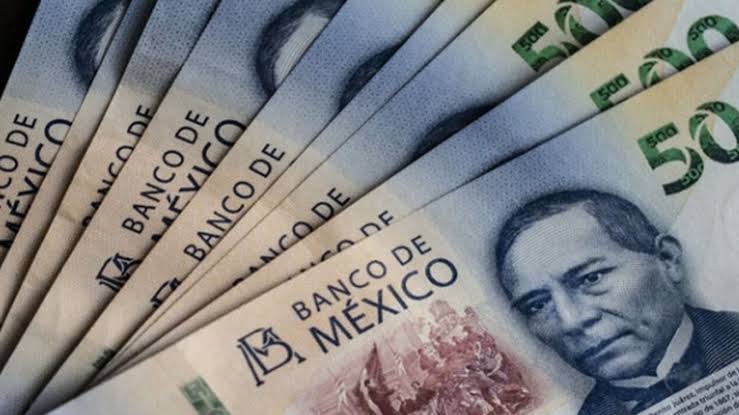
The same reform reduced the minimum number of weeks of contributions required to access the guaranteed minimum pension, expanding the pool of workers eligible for retirement benefits. Assets managed by Mexico’s Retirement Fund Administrators reached MX$8.3 trillion (US$488 billion) at the close of 2025, equivalent to 23.8% of the country’s gross domestic product (GDP), up from 20.3% a year earlier.
Antolín identifies the changing structure of employment as one of the central challenges facing pension systems worldwide, including Mexico’s. “The idea that someone starts a job at a company and stays there for the rest of their working life exists less and less. We have a labor market with much more mobility, where entrepreneurship plays an important role,” he says. As a result, he adds, one of the most pressing tasks for pension regulators is building flexible savings mechanisms for contractors, self-employed workers, and independent professionals, a population that remains only partially covered by Mexico’s system. Coverage gaps are already well documented: only about 55% of Mexico’s roughly 60 million informal workers currently participate in the Afore system, a structural weakness examined in Retirement in Mexico: Why We Must Look Beyond the Government, which argues that career interruptions common among informal workers erode retirement savings even under the strengthened contribution schedule.
Antolín observes that Latin America and the European Union are approaching that convergence from opposite starting points. Latin American countries, which built systems primarily around individual capitalization, have increasingly introduced minimum and basic pensions funded through public solidarity mechanisms.
EU countries, which relied historically on pay-as-you-go models, are now introducing individual capitalization components similar to Mexico’s Afore system. “Starting from different points, both regions are converging toward mixed systems,” he says.
Read more @mexicobusiness