US. 7 Things Retirees Need To Know About the Big Beautiful Bill Act
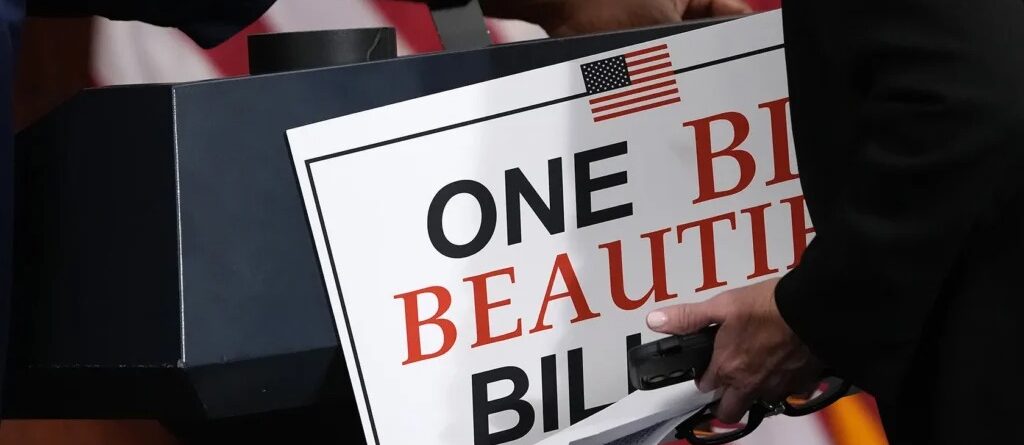
The One Big Beautiful Bill Act (OBBBA), signed into law by President Donald Trump over the July 4, 2025, weekend, is a sweeping multitrillion-dollar package that blends tax cuts with significant spending reductions and changes to the social safety net.1
For retirees, the new law brings both opportunities and uncertainties—from temporary tax relief on Social Security benefits to potential changes in required retirement distributions. While some provisions offer immediate benefits, others create planning challenges that could affect retirement strategies for years to come. Below are seven crucial takeaways for retirees.
7 Things Taxpayers Need to Know About the Big Beautiful Bill
1. A “Senior Deduction” of up to $6,000 Slashes Social Security Taxes
Beginning with 2025 returns, filers aged 65 and older may claim up to an extra $6,000 (single) or $12,000 (married) on top of the ordinary standard deduction.2 The break phases out at modified adjusted gross income above $75,000 ($150,000 per couple filing jointly) and expires after 2028.3
2. 88% of Beneficiaries Could Owe Zero Federal Tax on Benefits
The White House projects that, once the older adult deduction layers onto the existing formulas, almost nine in 10 Social Security recipients will have no benefits included in taxable income—a sharp jump from about two-thirds under current law.4
3. Required Minimum Distributions (RMDs) Get Trickier—Not Easier
The law doesn’t move the RMD start age beyond the 73-to-75 glide path set by SECURE 2.0. Instead, it instructs the Treasury to study the imposition of RMDs on Roth IRAs and large 401(k) balances, potentially spooking planners who rely on Roth accounts for tax-free compounding.5
4. The Estate-Tax Exemption Leaps to $15 million
Older adults undertaking legacy planning have a rare opportunity: beginning in 2026, the unified gift-and-estate exemption increases to $15 million per individual from $13,990,000 in 2025 ($30 million per couple filing jointly), indexed for inflation.6 The higher ceiling is permanent in statute, but a future Congress could, in theory, always dial it back.
5. Grandparent 529 Strategies Expand
Qualified 529 withdrawals now cover K-12 tutoring, credentials, and certain caregiving certifications, while rollover rules to Roth IRAs survive intact.7 That gives retirees new ways to fund a grandchild’s education without triggering the so-called FAFSA “grandparent penalty.”8
6. Healthcare Cuts Could Raise Out-of-Pocket Costs
To offset lost revenue, the law cuts more than $1 trillion from Medicaid and cuts Affordable Care Act subsidies.9 Although Medicare escapes direct cuts, many older adults who rely on Medicaid for long-term care will face stricter eligibility reviews, and states must implement new asset-verification rules by 2026.
7. Many Marquee Tax Breaks Expire in 2028
The deduction for older adults, tip-income exclusion, and several middle-class credits all sunset after Dec. 31, 2028—well before many boomers will finish their retirement withdrawals.1
The Bottom Line
For many retirees, the OBBBA offers a short-term windfall in the form of lower taxes on benefits and a richer estate exemption, but it is paired with long-term uncertainty around RMDs, healthcare funding, and expiring provisions. If possible, use 2025 to harvest deductions, review withdrawal plans, and revisit beneficiary designations, but keep your advisor on speed dial; the law’s beauty may only be in the eye of the beholder.