Low female employment and informality threaten Morocco’s social protection goals
Morocco’s low female labor participation, widespread informal employment, and rapidly aging population are putting growing pressure on the sustainability of pensions and social protection systems, according to a new HCP report. The study argues that extending social coverage alone will not be enough without deeper reforms aimed at expanding formal employment and increasing women’s participation in the economy.
Low female participation in the labor market, the persistence of informal employment, and rapid demographic aging are putting increasing pressure on Morocco’s long-term social protection ambitions, according to a new prospective report by the High Commission for Planning (HCP).
Based on the results of the 2024 General Population and Housing Census, the study argues that these three dynamics form a «system of cumulative inequalities» that gradually weakens the country’s contribution base, pensions system, and intergenerational solidarity mechanisms.
Weak female participation
The report identifies women’s economic participation as one of the country’s main structural weaknesses. In 2024, the female participation rate stood at just 19.1%, compared with 68.6% for men, placing Morocco among the countries with the lowest female labor participation rates in the middle-income world.
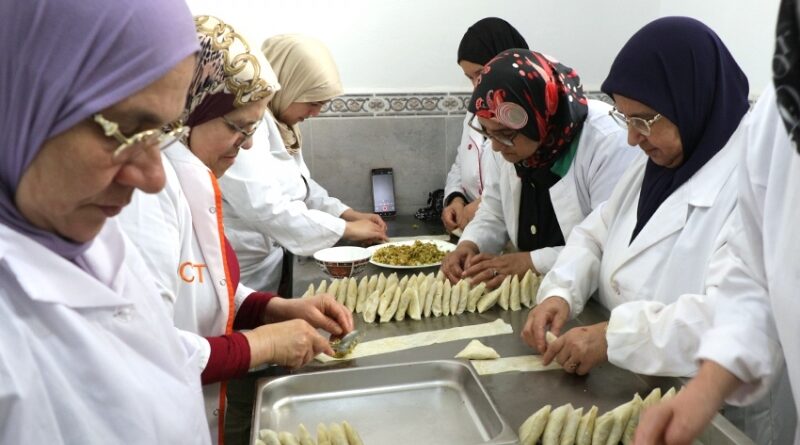
Even when women are employed, the majority remain outside the formal economy. Around 70% of working women are employed under informal conditions, compared with 76.9% of men. However, the report notes that women are disproportionately concentrated in unpaid family work and non-contributory activities, while men are more likely to hold income-generating informal jobs or work as self-employed laborers.
This low economic inclusion of women «reduces the contribution base by accentuating gender asymmetries», the study states.
According to the report, these inequalities accumulate throughout working life before resurfacing at retirement age in the form of deep pension gaps. Only 15% of women aged 60 and over currently receive an effective pension, compared with 37% of men.
In 2020, the female-to-male pension ratio stood at just 11.1%, meaning women’s pensions were on average nearly nine times lower than those of men.
The report also highlights sharp inequalities among women themselves depending on education levels. Under integrated reform scenarios, women with tertiary education see unemployment decline by 5.3 percentage points by 2070, while women with no diploma or only primary and lower-secondary education experience increases of 5 and 7.1 points respectively.
Read more @Yabiladi