June 2025

Optimal Income Redistribution

By Pavel Brendler, Eva Carceles-Poveda & Arpad Abraham We study whether a redesign of the social security and income tax-and-transfer systems can deliver significant welfare gains. Our rich quantitative model features both realistic inequality over the life-cycle and the key main channels through which redistributive policies can distort aggregate allocations. We find that there are two distinct ways to achieve significant welfare gains with joint policy reforms. The first prioritizes reducing distortions through a regressive pension system, resulting in higher...


May 2025

Income and Wealth Inequality in the United States: An Update Including the 2022 Wave

By Moritz Kuhn & José-Victor Ríos-Rull We provide a comprehensive overview of earnings, income and wealth inequality based on the 2022 Survey of Consumer Finances from the United States. We document the current state of inequality and its evolution over the last three decades organizing the data along key demographic dimensions including age, education, and marital status. The 2022 data reveal that wealth remains highly concentrated, with the top 1% holding 35% of total wealth down from a peak of...

April 2025

Unequal Inflationary Effects of Tariffs across Socio-Demographic Groups

By Hakan Yilmazkuday This paper investigates the heterogeneous effects of U.S. tariffs on inflation across socio-demographic groups, utilizing a structural vector autoregression model that controls for oil prices, output growth, policy rates, and exchange rates. The aggregate tariff pass-through to inflation is estimated at 0.51, with tariffs accounting for approximately 17% of overall inflation volatility. Disaggregated analysis reveals significant variation, where tariff pass-through ranges from 0.38 to 0.55 across income percentiles, with higher income groups experiencing greater pass-through and a...

March 2025

The Macroeconomy After Tariffs

By Davide Furceri, Swarnali A Hannan, Jonathan D Ostry & Andrew K Rose What does the macroeconomy look like in the aftermath of tariff changes? This study estimates impulse response functions from local projections using a panel of annual data that spans 151 countries from 1963 to 2014. Tariff increases are associated with persistent, economically and statistically significant declines in domestic output and productivity, as well as higher unemployment and inequality, real exchange rate appreciation, and insignificant changes to the...

On International Women’s Day, let’s focus on the gender pension gap

By Ivana Zanardo   Women in the workforce have made significant strides in recent decades: the gender wage gap is shrinking and more women hold a growing share of senior leadership positions at Canadian companies. But as we celebrate International Women’s Day, there’s another gap that should get more attention – the gender pension gap. Despite advancements made in the workplace, according to Stats Canada, women still face an annual income gap of 29 per cent. And what’s more worrisome is that we...

February 2025

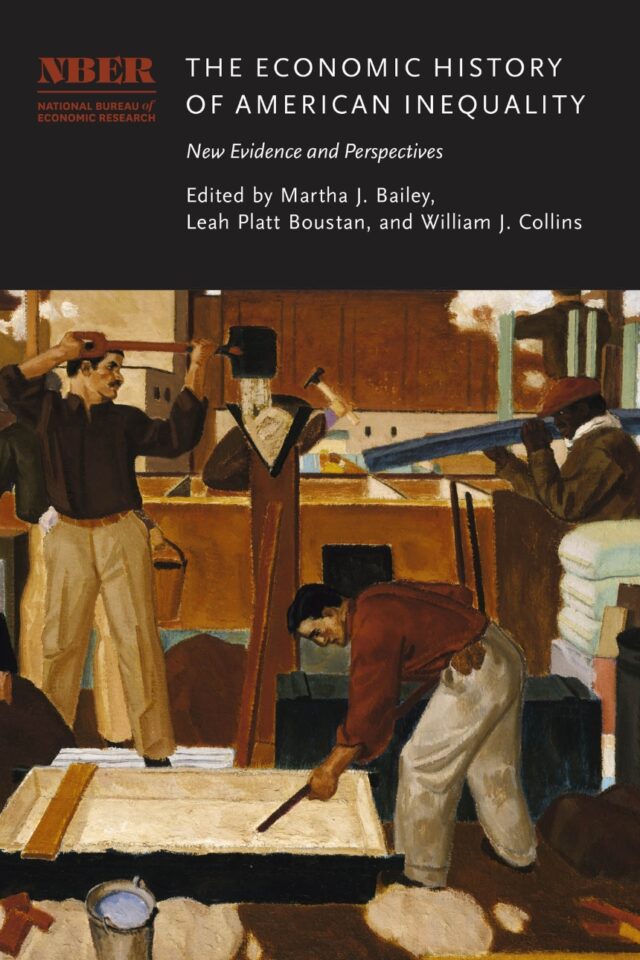
The Economic History of American Inequality: New Evidence and Perspectives

By Martha J. Bailey, Leah Platt Boustan & William J. Collins This volume refines and extends the economic history literature on economic inequality in the United States. Economic inequality manifests itself on various dimensions, including access to resources and to economic security, as well as access to education and opportunities for migration, marriage and other important life decisions. Measuring inequality and studying its variation over time and in response to economic shocks such as recessions and wars deepen our understanding of how the...

January 2025

Iran Protests: Nationwide Demonstrations Highlight Economic Injustice and Suppression

Today, January 27, 2025, protests erupted across multiple cities in Iran today, as retirees, farmers, workers, and defrauded citizens rallied against the regime’s economic mismanagement, systemic corruption, and oppressive tactics. Demonstrations highlighted a variety of grievances, from pensions and wages to access to water rights and freedom from arbitrary arrests. In Zanjan, northwest Iran, retirees from the Telecommunication Company of Iran (TCI) resumed their protests, calling for higher pensions and an end to mismanagement. Similar protests were held in Ahvaz, southwest Iran,...

Pension reform and wealth inequality: Theory and evidence

By Torben M. Andersen, Joydeep Bhattacharya, Anna Grodecka-Messi & Katja Mann A growing literature explores reasons for rising wealth inequality, but is mostly silent on the role of pension systems despite their well-understood influence on life-cycle savings. This paper develops a simple life-cycle model to lay bare the primary theoretical mechanisms connecting pension systems, asset accumulation, and the wealth distribution. Mandated fully-funded plans transform individuals with lower incomes, often characterized as low savers, into asset owners, and may also imply...

Collective Bargaining, Unions, and the Wage Structure: An International Perspective

By Simon Jäger, Suresh Naidu & Benjamin Schoefer In this paper, we assess the recent economics literature on collective bargaining. Despite a declining trend in the OECD in coverage and especially union membership, a large share of formal workers around the world are still covered by collective bargaining agreements. We describe the substantial institutional variation across a variety of countries, highlighting research done with modern research designs and recently available administrative datasets. We then estimate a canonical empirical model of individual-level coverage effects...

December 2024

Belgium. Staggering Pension Gap Revealed: Shocking Differences Between Civil Servants and Workers

The ongoing formation of a new federal government in Belgium, led by Bart De Wever, is facing significant challenges. A key issue at the forefront is the pension reform aimed at achieving substantial savings. As Stijn Baert highlighted on ‘De tafel van Gert’, the disparity between public and private sector pensions raises questions. How can this gap be addressed effectively? Fast Answer: Belgium’s pension reform discussions reveal a stark contrast between public and private sector pensions, with civil servants earning significantly more. This...