February 2026

UK. Industry warns against ‘giving up’ on saver engagement at retirement

The pensions industry should maintain engagement and not rely too heavily on default solutions at retirement, industry experts have stated. Speaking during an ABI Annual Conference session on personal pensions, Fidelity International head of platform policy and oversight, James Carter, emphasised a “fundamental difference” between individuals who actively opened a personal pension and those who were automatically enrolled into a workplace scheme. He cautioned against assuming that all savers were inherently passive and warned that the industry had increasingly accepted disengagement...


South Korea’s Older Adults Employment Rate Reaches 70% Milestone

As South Korea's society rapidly ages, the employment rate of older adults, aged 55–64, last year surpassed 70% for the first time since statistical records began. According to the Ministry of Employment and Labor’s "Trends in Older Adult Employment" data released on the 4th, the employment rate for older adults last year was 70.5%, exceeding 70% for the first time since related statistics began in 1983. This marks a slight increase from the previous year’s 69.9%. The statistic defines those...

How aging changes rats’ social choices and what that may mean for healthy aging

The loss of social connectedness as people age increases the odds of cognitive-related disorders and can worsen health outcomes in older populations. But is there a direct relationship between social behavior and cognition? Subhadeep Dutta Gupta, Peter Rapp, and colleagues, from the National Institute on Aging, developed a rat model to probe social cognition in the aging brain. As presented in their eNeuro paper, the researchers used 169 young and aged male rats to discover that while older rats were as social as younger...

January 2026

Vietnam. When society ages faster than its capacity to care

Vietnam is undergoing a profound demographic transition that remains surprisingly underdiscussed: rapid population aging. According to assessments by the United Nations and the World Health Organization, Vietnam is among the fastest-aging countries in Asia. What makes this shift particularly challenging is that it is happening before the country becomes wealthy and before a comprehensive system of long-term elderly care has been fully established. Within just a few decades, the proportion of people aged 60 and above has risen sharply. At the same...

Living longer, planning smarter: The hidden costs of longevity

Few phrases sound as reassuring as ‘increased life expectancy’. Thanks to medical advances, improved nutrition, and greater awareness of healthy living, South Africans are living longer than ever before. But, while longevity may be a triumph of modern progress, it is also one of the most underestimated risks to a person’s financial plan. The challenge is not merely ensuring you don’t outlive your money, it’s understanding what those extra years may actually cost, in both financial and human terms. The longevity...

Population Aging and Corporate Leverage

By Xingshen Li, Kexin Jiang, Wei Li & Xiaofen Tan This study examines the relationship between corporate leverage and population aging. Based on a panel dataset of global listed firms from 2000 to 2021, we find that population aging at the country level reduces a firm’s leverage. This effect is mediated through mechanisms that influence operational pressures and asset prices. Further analysis reveals that the adverse impact of population aging on corporate leverage is more pronounced among firms with higher financial...

Asia is entering the longevity era. How can we rethink wealth in a 100-year life?

For Asian countries in an aged-society stage, this demographic shift brings profound implications for how people are supported through longer lifespans. Just as a CFO manages risk and plans strategically, individuals must take a more active role in building financial resilience. The true success of a 100-year society lies not only in extending lifespan but in extending dignity, contribution and meaning. Across Asia, populations are ageing at a pace the world has never seen. Countries like Japan, the Republic of Korea and...

China’s birth rate hits record low as population continues to shrink

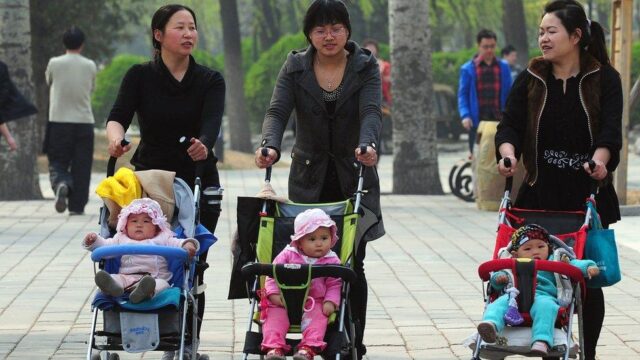
China's birth rates sunk to a record low in 2025, despite the government rolling out a spate of incentives to boost it, as the country's population fell for the fourth straight year. Government data on Monday showed that the country's birth rate fell to 5.63 per 1,000 people – a record low since the Communist Party took power in 1949 – while its death rate rose to 8.04 per 1,000 people, the highest since 1968. Its population fell 3.39 million to...

Cash Transfers and Socioeconomic Behavior among Older Adults:,Evidence from a Regression Discontinuity Design

By Anh Tuyet Nguyen & Hiroyuki Yamada The rapid aging of populations has prompted the introduction of social pension programs aimed at preserving the welfare of the elderly. However, adverse socioeconomic behaviors may dampen the intended policy effects. Using a fuzzy regression discontinuity design, this study examines the impact of social pension receipt on expenditure patterns and material hardship among older adults aged 80 year or older in Vietnam. We find that social pension increases the risk of material hardship...

China’s one child policy ended 10 years ago but birth rates remain low

This month marks 10 years since China ended its one-child policy in order to address an aging population and a shrinking workforce. The government eventually removed all limits on how many children couples can have. But cultural and economic changes mean families in China now prefer fewer children, leaving the government to figure out ways to encourage larger families, including a new contraceptive tax that began this month. So where does the country go from here? Cindy Yu is...