August 2026

Healthy Longevity as Regenerative Capital: AI-Enabled Prevention, Senior Re-employment, and Climate Risk

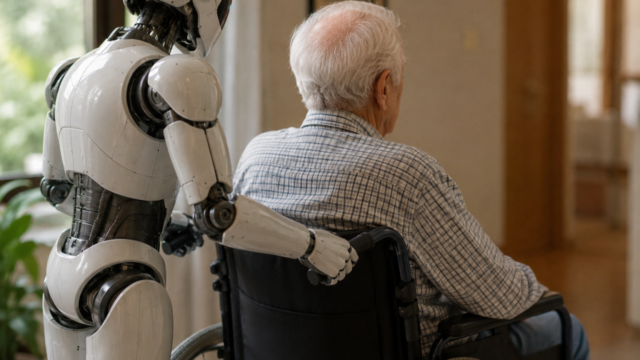
By Jules SADEFO KAMDEM Population ageing and climate change jointly threaten the functional capacity that sustains autonomy, labour supply, productivity, and fiscal resilience. This paper develops a continuous- time, age-structured model in which healthy longevity is a regenerative form of human capital. Cohort health is exposed to biological depreciation, a standardised heat-stress state, diffusion risk, and marked compound-Poisson losses. Prevention, climate adaptation, education, and effectively accessible artificial intelligence can offset avoidable depreciation. AI is accumulated as a depreciating capital stock...

The Most Important Longevity Term You’ve Probably Never Heard of

What if there was a single metric that could capture every aspect of your health — how strong you are, how clear your vision is, how sharply you think? That’s the goal of intrinsic capacity, a holistic measure of what someone’s body and mind are capable of. “It’s not really a sexy term,” but it makes sense from a scientific perspective, said Dr. John Beard, a professor of productive aging at the Columbia University Mailman School of Public Health who helped...

Job displacement and the health of older adults: Evidence from China

By Xiaoyun Zhang & Yiyang Luo This paper investigates the long-term consequences of involuntary job displacement on multidimensional health outcomes among middle-aged and older adults in urban China, using the 2014 China Health and Retirement Longitudinal Survey (CHARLS) Life History Questionnaire. To address the endogeneity of job loss, we exploit business closures, position cancellations, and layoffs during the state-owned enterprises (SOEs) reforms in the late 1990s as exogenous labor market shocks and employ Propensity Score Matching (PSM) to control for...

July 2026

Living Longer Isn’t The Same As Aging Well & A Massive New Study Proves It

Living longer used to feel like the whole point. More birthdays, more time with people you love, more years to do the things that matter. But a new analysis tracking 204 countries over three decades is asking a harder question: are those extra years actually good ones? Researchers found that while life expectancy has risen significantly around the world, more of those added years are being spent managing chronic illness, pain, or disability. It's a shift that changes how we think about healthspan versus...

Malnutrition in Older Adults: The Hidden Threat to Healthy Longevity

By Janet Helm  When you think about malnutrition, you may picture famine or starving children in developing countries. But in the United States and across the globe, malnutrition among older adults is a quiet epidemic hiding in plain sight. A comprehensive meta-analysis of 98 studies found that about one in five older adults worldwide is malnourished, and in the Americas specifically, that number climbs to more than 20%. The more rigorous Global Leadership Initiative on Malnutrition criteria, which are now endorsed...

The Impact of a Rising State Pension Age Policy on Women’s Well-Being and Health Using Longitudinal Data from the UK

By Louis Compton, Magdalena Walbaum, David R. Sinclair, Gemma Spiers, Barbara Hanratty, Raphael Wittenberg Background: The UK aimed to prolong the working lives of women by introduced a policy raising women’s state pension age (SPA) from 60 to 66. The impact of involuntary prolonged employment on individual’s health and well-being is debated. We explore how the well-being, mental and physical health of the women impacted by the policy has been affected. Methods: We used data from the first 12-waves of the...

UK. Can CDC solve the retirement income challenge?

Retirement in the UK is starting to feel out of reach for many workers. Not because people do not understand the importance of pensions, nor because they are unwilling to save, but because once the bills are paid, there is little left. The Pensions Commission’s figures tell the story. Around 15 million people are estimated to be under saving for retirement, while projections suggest millions could face pensioner poverty by 2040 if current trends continue. Only around 4 per cent...

Asia’s super-aging societies are sparking a boom in high-end longevity clinics—even if ‘public enthusiasm’ is outpacing the science

A nondescript wooden door in Singapore’s central business district leads to an amiable concierge and a cup of warm tea. Customers at the Rekoop clinic swap their office clothes for scrubs and a pair of bedroom slippers, then are whisked through a series of wellness treatments: red light therapy, lymphatic massages, hyperbaric oxygen therapy, and others. Clinics like this are part of a new wave of longevity offerings taking Asia’s luxury hospitality sector by storm. By 2030, one in four Asians...

June 2026

LGBT+ Older Adults Report Higher Rates of Loneliness and Other Adverse Social Determinants of Health

By Jace Flatt, Joel Anderson, Ethan Cicero, Jalal Uddin & Erin Rook While loneliness tends to decline with age, lesbian, gay, bisexual, transgender, and additional identity (LGBT+) older adults face heightened risks of loneliness and adverse social determinants of health (SDoH). We examined data from 33 U.S. states and 2 territories from the 2023 Behavioral Risk Factor Surveillance System that included optional SDoH and sexual orientation and gender identity (SOGI) modules. The sample included adults aged 65+ (mean:73.5 years, range:65-80+) who identified as a LGBT+ (n = 2356)...

New Study Finds the Ideal Amount of Strength Training for a Longer and Healthier Life

Strength training is increasingly linked to longevity, with fitness research suggesting that a moderate weekly amount can deliver meaningful health benefits. A long-term study of more than 147,000 adults found that 90 to 120 minutes of resistance training per week was associated with lower mortality risk, especially for cardiovascular and neurological diseases. The findings also highlight the importance of balance in fitness routines. While strength training alone showed clear benefits, the strongest results came from combining it with regular aerobic exercise....