
July 2022

Canadian defined benefit pension plans’ financial health steady in Q2 2022: Aon

Aon plc (NYSE: AON), a leading global professional services firm, announced today that the aggregate funded ratio for Canadian pension plans in the S&P/TSX Composite Index increased from 100.5 to 101.5 percent during the past three months, according to the Aon Pension Risk Tracker. It was at 96.9 percent at the beginning of the year. The Aon Pension Risk Tracker calculates the aggregate funded position on an accounting basis for companies in the S&P/TSX Composite Index with defined benefit (DB)...

June 2022

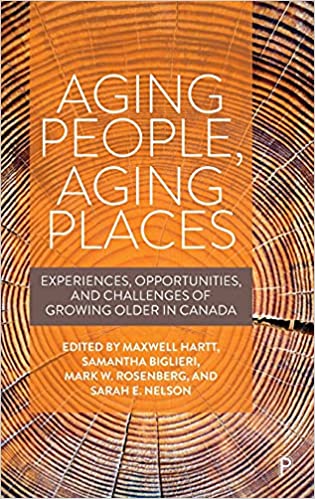
Aging People, Aging Places: Experiences, Opportunities, and Challenges of Growing Older in Canada

By Maxwell Hartt, Samantha Biglieri, Mark W. Rosenberg & Sarah E. Nelson How well do the places where we live support the wellbeing of older adults? The Canadian population is growing older and is reshaping the nation’s economic, social and cultural future. However, the built and social environments of many communities, neighbourhoods and cities have not been designed to help Canadians age well. Bringing together academic research, practitioner reflections and personal narratives from older adults across Canada, this cutting-edge text...

Canada. Pension plan sponsors uncertain about balancing ESG factors, fiduciary responsibilities: ACPM

Defined benefit pension plans and defined contribution pension plans are uncertain about how to incorporate environmental, social and governance issues into their investment processes in a way that’s consistent with fiduciary duties, according to a new white paper from the Association of Canadian Pension Management. “Sustainable investing, including ESG, is an area where some investment risks that have been acknowledged for decades are now becoming more acute (e.g., climate risk),” said the white paper. “How pension plans can, and should,...

May 2022

Many soon-to-be retired Canadians considering changing retirement date

One-third of retired Canadians between ages 55 and 75 have retired sooner than originally planned, according to a recent RBC survey. And while the survey didn't provide insight into why people decided to take advantage of their golden years earlier, Selene Soo, director of wealth insurance at RBC Insurance, offered her guess. "If I had to wager a guess, with the last two years, it could have been that it wasn't of their own choice. Just because of businesses going under,...

Canada. How employers can design health benefits, retirement plans for gig workers

Whether they’re delivering takeout, chauffeuring passengers, or fixing leaky sinks, most gig workers in Canada don’t get benefits. Classified as independent contractors rather than employees, they’re excluded from employer contributions to Canada Pension Plan and Employment Insurance, they may not be protected under worker’s compensation and they can’t participate in tax-advantaged benefits programs like registered pension plans and employee life and health trusts. Read: Uber Canada sharing details of self-directed benefits fund for gig workers So even if an employer offered dental...

CPPIB returns net 6.8% for fiscal year

Canada Pension Plan Investment Board returned a net 6.8% for the fiscal year ended March 31, the Toronto-based board announced in a news release Thursday. CPPIB, which manages the assets of the Canada Pension Plan, said the pension fund's net assets increased to C$539 billion ($431.8 billion) from C$497 billion a year ago. It added that the C$42 billion increase comprised $34 billion in net income and $8 billion in net transfers from the plan. The portfolio achieved five-year and 10-year...

Canadian Pensions Can Withstand Higher Inflation, Weaker Growth

Fitch-rated Canadian pension funds are well positioned to withstand higher inflation and modest economic growth amid heightened market volatility, Fitch Ratings says. That said, stagflation would be more challenging, given funds’ long-only investment strategies and vulnerability to economic and market downturns. The maturing nature of participant bases increases pension funds’ reliance on investment returns, as contributions and income from active members may be outpaced by benefits paid to a growing number of retirees. Still, Canadian pension funds’ long-term investment...

Large corporate defined benefit plans in Canada are fully funded

Corporate defined benefit plans of public companies in Canada surged to 100% funding with higher discount rates. Asset allocations were little changed. Liability-driven investing continued to be at the forefront with about 50% of assets invested in fixed income. Alternative investments did increase to 7.7%, which was the highest allocation since data have been tracked. The median funded status increased to 100.3% up from 91.5% in 2020. This was the first time the median funding level increased to more than 100%...

Aging beyond retirement: How Canadians can afford to grow old

That’s the number of siblings Dr. Bonnie-Jeanne MacDonald’s mother had growing up. An astounding number, even at a time when families were known for having large broods. While it might seem overwhelming, to say the least, there certainly were benefits to having so many kids, says Dr. MacDonald, the director of financial security research for the National Institute on Aging (NIA). “My mother came from a family of 14 kids, and suddenly you have much fewer people to do that care...

April 2022

Canada. IMCO returns 9.6% in 2021, outperforming its benchmark

Investment Management Corp. of Ontario, Toronto, delivered a weighted average net return of its clients' portfolios of 9.6% for the year ended Dec. 31, vs. a consolidated benchmark return of 8.5%. IMCO's assets under management climbed to C$79 billion ($61.8 billion) at the end of 2021, up 7.8% from a year earlier, the firm said in a news release Monday. By asset class, private equity performed the best in 2021, returning a net 19.2% (above the 16.9% performance by its benchmark);...