April 2025

China’s Pension Fund Returns Outdo Many in US, Europe, Former Official Says

China’s pension returns on investment are better than those in many developed countries in Europe and the US and are in a globally leading position, the former chairman of the National Council of Social Security Fund of China, which manages the country’s largest pension fund, the National Social Security Fund, said yesterday China’s strong pension returns are mainly because prices in the country are relatively stable and the investment products are reasonable, Dai Xianglong, who is also a former governor...


Canadian plan sponsors watch China’s pension opt-outs for gig economy warning signs

More than 40 percent of flexible workers in China—including delivery drivers, livestreamers, and freelancers—are choosing not to participate in the national pension system, according to Morningstar Canada. Their shift away from the system has contributed to the state pension fund’s first cash-flow deficit since 2018, raising concerns about its sustainability. 29-year-old delivery driver Liu Xin works six days a week in Chengdu but cannot afford the $195 monthly contribution to the state plan. “That’s two weeks of groceries,” he said. “I can’t lock...

Population Aging, Digital Financial Inclusion, Development Strategies and Economic Resilience

By Dongsong Cai, Ling Long, WanHuan Cai & Xin Wang As China enters into a deeply aging society, China's demographic development has come to an unprecedented stage of great transition, which also has an impact on economic resilience. Based on the perspective of new structural economics, the relationship between population aging and economic resilience is explored. Meanwhile, empirical tests using provincial panel data find that, firstly, there is a positive effect of population aging on economic resilience, i.e., population aging...

Robots and Informal Employment in China

By Haiyan Lin This paper examines labor adjustments between the informal and formal sectors in response to the adoption of industrial robots in China. Using a longitudinal household data from 2010 to 2018, I find that robotization increases informal employment. Quantitatively, one more robot per thousand workers increases the share of informal employment by 1.16 percentage points. The reallocation is not driven by new entrants or re-entrants, but by workers initially employed in the formal sector. Displaced formal workers tend...

March 2025

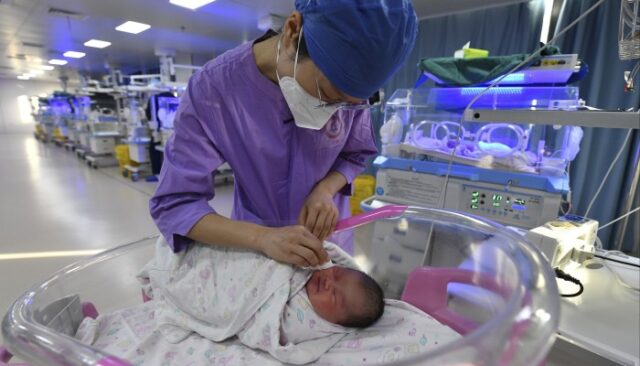
Why China is betting on birth subsidies to solve its population crisis

When Tang Tang, a mother from Tianmen in central China, gave birth to her second child in December, it brought her family untold joy – and a thick wad of cash. Within months of leaving hospital, the local government paid Tang a 6,500-yuan (US$897) reward for having two children as part of a new birth subsidy scheme introduced last year. She will also receive an 800-yuan allowance every month until her new baby turns three. For a family in Tianmen, where...

How and Why the Gender Pension Gap in Urban China Decreased between 1988 and 2018

By Björn Gustafsson, Peng Zhan & Hanrui Jia In urban China, gender gaps in employment and earnings have steadily increased since the 1990s. Such gender gaps are important because pension rights and amounts are based on labor force participation and wages. However, as this study demonstrates, despite the rise in gender differences in the urban labor market, the average gender pension gap decreased between 1988 and 2018. In this paper, we describe the evolution of the fragmented pension system in...

February 2025

Challenges and concerns surrounding China’s retirement age reform

By China Labour Bulletin China is currently grappling with a pressing demographic challenge, marked by record-low birth rates and low retirement ages, leading to a continuous decline in the working-age population. According to the National Bureau of Statistics, the working-age population dropped to 61.3% in 2023, down from 62% the previous year. The shrinking workforce and ageing population are increasingly straining China’s pension system. Current projections indicate that, without intervention, the social security system’s resources will be depleted by 2035. In response to...

China. Pensions Index expected to tackle aging challenges

In a significant move aimed at addressing the pressing global issue of aging, a top university in Shanghai has launched an innovative tool for sustainable and inclusive pension systems, which is expected to help China and other countries deal with the challenges. The China Pensions Index, which was created by East China Normal University, or ECNU, offers a comprehensive framework to assess and enhance pension systems, giving valuable insights to nations grappling with demographic shifts, a leading aging finance expert...

January 2025

The Looming Crisis: China’s Pension System Faces a Generational Challenge

By Jessica Huang China, a nation of immense scale and ambition, is in the grip of an urgent demographic crisis. Declining birth rates and rising life expectancy are rapidly aging the population. Within the next two decades, the number of retirement-age individuals is expected to surpass the entire population of the United States, with an estimated 402 million people over 60 by 2040—28% of China’s total population. This demographic shift is straining the workforce, social services, healthcare infrastructure, and economic productivity, marking...

China: Expansion of voluntary personal pension system

Employer Action Code: Act In 2022, China’s central government piloted new tax incentives in 36 cities and regions to encourage employees to make voluntary contributions to individual retirement accounts to complement social security pension benefits and help address the challenges of a rapidly aging population. After a successful pilot, the system is now fully implemented nationwide as of December 15, 2024. Key details The following changes to the individual accounts under the pilot program have been made: Money may be withdrawn in...