June 2025

The number of working pensioners in Germany has reached a record high.

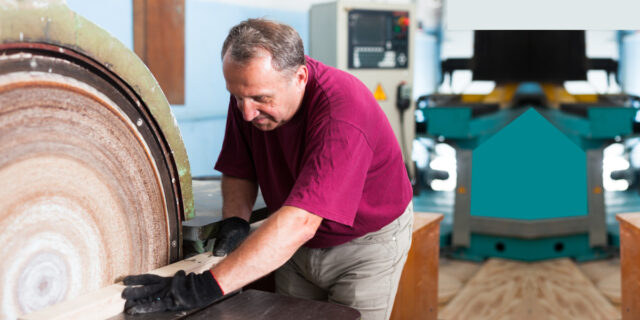
In Germany, the number of working-age pensioners is increasing – over 1.1 million people aged 67 and older are working, which is 51,000 more than last year. This is a record figure in the country's history. Most pensioners who continue to work do so due to financial necessity, as pensions prove to be insufficient. Therefore, the authorities have started to encourage active work among pensioners by offering them financial bonuses and additional earning opportunities. BSW party leader Sahra Wagenknecht is astonished:...

May 2025

​Germany. Aon recommends halt in US investments as capital shifts to safer havens

Aon is recommending German corporate pension funds to refrain from making new investments in the US, and carefully rebalance allocations as capital moves to safer havens. Volatility on the equity markets, particularly in the US, continues, and it is likely to result in capital shifts to safe havens such as Europe and Japan, and possibly Canada and Australia, the consultancy wrote in a blog (published in German) to highlight the impact of capital market turbulences on occupational pensions in Germany. Companies offering funded...

Germany struggles to fix its pension system

Germany's baby boomers are retiring. Those born between 1955 and 1969, when the birth rate was at an all-time high, are also living longer. The workforce is not growing at the same rate. So who will pay the elderly's pensions? A considerable chunk of the federal budget goes into propping up the statuary pension system and the new Labor Minister, Bärbel Bas from the center-left Social Democratic Party (SPD), has reiterated an idea of how to partially fix that. The pension system in Germany, established in 1889,...

December 2024

German Pensioners Set For Increased Payments Amid Rising Healthcare Costs

Projected 3.5% increase may bring some relief to seniors, but rising healthcare contributions raise concerns. Millions of seniors across Germany can expect improved financial aid as the government gears up for noteworthy pension increases next year. According to recent projections, pensioners will see their benefits rise by approximately 3.5% starting from July 2025, as reported by various news outlets, including the Deutsche Presse-Agentur. This anticipated increase aligns with the yearly Rentenversicherungsbericht, which highlights the progress of the statutory pension insurance scheme...

Rising Pension Poverty in Germany: A Growing Number Below Minimum Living Standards

The issue of pension poverty is increasingly prevalent in Germany, with a significant portion of the elderly population receiving pensions that fall below the established minimum living standard. Recent statistics reveal that the situation is worsening, as more seniors struggle to meet their basic needs. As of the end of 2023, the minimum living standard for pensioners, as defined by the basic security benefits in old age, was set at 942 euros per month. Approximately 7.9 million individuals in Germany...

Thousands of Volkswagen workers strike at factories across Germany

Thousands of Volkswagen workers in Germany went on strike on Monday after the company announced plans to close three plants and slash pensions. Tens of thousands of employees with the IG Metall union stopped work at 9:30 a.m. The strike is set to last two hours, a process which will be repeated by the late shift. Nine of Volkswagen’s car and component factories in Germany were affected by the so-called warning strikes, with work either being halted temporarily for demonstrations or shifts...

August 2024

German CDU party marks retirement age as priority in pension policy plan

The German Christian Democratic Union (CDU) party has placed increasing retirement age on top of its list of priorities for its pension policy programme, if it wins the general election next year. “Adjusting the retirement age to life expectancy must be [included] both in the government programme and in the party’s manifesto (Grundsatzprogramm),” said Gitta Connemann, chair of the Mittelstands und Wirtschaftsunion (MIT), the pro-business political association of the CDU and its ally Christian Social Union (CSU), in an interview with the Frankfurter...

Funding ratios of German corporate schemes hit unprecedented level

The funding ratios of pension schemes of German companies listed on the DAX and MDAX indices have climbed to an unprecedented level in the first half of this year, according to the latest Pension Finance Watch published by WTW. The funding ratio of pension plans of the largest firms listed on the DAX index improved to 84% in H1 2024, up from 79.1% at the end of 2023, WTW’s figures show. The funding ratio of pension plans of companies listed on...

July 2024

When Institutions Interact: How the Effects of Unemployment Insurance are Shaped by Retirement Policies

By Matthew Gudgeon, Pablo Guzman, Johannes F. Schmieder, Simon Trenkle & Han Ye This paper shows empirically that the non-employment effects of unemployment insurance (UI) for older workers depend in a first-order way on the structure of retirement policies. Using German data, we first present reduced-form evidence of these interactions, documenting large bunching in UI inflows at the age that allows workers to claim their pension following UI expiration. We then estimate a dynamic life-cycle model and use it to...

Elderly Germans Face Rising Poverty Threat

Germany is facing a growing concern over the rising number of elderly citizens living in poverty. Recent investigative reports indicate that a staggering 3.2 million pensioners in the country are at risk of economic hardship, a situation worsened by stagnant wages and insufficient pension benefits. As mentioned in reports from the public broadcaster ARD, nearly one in five, or approximately 18.7%, of Germany's pensioners were classified as being at risk of poverty as of 2017. This alarming statistic highlights...