
August 2026

In memory care deserts, senior centers can help close the gap in brain‑related healthcare

About 90 miles north of Phoenix, the town of Yarnell nestles atop a winding mountain road. Phoenix, a sprawling city of more than 1.6 million people, has one physician for every 2,407 people. But in Yarnell and other rural areas in Arizona, the ratio is one for every 3,896. Like many rural residents across the U.S., people in this small town face major barriers to care – especially those with cognitive issues. The U.S. Census Bureau estimates the American population aged 65 and...

July 2026

Optimizing Retirement Financial Strategies: Integrating Annuities, Defined Contribution Plans, and Long-Term Care Costs

By Vanya Horneff, Raimond Maurer, Olivia S. Mitchell, Julius Odenbreit Nursing home costs in the United States now exceed $100,000 per year, and government assistance programs such as Medicaid help out only when retirees are largely destitute. Moreover, health shocks driving the need for such care can arise suddenly in old age, are frequently permanent in nature, and can be associated with declining mental and physical abilities. These facts raise the important question of how households can best prepare to...

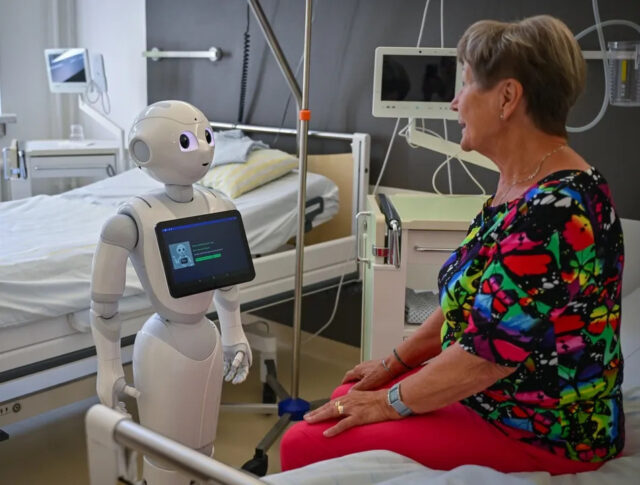
Artificial Intelligence in Elderly Care: Navigating Ethical and Responsible AI Adoption for Seniors

By David Mhlanga This paper delves into the critical intersection of ageing and the rapidly evolving field of artificial intelligence (AI). This exploration is anchored in the recognition of the unique potential that AI holds for enhancing the lives of seniors, while also acknowledging the complex ethical and practical challenges that accompany its adoption in elder care. The paper comprehensively examines how AI can revolutionize healthcare, assistive technologies, and social engagement for the elderly, offering solutions that promise increased independence,...

May 2026

The Rise of Assisted Living, Its Aging Population, and What It Means for Facilities and Oversight

Serving as a middle option between independent living and institutional care, assisted living is playing an increasingly important role in long-term services and supports (LTSS), with more older adults than ever living in assisted living communities. That growth has meant changing demographics, emerging challenges, and a greater focus on evolving oversight needs. Today, residents in assisted living communities are older and are more likely to have dementia, amplifying the need for appropriate direct-care staffing. Many of assisted living’s challenges, such...

Older people risk mental decline if they do long hours of caring, UK study shows

The stresses and strains of caring for someone for 50 hours or more a week leads to “accelerated cognitive decline” in middle-aged and older people, research shows. However, providing care for only five to nine hours a week has the opposite effect, boosting brain health so much that the benefits last until older age. Carers UK called the findings “extremely worrying” and said they highlight how long hours spent providing care raises the risk of social isolation and burnout. Dr Baowen Xue,...

April 2026

Australia. More than 3 million Australians over 65 to pay more for private health

More than 3 million Australians aged over 65 will have to pay hundreds of dollars more for their private health insurance per year, in a move the federal government argues will re-establish fairness between generations. In a major pre-budget speech at the National Press Club on Wednesday, Health Minister Mark Butler announced sweeping changes to the National Disability Insurance Scheme and aged care. As part of this, he revealed older Australians would no longer be given special treatment and would now have to...

US. Retirees are facing a $345,000 bill they never saw coming — and most aren’t prepared

Advances in medicine have extended the “golden years” for many retirees—also increasing the number of years retirement savings must support everyday living expenses. Those added years can carry a significant price tag in the form of rising healthcare costs. Recent studies suggest healthcare can become a six-figure retirement expense, even for people who do “everything right.” Yet planning lags. A recent D.A. Davidson survey of U.S. adults found that while 8 in 10 are concerned about healthcare costs in retirement,...

March 2026

The big squeeze on health care—how shifting demographics and geographical divide are reshaping policy

Our world is changing fast, and so are our healthcare needs. Demographic shifts—rapidly aging populations, falling birth rates, swift urbanization—along with an increasing non-communicable disease (NCD) burden are pushing our health systems to focus on chronic disease management and long-term elderly care. Furthermore, the diverse geographies of many countries exacerbate the disparities in health status, access, and outcomes between different locations, such as urban versus rural areas. These problems are particularly acute in low- and middle-income countries (LMICs), whose populations...

Global report identifies 6 trends redefining aging well — with takeaways for US senior living

Aging well increasingly is being defined not simply by longevity or the absence of disease, but by functional ability, social connection, emotional well-being and purpose, according to a white paper from the Global Wellness Institute’s Aging Well Initiative. The paper identifies six key trends shaping how older adults experience wellness, drawing on interviews with 18 experts across eight countries: the United States, Australia, Indonesia, Japan, India, Singapore, Thailand and the United Kingdom. The report, “What Is Happening with Aging Well? Views from...

January 2026

Aging populations are redefining the value of a healthy life year

Efficient, evidence-based resource allocation using quality-adjusted life years (QALY) is essential, especially as global life expectancy rises. A recent study published in Scientific Reports examines how considering age and country-specific demographic factors in QALY estimates can improve healthcare policy decisions and resource allocation. Concerns over increased healthcare costs due to the aging population Advances in medical technology and public health have led to rapidly aging populations worldwide, which contributes to rising healthcare costs and social burdens. By 2040, healthcare spending in Japan is...