January 2026

Swiss Life Holding AG: How a 165-Year Incumbent Is Rebuilding Wealth and Retirement for a Volatile Age

The New Urgency of Swiss Life Holding AG Retirement planning used to be boring. Then zero interest rates, inflation spikes, housing crises, and fragmented work lives turned it into a high?stakes puzzle that most people are failing to solve. In Europe, where demographic aging is accelerating and public pension systems are under strain, that puzzle is now an existential problem for households and a structural challenge for governments. Swiss Life Holding AG sits right at the center of that storm. Officially,...


Crypto and retirement: Why seniors are taking an interest in digital assets

Despite its unique volatility, cryptocurrency has recently expanded beyond blockchain exchanges. Now, cryptocurrency prices have found a place in exchange-traded funds (ETFs), investment portfolios, and perhaps most notably, retirement funds. Drawn by returns, accessibility, and diversification, Australians have begun to explore the potential of crypto as a supplement to traditional retirement strategies. Why would cryptocurrency prices appeal to retirees? Typically, retirees in Australia and around the world place an emphasis on assurances and stability. However, as the global financial market faces uncertainty and...

German dentists’ pension fund sues advisers after C$1.77B loss

A pension fund for more than 10,000 German dentists has launched legal action against its former auditor, an external adviser and several ex-managers after suffering investment losses of over €1.1 billion (about C$1.77 billion), according to reporting by Bloomberg and AwazLive. Versorgungswerk der Zahnärztekammer Berlin (VZB), which manages roughly €2.2 billion (C$3.55 billion) for dentists in Berlin, Brandenburg and Bremen, said the losses were significant enough to prompt a corruption probe by Berlin prosecutors. In legal filings, the fund alleges that...

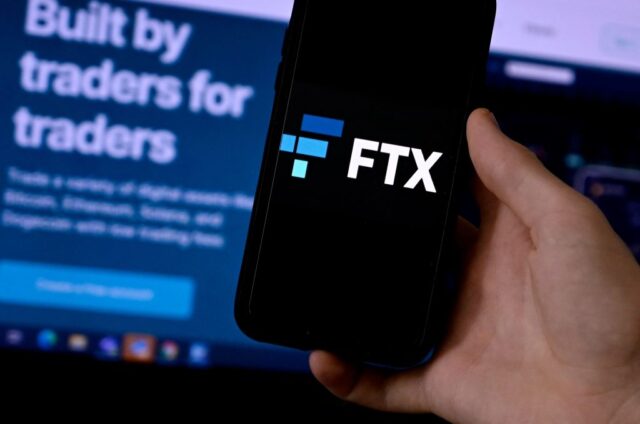
After FTX collapse, Canada’s pension giants swore off crypto — until now when they quietly started circling back

When the Ontario Teachers’ Pension Plan (OTPP) and Caisse de dépôt et placement du Québec (CDPQ) wrote down their multimillion-dollar stakes in the failed FTX exchange in 2022 (1), it marked a turning point in Canadian institutional investing (2). For most pension executives, the message was clear: Stay far away from crypto. Yet three years later, the tone is shifting. The world’s largest institutional investors — from BlackRock to Singapore’s GIC — are increasing exposure to tokenized assets and digital...

Global investment outlook: Navigating a complex landscape

From the impact of US trade tariffs to the continued growth of private markets, and from climate change investing headwinds to the artificial intelligence (AI) megatrend, there have been plenty of challenges and opportunities for investors to navigate over the past 12 months. Pensions Expert asked consultants and asset managers for their views on the continued dominance of US equities in investment portfolios, how to mitigate geopolitical risks, and whether private markets have been overdone. AI continues to dominate as a...

December 2025

Over half of UK savers relying on non-pension assets for retirement

Over half (57 per cent) of UK pension savers are building up retirement savings outside of their pension, with a heavy reliance on cash, raising concerns about long-term outcomes, research from Interactive Investor has revealed. The investment platform found that adults were saving for retirement outside of a pension, using a mix of cash savings, stocks and shares ISAs, buy-to-let property and other investments to build long-term wealth. While the trend points to broader engagement with retirement saving, the findings highlighted...

Dynamic asset allocation on the rise as pension plans face an era of controlled disorder

By Prof. Amin Rajan This question has come to the fore as the swirling clouds of geopolitical events have elevated the role of dynamic asset allocation (DAA). They have challenged the timehonoured primacy of strategic asset allocation (SAA), with fixed weights for different asset classes with long-term return targets. This rigid set-it/forget-it approach worked well in the longest bull run after the 2008 global financial crisis. Since 2022, however, concerted steep rises in interest rates by key central banks to curb...

State of OECD Pension Funds’ Climate Transition: Insights and recommendations from the Net Zero Finance Tracker

By Frederick Fabian, Claris Parenti, Maddy Taylor & Valerio Micale Unlike other institutional investors, which often focus on short-term performance, pension providers have a fiduciary duty to address long-term systemic issues and act in their beneficiaries’ best interests. In many jurisdictions, this obligation includes setting credible climate targets, implementing internal changes to strategy, governance, and process, and actively supporting the decarbonization of the real economy. Pension funds’ role in financing the climate transition is drawing sharper focus as the limits of...

Heterogeneous Institutional Investor Response to Firm Environmental Regulatory Risk

By Chunxiao Lu, Yuyang Zhang & Linxiang Ma This paper investigates whether institutional investors incorporate firm-level environmental regulatory risk into their portfolio decisions. We document substantial heterogeneity across investor types in their responses to changes in firm-level environmental regulatory risk. Long-horizon investors, such as banks, insurance companies, and pension funds, tend to tilt their portfolios toward stocks with higher environmental regulatory risk. In contrast, short-horizon investors, including investment advisors and mutual funds, reduce their holdings of these firms. These opposing...

TfL Pension Fund raises ESG allocation to 15.9% after exceeding net-zero target

The TfL Pension Fund has surpassed its interim net-zero target and increased its allocation to environmental, social and governance (ESG)-tilted investments to nearly 16 per cent, according to its latest report on sustainable investing. The fund reported a 58 per cent reduction in carbon emissions intensity as of 31 March 2025, relative to a 2016 baseline, exceeding its 55 per cent reduction target for 2030. Its long-term objective remains a 100 per cent reduction by 2045. At the same time, ESG-tilted investments...