November 2019

Switzerland. Aging in good health: The inequalities are widening

Life expectancy in Switzerland has been growing steadily for decades. But have these additional years been spent in good health or, on the contrary, do they only prolong the ills of an aging population? In an attempt to answer this question, researchers from the University of Geneva (UNIGE), Switzerland, collated data from the Swiss National Cohort (SNC) and the Swiss Health Surveys between 1990 and 2015, all within the framework of the "LIVES" National Centre of Competence in Research...

September 2019

The Social Protection Indicator for Asia: Assessing Progress

By Asian Development Bank This publication provides updates on Social Protection Indicators of 24 countries in Asia, with an analysis of 2015 data on social protection programs. It shows progress in expenditure, primarily driven by social insurance and coverage between 2009 and 2015. Spending on women has improved in several countries, yet others continued to favor the nonpoor over the poor, and men over women. The Social Protection Index---now the Social Protection Indicator---was developed by the Asian Development Bank...

August 2019

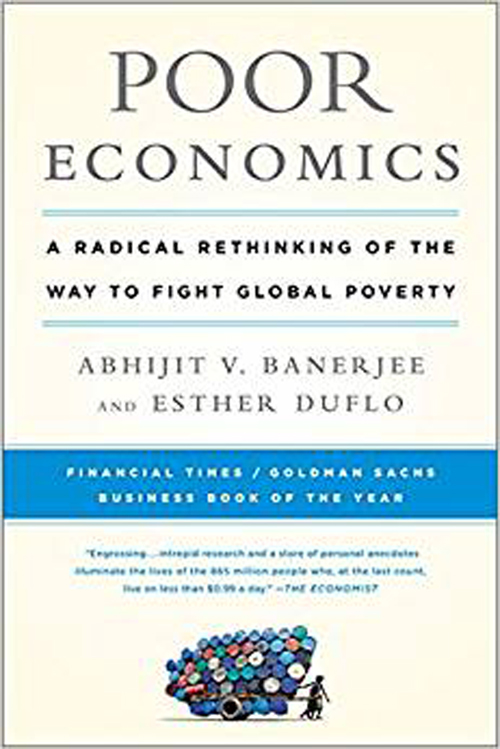
Poor Economics: A Radical Rethinking of the Way to Fight Global Poverty

By Ford Foundation International Professor of Economics and Director Poverty Action Lab Abhijit Banerjee, Esther Duflo Two practical visionaries upend the most common assumptions about how economics works in this gripping and disruptive portrait of how poor people actually live. Why do the poor borrow to save? Why do they miss out on free life-saving immunizations, but pay for unnecessary drugs? In Poor Economics, Abhijit V. Banerjee and Esther Duflo, two award-winning MIT professors, answer these questions based...

Income Inequality and Government Transfers in Mexico

 By Frederic Lambert, Hyunmin Park We analyze microdata from Mexico's survey on household income and expenditures (ENIGH) to study the evolution of income inequality in Mexico over 2004-16, identify its sources, and investigate how it was affected by government social policy. We find evidence of only a small decline in inequality over this period. The observed decline may be attributed to government transfers, notably targeted cash transfers (Prospera) and non-contributory pensions. In 2016, those two programs accounted for more...

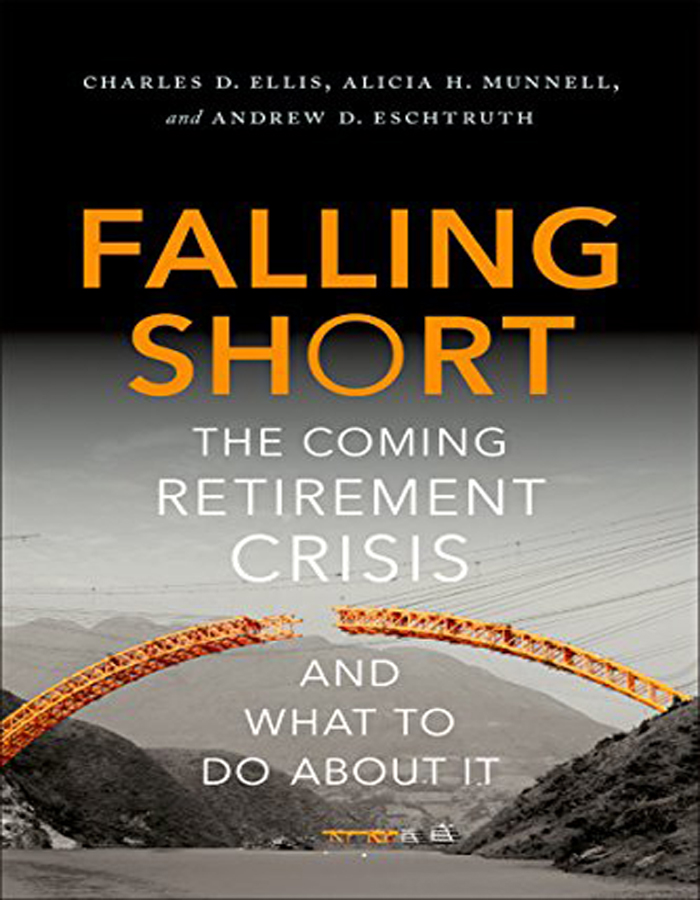
Falling Short: The Coming Retirement Crisis and What to Do About It

By Charles D. Ellis, Alicia H. Munnell, Andrew D. Eschtruth  The United States faces a serious retirement challenge. Many of today's workers will lack the resources to retire at traditional ages and maintain their standard of living in retirement. Solving the problem is a major challenge in today's environment in which risk and responsibility have shifted from government and employers to individuals. For this reason, Charles D. Ellis, Alicia H. Munnell, and Andrew D. Eschtruth have written this concise guide for...

May 2019

Will the Financial Fragility of Retirees Increase?

By Steven A. Sass Retirees have long been considered financially fragile. The notion that they are ill-equipped to absorb financial shocks is captured in the traditional trope that they live on fixed incomes. Going forward, retirees will get much less income from fixed Social Security and employer pensions, and much more from savings in 401(k) plans and individual retirement accounts (IRAs). These savings give retirees greater flexibility to respond to shocks. But tapping into their nest eggs comes at...

February 2019

Household Savings in Central Eastern and Southeastern Europe: How Do Poorer Households Save?

By Elisabeth Beckmann (Oesterreichische Nationalbank (OeNB)) Based on a survey of households in 10 Central Eastern European and Western Balkan countries, this paper presents new and unique evidence on which households have savings and how they save. The paper shows that the percentage of savers is low, and savings are frequently informal. Formal savings are dominated by bank savings, and participation in contractual and capital market savings is very low in comparison to high-income countries. Poor households are significantly less...

July 2018

UK. Rush to cash-in small pensions will leave thousands below ‘acceptable’ retirement income, warns Just Group

Cashing in small pension pots early to rely on State benefits in retirement could leave many thousands of people struggling to achieve an acceptable income in later life, suggests new analysis by Just Group. The warning comes following the publication of Minimum Income Standards (MIS) by the Joseph Rowntree Foundation (JRF) reflecting the public’s views on how much weekly income is needed to achieve a minimum acceptable standard of living in the UK today. The JRF’s 2018 report suggest the MIS...