March 2026

Pension and Entrepreneurship: Evidence from Sweden’s Transition from Defined Benefit to Defined Contribution

By Ai Jun Hou, Di Cui, Mingfa Ding, Yikai Han & Xiaoyang Li Sweden's 1999 pension reform-which replaced a defined-benefit (DB) regime with a notional defined-contribution (DC) scheme-changed incentives in ways that affect employees' career choice over the life cycle. We use Swedish administrative data and a difference-indifferences approach to study the impact of this reform on entrepreneurship. We find that entrepreneurial entry increases more after the reform among cohorts with greater exposure to the new DC pension system. The...

December 2025

European Financial Ecosystems. Comparing France, Sweden, UK and Italy.

By Stefano Caselli & Marta Zava The study examines the structure, functioning, and strategic implications of financial ecosystems across four European countries-France, Sweden, the United Kingdom, and Italy-to identify institutional best practices relevant to the ongoing transformation of Italy's financial system. Building on a comparative analysis of legislation and regulation, taxation, investor bases, and financial intermediation, the report highlights how distinct historical and institutional trajectories have shaped divergent models: the French dirigiste system anchored by powerful state-backed institutions and deep...

​Sweden’s FI launches probe into costly individual occupational pensions

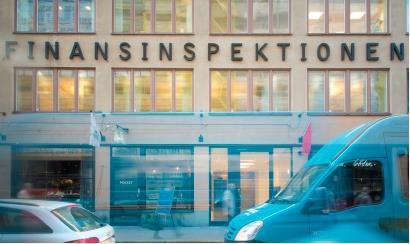
The Swedish financial watchdog is launching a new investigation into the cost of individual occupational pension products, after its government-mandated investment costs mapping exercise revealed these to be considerably more expensive than their collectively-agreed counterparts. The Swedish Financial Supervisory Authority (Finansinspektionen, FI) yesterday announced the probe as it published a 50-page report into fees and distribution in the Swedish mutual funds market. FI said: “Customers of big banks often pay more in fund fees, yet 85% of private savings are made...

July 2025

Swedish pensions reform efforts must heed rise of anonymous owners, says AMF

AMF, Sweden’s second biggest occupational pension fund, has issued a stark warning about the negative effects of the rise of huge passive investment funds on corporate governance in the Nordic country, and said legislators must take this into account when shaping pension reforms. Anders Oscarsson, head of equity and stewardship at the SEK850bn (€76.3bn) pensions institution, said large index funds were increasingly dominating as owners of Swedish companies — a development he said posed a threat to the Swedish ownership...

June 2025

Swedish pension fund AP7 blacklists Tesla, has sold entire stake

Swedish pension fund AP7 said on Friday it has blacklisted and sold all its shares in U.S. electric vehicle maker Tesla (TSLA.O), opens new tab, citing violations of union rights in the United States. "AP7 has decided to blacklist Tesla due to verified violations of labor rights in the United States," the pension fund said in a statement. Make sense of the latest ESG trends affecting companies and governments with the Reuters Sustainable Switch newsletter. Sign up here. "Despite several years of dialogue with Tesla,...

Sweden. Market turbulence is evident in insurance and occupational pension companies’ capital investments

During the first quarter of 2025, the market value of insurance and occupational pension companies' investment assets decreased to SEK 7,646 billion, from SEK 7,836 billion at the end of the previous quarter. Compared to the first quarter of 2024, the market value has increased 1,5 percent from SEK 7,530 billion. The quarter in brief ”Market turbulence over the past quarter has led to lower capital investments, especially in shares”, says Malcolm Svensson Rothmaier, economist at Statistics Sweden. In the...

January 2025

​Sweden. KPA calls for action on pensions investment in local climate adaptation

KPA Pension, which manages pensions for local authorities, said action needs to be taken to improve the framework for pension funds to invest in climate change preparedness in Sweden, arguing that most scheme members favour their savings being invested in that way. The SEK300bn (€26bn) pension fund, a subsidiary of pensions and insurance group Folksam, published a report on Friday on Sweden’s need to undergo the green climate transition, adapt society to a changing climate and to build civil preparedness...

July 2024

Climate Polarization and Green Investment

By Anders Anderson & David T. Robinson We build a nationally representative sample of retirement savers in Sweden to study how climate polarizaton affects individual investment decisions. After the record-breaking heat wave of 2018, respondents in regions with strong support for a right-wing, anti-climate party grow less concerned about climate change, while respondents outside these regions grow more concerned. Those growing more concerned rebalance their retirement portfolios toward climate-friendly mutual funds; those growing less concerned rebalance out of these funds,...

June 2024

​Sweden eases rules on occupational pension payout phase, allowing pauses

Sweden’s government has decided to introduce more flexible rules for the payment of occupational pensions — following agreement on the issue by the cross-party pensions group last October. During the first five payment years, it will be possible for individuals to pause payments and extend the payment period, according to an announcement from the ministries of finance and social affairs last week. Elisabeth Svantesson, the Swedish finance minister, said: “Sweden’s pensioners should be able to choose how they want to set...

May 2024

Intergenerational redistribution in a pay-as-you-go pension system

By Jacob Lundberg This study provides a comprehensive analysis of the generational wealth transfer within Sweden’s public pay-as-you-go pension system introduced in 1960. Using extensive administrative registers, the paper quantifies the contributions made and benefits received by each birth cohort. The findings reveal a substantial fiscal imbalance favouring the initial generation (born in the early 20th century), who received a net gain of $1.5 trillion in today’s present value, equivalent to up to 13% of their discounted lifetime income. This...