February 2022

Overpaying and Undersaving? Correlated Mistakes in Retirement Saving and Health Insurance Choices

Overpaying and Undersaving? Correlated Mistakes in Retirement Saving and Health Insurance Choices

By Leora Friedberg & Adam Leive Not everyone makes wise financial choices. A large body of research documents behavior inconsistent with well-informed consumers maximizing their expected utility of consumption. It remains unknown, however, whether such behavior is correlated across domains. This paper uses two novel datasets to test whether the quality of health insurance and retirement saving decisions are correlated. Using administrative panel data from a large employer, we find that people who overpay for health insurance by choosing a...

How the Pandemic Altered Americans’ Debt Burden and Retirement Readiness

How the Pandemic Altered Americans’ Debt Burden and Retirement Readiness

By Andrea Hasler, Annamaria Lusardi & Olivia S. Mitchell This paper analyzes Americans’ perceptions of being debt constrained. We focus on which population subgroups reported feeling most debt constrained, how this perception was impacted by the COVID-19 pandemic, and how it relates to financial literacy and retirement readiness. To this end, we analyze two datasets, namely the 2020 and 2021 TIAA Institute-GFLEC Personal Finance Index files (P-Fin Index). The evidence shows that, prior to and during the pandemic, one in...

Assessing Chile’s Pension System: Challenges and Reform Options

By Christopher Evans & Samuel Pienknagura Chile’s pension system came under close scrutiny in recent years. This paper takes stock of the adequacy of the system and highlights its challenges. Chile’s defined contribution system was quite influential when introduced, and was taken as an example by other countries. However, it is now delivering low replacement rates relative to OECD peers, as its parameters did not adapt over time to changing demographics and global returns, while informality persists in the labor...

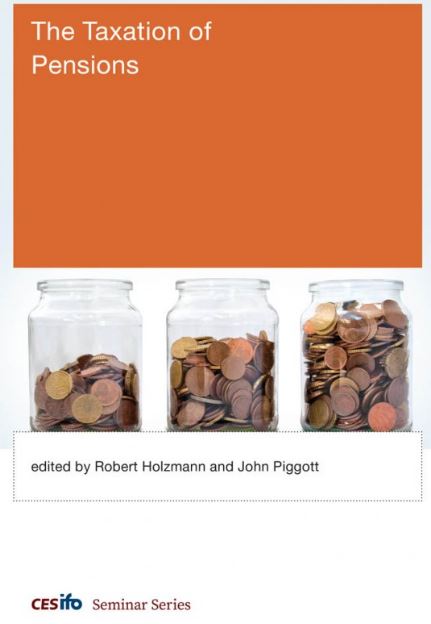
The Taxation of Pensions

By Robert Holzmann & John Piggott Theoretical and policy perspectives on the taxation of pension, viewed in an international context. Policy makers and academic researchers have been preoccupied in recent decades with the design of pension schemes and effective pension system reform. Relatively little attention has been given to the taxation of pensions and, more broadly, the provision of retirement income. In this book, experts from a range of countries explore the interconnection. Their contributions are especially timely, given recent demographic...

Low Demand for Reverse Mortgages in Canada: Price, Knowledge or Preferences?

By Admin SSRN au/at CIRANO, Ismael Choiniere Crevecoeur & Pierre-Carl Michaud High borrowing costs, limited knowledge and preferences could explain why few Canadians purchase reverse mortgages, an asset decumulation product that is appealing to those who are house-rich but cash-poor. In this paper, we first use an asset pricing model to calculate the actuarial fair costs of guarantees built into reverse mortgage products in Canada and compare those estimates to prevailing interest rates in the market for these products. We...

January 2022

Managing Misbehavior: Rational Choice in an Uncertain Retirement

By Rene Martel, Jennifer Gongola, sean klein, Avi Sharon Behavioral science has helped encourage better behaviors for many investors who are accumulating savings for retirement. This paper investigates the application of behavioral science to decumulation to help investors make better choices and maintain quality of life in retirement. We conducted a proprietary research study, collecting more than 750 responses from affluent and high-net-worth investors in the United States age 55 and older. The results identify key behavioral influences linked to...

October 2021

Benchmarking Retirement Income Systems Around the World: Which Countries Rank Highest and Why?

By David Knox The variety of retirement income systems around the world is great, with varying dependencies on public-sector pensions, funded private pensions, and savings outside these formal systems. But which are producing the best outcomes? And which are sustainable into the future, as many countries face the effects of a significantly aging population? The Melbourne Mercer Global Pension Index considers more than 40 indicators in calculating an index value for the systems in 16 countries covering more than half...

Gender Inequality in Retirement Savings

By Dr David Knox, Michael Rice and Richard Dunn Over the last twenty years, there has been increasing interest in the reasons for the gap between the average male and female retirement balances. This gap, known as the gender pension gap1, is characterised by the fact that, on average, women tend to live on a lower income in retirement than men. It is usually measured by combining all sources of retirement income, whether public or private, pay-as-you-go or funded. In this...

Temporal Reframing of Recurring Savings Reduces Perceived Pain and Helps Those with Lower Financial Literacy to Save

By Stephen Shu Steve Thomas & David A. Smith While assessments of the Gig Economy vary in terms of size, growth, and heterogeneity, most studies suggest that this segment of the economy is sizeable, growing, and diverse in terms of types of work. Some concerns in the literature include both the present and future welfare of workers in the Gig Economy. More granular, temporal reframing of savings (e.g., save $5 a day versus $150 a month) has been shown to...

September 2021

Do Tax Deferred Accounts Improve Lifecycle Savings? Experimental Evidence

By John Duffy, Yue Li Tax deferred accounts (TDAs) are an increasingly popular method of saving for retirement, and have become common across many developed countries. Nevertheless, it is unclear whether TDAs actually improve a household's lifecycle savings behavior and retirement preparedness because it is difficult to perform a counterfactual analysis. Households always have other means of savings so there is no guarantee that a TDA, with its inflexible restriction that funds cannot be drawn until retirement, will be attractive...