December 2025

Retirement by the Numbers: How participant behavior and glide path design can drive stronger retirement outcomes

By JPMorgan  How are participants interacting with their defined contribution retirement plans, and what are the implications for target date fund glide path design? For more than two decades, J.P. Morgan Asset Management has closely examined this question, analyzing real-world saving and spending patterns to provide actionable insights into how to help more people achieve the retirement they’ve earned. Retirement by the Numbers offers a unique view of how participants save, invest and spend throughout their working lives and retirement, leveraging...

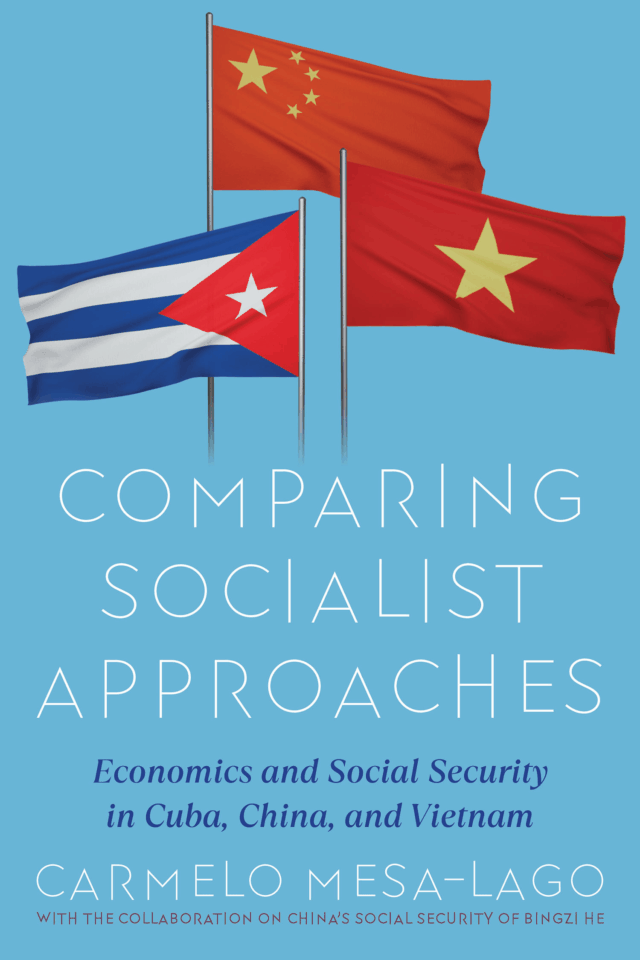
Comparing Socialist Approaches: Economics and Social Security in Cuba, China, and Vietnam

By Carmelo Mesa-Lago In Comparing Socialist Approaches, Carmelo Mesa-Lago examines the two main socialist models across Cuba, China, and Vietnam to compare central planning and socialist markets. Under the Cuban central plan, large state enterprises have been unable to generate economic growth, even with mild structural market reforms and a small controlled private sector. In the Sino-Vietnamese model of a socialist marketplace, dynamic private enterprises of all sizes, together with large state enterprises, operate under a decentralized plan with state regulation and...

European Financial Ecosystems. Comparing France, Sweden, UK and Italy.

By Stefano Caselli & Marta Zava The study examines the structure, functioning, and strategic implications of financial ecosystems across four European countries-France, Sweden, the United Kingdom, and Italy-to identify institutional best practices relevant to the ongoing transformation of Italy's financial system. Building on a comparative analysis of legislation and regulation, taxation, investor bases, and financial intermediation, the report highlights how distinct historical and institutional trajectories have shaped divergent models: the French dirigiste system anchored by powerful state-backed institutions and deep...

November 2025

Pensions at a Glance 2025: OECD and G20 Indicators

By Organisation for Economic Co-operation and Development The 2025 edition of Pensions at a Glance highlights the pension reforms undertaken by OECD countries over the last two years. It includes a special chapter focusing on pension differences between men and women. It shows recent and projected trends in the pensions of women relative to those of men in OECD countries, analyses the key drivers of the gender pension gap, and reviews the pension rules that directly or indirectly affect gender disparities in...

Global pension trends: What to expect in 2026

By Julien Halfon  Pension reforms are at an inflection point as UK and Dutch pension systems enter 2026 with high funding ratios, regulatory clarity, and the scope to re-risk in controlled ways. We expect much wider adoption of cash-flow driven investing strategies for defined benefit plans and some re-risking for the forthcoming Dutch Collective Defined Contribution system. The high equity tolerance of US defined contribution plans is broadening, while allocations to private markets, particularly private credit and infrastructure, continue to...

The Nucleus UK Retirement Confidence Index 2025

By Nucleus Retirement is one of the most significant milestones in life, yet for many people across the UK it carries as much uncertainty as it does anticipation. Our Retirement Confidence Index offers a unique, in-depth look at attitudes, expectations, and concerns surrounding retirement across the UK at different life stages. Whether you're refining your client communications or shaping your advice proposition, these insights can help you stay ahead of your clients' expectations and build deeper trust. Surveying over 4,300 UK adults,...

Digital finance and retirement planning: The role of information cost reduction and trust enhancement channels

By Liang Liu & Zhen Ju With the rapid development of digitalization, retirement decisions are increasingly being mediated by digital finance platforms, which help individuals in effectively managing and planning their retirement. Existing literature primarily focuses on the impacts of financial literacy, risk attitudes, and awareness of retirement goals. Using data from the 2015 China Household Finance Survey, we investigate the effect of digital finance on household retirement planning. Our analysis reveals that digital payment lowers the acquisition cost of pension finance...

How America Retires: Turning complexity into clarity

By Vanguard This year, roughly 4.2 million people will turn age 65.* These individuals, collectively the so-called silver tsunami, are preparing to leave working life behind and enter a fulfilling and rewarding retirement. That’s exactly why we’ve created How America Retires, Vanguard’s new report that spotlights behavioral trends, insights, and plan design best practices to help today’s retirees make the life-changing transition from saving their money to spending it. Get the report here

Household financial literacy and retirement planning in rural China

By Yuting Qian, Weiqiang Tan & Jingbo Wu Amid the prevailing importance of discussing rural villagers' retirement in China, this study analyzes the relationship between the financial literacy of rural residents and their plans for retirement. Using in-depth survey data from the Greater Bay Area, this work examines the region's demographic structures and presents the different levels of rural residents' financial literacy. The findings are robust and indicate a positive correlation between financial literacy and retirement planning. The examination also reveals the moderating...

October 2025

Behavioral Biases of Financial Planners: The Case of Retirement Funding Recommendations

By Vishaal Baulkaran & Pawan Jain We examine whether financial planners display common behavioral biases and whether these biases affect their recommendations for various home equity release options to fund retirement income. First, we show that different factors explain different behavioral biases. Second, we show that different behavioral biases affect financial planners’ comfort level and recommendations for various options to fund extra income during retirement. For instance, female planners, planners with advanced degrees and those from non-bank institutions display less...