January 2026

Access to Pensions, Old-Age Support, and Child Investment in China

By Xiaoyue Shan & Albert Park This work studies how access to public pensions affects old-age support and child investment in traditional societies. Guided by predictions from an overlapping generations model, we analyze the influences of a new pension program in rural China, using a difference-in-differences approach. We find that the program crowds out transfers from working-age adults, especially men, to their elderly parents. Interestingly, the impact on child investment significantly differs by child gender. While adult parents increase educational investment...


The future of public pension provision in the UK: challenges and trade-offs

By Jonathan Cribb , Carl Emmerson & Heidi Karjalainen The UK state pension system faces significant challenges given the country’s ageing population, but at the same time it is crucial for retirement finances: state pensions make up on average almost half of income for recently retired households. Reforms coming into force in 2010 and 2016 have increased universality, and most future pensioners will receive a full (flat rate) state pension. Policy-makers seeking to limit the cost of the system have...

December 2025

Cananea Mine Strike Ends After 18 Years, Agreement Reached

After nearly two decades, the labor conflict at the Cananea mine has come to an end, as miners from Section 65 of Mexico’s National Miners’ Union unanimously approved a final agreement providing long-awaited compensation, access to social security and pensions, and a comprehensive resolution for more than 650 workers and their families. According to Section 65, the assembly unanimously endorsed the agreement, which followed negotiations involving the union, the federal government, the Ministry of the Interior, the Ministry of Labor and...

Why is inequality so high in Latin America? An interview with Francisco H. G. Ferreira

Economic inequality in Latin America has historically been – and is currently – higher than in much of the rest of the world. For a time, it seemed that large pro-poor programmes, particularly conditional cash transfers (CCTs) – conditional mainly on attending schools and health visits – made some dent on inequality. Such CCTs were pioneered in Mexico, though it has now discontinued that policy, and have been pursued in a major way in Brazil, Colombia, Chile and elsewhere....

Mexico Retirement Funds Log Record MX$1.12 Trillion Returns

Retirement savings for Mexican workers posted historic returns in 2025, as Administrators of Retirement Funds (Afores) recorded total gains—or plusvalías—of MX$1.12 trillion from January through November. According to data from the National Commission for the Retirement Savings System (CONSAR), this represents the highest level ever recorded for the period. Despite the record cumulative performance, the pace of growth in Afores’ returns moderated in November compared with previous months. Positive returns for the month totaled MX$32.608 billion, a 77% decline from...

Retirement by the Numbers: How participant behavior and glide path design can drive stronger retirement outcomes

By JPMorgan  How are participants interacting with their defined contribution retirement plans, and what are the implications for target date fund glide path design? For more than two decades, J.P. Morgan Asset Management has closely examined this question, analyzing real-world saving and spending patterns to provide actionable insights into how to help more people achieve the retirement they’ve earned. Retirement by the Numbers offers a unique view of how participants save, invest and spend throughout their working lives and retirement, leveraging...

Dynamic asset allocation on the rise as pension plans face an era of controlled disorder

By Prof. Amin Rajan This question has come to the fore as the swirling clouds of geopolitical events have elevated the role of dynamic asset allocation (DAA). They have challenged the timehonoured primacy of strategic asset allocation (SAA), with fixed weights for different asset classes with long-term return targets. This rigid set-it/forget-it approach worked well in the longest bull run after the 2008 global financial crisis. Since 2022, however, concerted steep rises in interest rates by key central banks to curb...

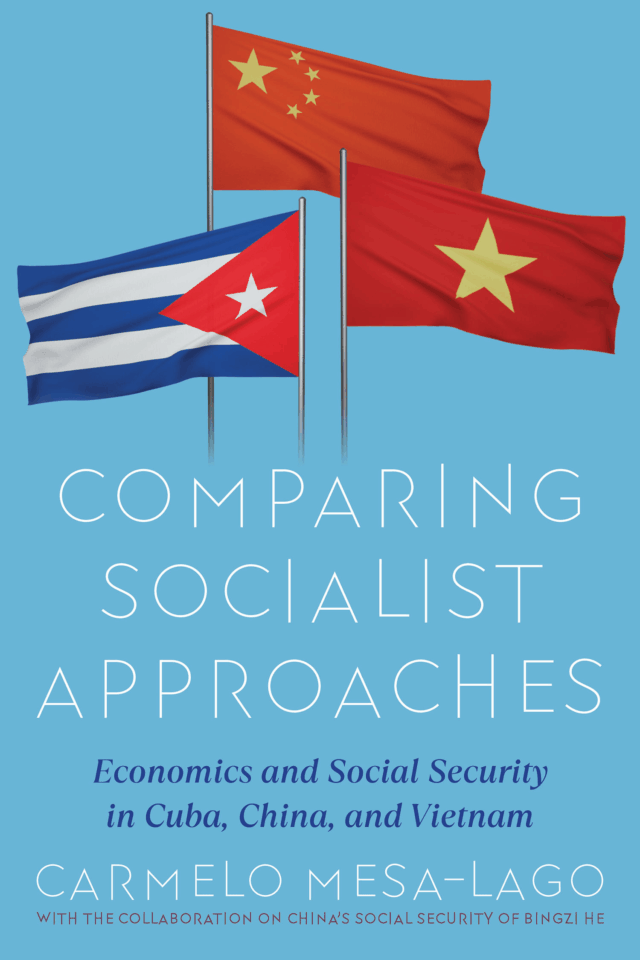
Comparing Socialist Approaches: Economics and Social Security in Cuba, China, and Vietnam

By Carmelo Mesa-Lago In Comparing Socialist Approaches, Carmelo Mesa-Lago examines the two main socialist models across Cuba, China, and Vietnam to compare central planning and socialist markets. Under the Cuban central plan, large state enterprises have been unable to generate economic growth, even with mild structural market reforms and a small controlled private sector. In the Sino-Vietnamese model of a socialist marketplace, dynamic private enterprises of all sizes, together with large state enterprises, operate under a decentralized plan with state regulation and...

State of OECD Pension Funds’ Climate Transition: Insights and recommendations from the Net Zero Finance Tracker

By Frederick Fabian, Claris Parenti, Maddy Taylor & Valerio Micale Unlike other institutional investors, which often focus on short-term performance, pension providers have a fiduciary duty to address long-term systemic issues and act in their beneficiaries’ best interests. In many jurisdictions, this obligation includes setting credible climate targets, implementing internal changes to strategy, governance, and process, and actively supporting the decarbonization of the real economy. Pension funds’ role in financing the climate transition is drawing sharper focus as the limits of...

Heterogeneous Institutional Investor Response to Firm Environmental Regulatory Risk

By Chunxiao Lu, Yuyang Zhang & Linxiang Ma This paper investigates whether institutional investors incorporate firm-level environmental regulatory risk into their portfolio decisions. We document substantial heterogeneity across investor types in their responses to changes in firm-level environmental regulatory risk. Long-horizon investors, such as banks, insurance companies, and pension funds, tend to tilt their portfolios toward stocks with higher environmental regulatory risk. In contrast, short-horizon investors, including investment advisors and mutual funds, reduce their holdings of these firms. These opposing...