December 2025

8 ways countries with aging populations are reshaping the economy

Across many advanced economies, falling birth rates and rising life expectancy are reshaping labor markets, public finances, and growth assumptions faster than policymakers expected. What once unfolded over generations is now compressing into decades, leaving less time to adapt. The economic consequences are structural. Smaller working-age populations limit output and strain employers. Larger retiree populations increase spending on pensions and healthcare. Tax bases narrow just as public costs rise. These forces interact, reinforcing slower growth rather than canceling each other...
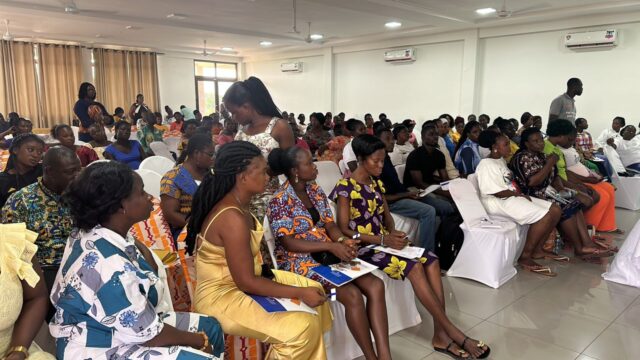

Ghana. Rethinking Pensioners’ Advocacy in Ghana: A New Model of SSNIT Pensioners’ Association

Ghana’s pensioner population is steadily growing. With improved life expectancy and decades of formal employment feeding into the Social Security and National Insurance Trust (SSNIT), retirees today number about two hundred and fifty thousand, if not more. Yet paradoxically, this expanding demographic, arguably one of the most vulnerable and policy-affected groups remains one of the least effectively represented in national decision-making. For decades, the National Pensioners Association (NPA) has been the most visible body claiming to speak for pensioners, particularly...

Luxembourg’s Pension Outlook: Strong Forecasting Today, Hard Reform Choices Ahead

A study on the IMF's December 2025 Technical Assistance Report on Luxembourg's pension projections offers a detailed examination of how reliably the country has been forecasting the financial future of its public pension system. Prepared by the International Monetary Fund's Fiscal Affairs Department in cooperation with Luxembourg's General Inspectorate of Social Security (IGSS), the national statistical institute STATEC, and within the EU framework coordinated by the Ageing Working Group (AWG), the report reflects a collaborative, evidence-based effort to assess...

US Workforce Is Aging Fastest in These Industries

The U.S. workforce is aging, and workers who are 55 or older have been the fastest-growing age group in the labor force for more than two decades, according to new research by the U.S. Census Bureau. Those aged 55 or older made up almost a quarter (24 percent) of the U.S. workforce in 2022, which was up from 10 percent in 1994. The data also revealed which industries have greater concentrations of older workers than others. Why It Matters There is growing concern about America's...

Adequacy and Sustainability of Pensions

By Commission European Pensions are the main source of income for older people in Europe, coming mostly from 'pay-as-you-go' public schemes. Retired people drawing a pension are a significant and — due to demographic ageing — a growing part of the EU population (about 124 million, or a quarter of the total population1). European pension systems are facing the dual challenge of remaining financially sustainable and being able to provide Europeans with an adequate income in retirement. The key purpose of...

Japan’s Aging Workforce: Determinants and Outlook

By Sagiri Kitao & Nozomi Takeda This paper examines recent trends in the Japanese labor market, with a particular focus on the elderly workforce. Japan's elderly employment rates are notably high compared to other OECD countries and have increased significantly over the past two decades. To investigate the factors that affect the employment of old individuals, we develop a structural life-cycle model with consumption-saving decisions and endogenous labor supply in both intensive and extensive margins. The model is calibrated to...

Trump said he’s looking into an Australian-style retirement program for the U.S.

The Trump administration is looking Down Under for inspiration on how to improve the United States’ retirement savings system. President Donald Trump on Tuesday said at the White House that his administration is looking into an Australian-style retirement program. “We’re looking at it very seriously,” Trump said. “It’s a good plan. It’s worked out very well.” Australia’s primary retirement savings program — known as “superannuation” — might have caught the attention of Washington officials. How superannuation works Superannuation, or “super” for short, is Australia’s...

Is the world ageing out of interest rates?

From global rate hikes to political pressures, central banks can’t stay out of the news these days. But these headlines overlook a growing challenge for central banks: With the share of the population aged 65 or over set to nearly double by 2054, their policy tools may become less effective. Interest rates have long been a key instrument of monetary policy, used much like car pedals, with cuts made to accelerate economic activity and hikes to slow it down. Historically,...

OECD Warns Mexico’s New Pension Fund Lacks Long-Term Stability

The Organisation for Economic Co-operation and Development (OECD) has raised concerns about the long-term financing of Mexico’s Pension Fund for Well-being (FPB), warning that the program depends on temporary resources that may not be sustainable. In its Pensions at a Glance 2025 report, the OECD noted that the FPB is funded through various sources, many of which involve one-time transfers. As a result, “it is not clear how the financing measures planned for this complement will be able to cover...

Scientists identify 4 key turning points for your brain as you age

It’s no secret that our brains change as we age. The ease with which we form new connections—whether learning a language or picking up a new skill—shifts throughout life. But scientists are now showing just how dramatic and how patterned those shifts really are. A new study from the University of Cambridge has identified five distinct phases of brain development across the human lifespan. The phases are marked by four turning points: ages nine, 32, 66, and 83, where brain rewiring shifts....