August 2025

Analysis: The US$400 trillion global retirement gap

By Paul Mackintosh   In a recent discussion with the World Economic Forum (WEF), Yie-Hsin Hung, chief executive officer of State Street Investment Management, addressed the global retirement savings gap, estimated to have hit some US$50 trillion ten years ago and forecast to reach around $400 trillion by 2050. The US is expected to account for 33% of the $400 trillion, China, 30%, and India, 20%. In the US, those who are 45- 60 years old or Generation X save on average around...


China’s pension system needs an overhaul because it is neither fair nor sustainable

By Zhou Xin Mainland China’s pension system has again become an issue of debate after the Supreme People’s Court ruled that any private agreement between employers and employees to evade payment of retirement funds was invalid. While the legal interpretation reiterated existing laws and regulations, it struck a nerve with the population and triggered doubts about the pension system’s fairness and sustainability. China’s pay-as-you-go system, which requires workers to contribute funds into a state-managed pool to pay for their retirement, essentially serves as a...

China’s consumption weighed down by weak expectations

China’s economy registered a respectable GDP growth rate of 5.3 per cent in the first half of 2025. Despite US President Donald Trump’s tariff war, China’s exports grew by 7.3 per cent and contributed more than one-third of the first half of the year’s growth. But domestic demand remains weak and prices are still falling. The conventional wisdom identifies weak consumption as the culprit. The Chinese authorities have prioritised boosting household consumption. A 200 billion RMB (US$28 billion) programme was...

China’s GDP could slow by more than half in the next 30 years due to population shrinking

China’s long-term economic growth is at risk owing to a shrinking labor force and rapidly aging population, according to Oxford Economics. The country’s potential output growth could fall below 2% by the 2050s, as low birth rates and a rising dependency ratio strain productivity and public finances. While developed nations like the U.S. may buffer this with immigration, China and others face tougher challenges in sustaining growth and managing social support systems. China may be the only nation that could rival...

July 2025

China’s New Cash Plan to Tackle Birth Rate Threat

China plans to introduce new nationwide cash incentives for families with newborn babies in an effort to boost the country's declining birth rate and ensure long-term economic growth. Why It Matters China ended its decades-long one-child policy in 2016, but the country's fertility rate continued to decline for seven years, despite a raft of government policies. Officials fear that the demographic shift could have wide-ranging effects on the world's second-largest economy in the years to come. While the fertility rate last year bucked...

Germany’s 34.1 billion euros pension gives mandate to China stock fund

A German pension fund has tapped a Chinese firm’s Hong Kong arm to help it invest in local stocks, in a rare move among global allocators that have been cautious about gaining exposure to the nation’s equities. KZVK, which manages 34.1 billion euros (S$51 billion), gave US$50 million to Fullgoal Asset Management (HK) in the second quarter, according to sources with knowledge of the matter. The mandate is to invest in Chinese equities listed in Hong Kong, the mainland and...

May 2025

China steps up support for social participation of seniors amid population aging

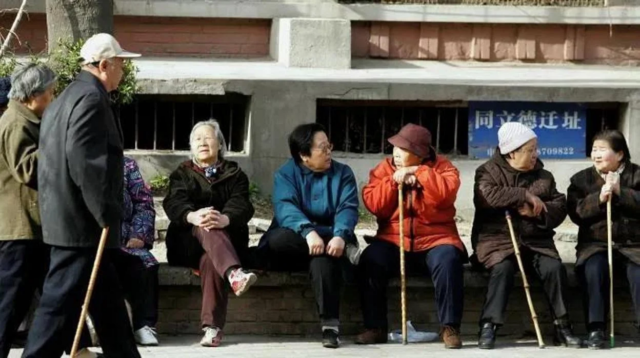
From promoting volunteer service and expanding lifelong learning opportunities to developing senior-friendly tourism offerings, China is taking proactive steps to enhance social engagement among the elderly and support their pursuit of active, meaningful lives. These measures, laid out in a guideline released recently by 19 government departments, came as the country grapples with a rapidly aging population. Home to the world's largest elderly demographic, China had over 310 million people aged 60 and above by the end of 2024, accounting for...

The vision of younger-seniors-based elderly care in rural China: based on population aging predictions from 2020 to 2050

By Haojian Dou, Cheng Wang, Guishan Cheng, Xiaoyan Lei & Shuang Xu  Population aging is an irreversible and challenging global trend. Factors that worsen it in rural areas include the outflow of young adults, lack of medical resources, and uneven economic development. Based on projections of rural population aging trends in China from 2020 to 2050, this article explores the growth trends and spatial heterogeneity of elderly populations in rural areas. The results indicate that from 2020 to 2050, the...

China. Eld­erly patients to get improved clin­ical care

China plans to build more clin­ics spe­cial­iz­ing in geri­at­rics at major hos­pit­als and strengthen their cap­ab­il­it­ies as part of broader efforts to address the needs of a rap­idly aging soci­ety, accord­ing to a recent guideline released by the National Health Com­mis­sion. The updated guideline on the estab­lish­ment and man­age­ment of clin­ics for eld­erly patients, issued on Thursday, replaces an earlier ver­sion from 2019. It man­dates that hos­pit­als in the upper two tiers of the coun­try’s three-tier hos­pital sys­tem estab­lish such clin­ics...

No one wins in a U.S.-China trade war, Milken speakers say

The standoff between the U.S. and China over trade and tariffs presents enormous risks for the global economy, with implications for combatting climate change, nuclear weapons security, and for the development of international standards for artificial intelligence, speakers said May 6 at the Milken Institute Global Conference 2025 in Beverly Hills, Calif. “We are tearing apart an international trade regime that served our country and the world very well," Robert Rubin, who served as secretary of the Treasury in the...