June 2025

Japan’s Population Crisis Reaches Tipping Point

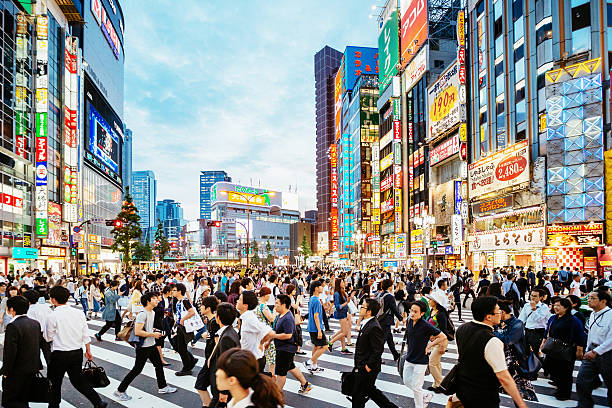
In 2024, Japan recorded only 686,061 births—the lowest number since records began in 1899. This marks a 5.7% decline from the previous year and the ninth consecutive annual drop. The fertility rate also hit a record low of 1.15 children per woman, far below the 2.1 needed for population stability. The steady decline in the number of births has become a defining feature of Japan’s demographic landscape, raising deep concerns about the country’s ability to sustain its population. Each year, the...

April 2025

Aging Nation: The Alarming Shift in Japan’s Demographic Landscape

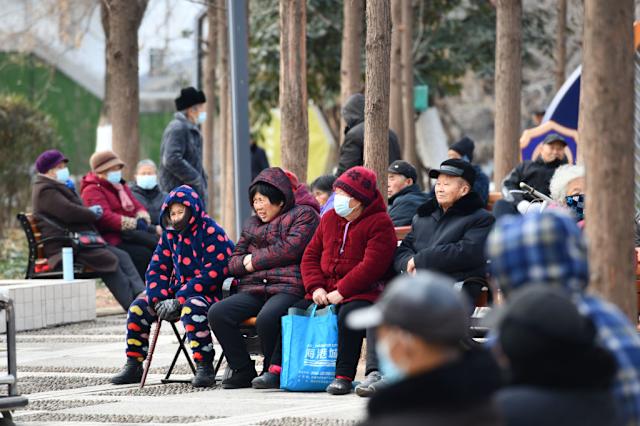
Japan faces a demographic shift, with a rapidly aging population and a 14-year trend of population decline. Japan’s total population stands at 123.8 million, a decrease of 550,000 from the previous year. Individuals aged 75 and over now constitute 16.8 percent of the population, while those under 15 years old make up only 11.2 percent. The population decline is contrasted by an increase in foreign residents for the third consecutive year. Migration provides a counterbalance to the declining...

March 2025

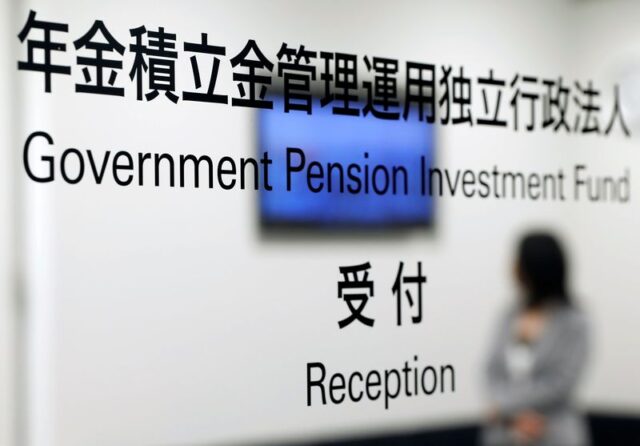
Japan’s $1.7 Trillion Pension Fund Offers New Backing to ESG

Japan’s $1.7 trillion Government Pension Investment Fund issued new guidelines backing sustainability-related investments as crucial to long-term returns. The fund, one of the world’s largest pensions, sees managing environmental and social issues as fundamental to its strategy, GPIF said Monday in a new policy document — rejecting the shift by other asset managers to downgrade or remove green commitments. Read more @

How one of Japan’s largest insurers is pivoting to serve an aging population

Sompo Holdings, a leading global insurance provider, is undergoing a significant transformation under Group CEO Mikio Okumura. The company, with operations in 28 countries, has restructured into two main segments: Sompo Property and Casualty (P&C) and Sompo Wellbeing. “The integration between Sompo Japan, Sompo International, we hope they can improve resilience. They can utilize balance sheets wisely, so they can improve risk-taking capability,” Okumura told CNBC’s Christine Tan in the latest episode of Managing Asia. Okumura hopes the restructuring will help the company to compete...

February 2025

AI robots may hold key to nursing Japan’s ageing population

Recently in Tokyo an AI-driven robot leaned over a man lying on his back and gently put a hand on his knee and another on a shoulder and rolled him onto his side -- a manoeuvre used to change diapers or prevent bedsores in the elderly. The 150-kg (330 lb) artificial intelligence-driven humanoid robot called AIREC is a prototype future "caregiver" for Japan's rapidly ageing population and chronic shortage of aged-care workers. "Given our highly advanced ageing society and declining births,...

January 2025

Household Saving in Japan: The Past, Present, and Future

By Charles Yuji Horioka This paper explores the determinants of the level of, and trends over time in, Japan’s household saving rate, with emphasis on the impact of the age structure of the population, and makes projections about future trends therein. The paper finds that Japan’s household saving rate has not always been high either absolutely or relative to other countries and that it was only during the 1961-86 period that it exceeded 15%. Past and future trends in Japan’s...

Japan to have more part-timers join employee pension program

Japan plans to have a wider range of part-time workers join the kosei nenkin employee pension program by changing some rules, sources have said. Currently, companies with 51 or more employees must have their part-time workers join the kosei nenkin program, which pays benefits on top of those paid under the basic pension program providing universal coverage. The government plans to lower the corporate size threshold to 21 employees in October 2027 and scrap it two years later. The government sees the need to...

Japan’s GPIF-commissioned report finds gaps in infrastructure assets data

Fund managers’ current data reporting practices for infrastructure assets do not provide Japan’s Government Pension Investment Fund and other asset owners with adequate information to measure fair value and manage risks in their portfolios, a report commissioned by the pension fund found. Tokyo-based GPIF had ¥252.86 trillion ($1.61 trillion) in assets as of Sept. 30. Money managers that follow ethical guidance under the Global Investment Performance Standards are expected to provide “a full and fair disclosure of their performance,” but research...

December 2024

Household Saving in Japan: The Past, Present, and Future

By Charles Yuji Horioka This paper explores the determinants of the level of, and trends over time in, Japan’s household saving rate, with emphasis on the impact of the age structure of the population, and makes projections about future trends therein. The paper finds that Japan’s household saving rate has not always been high either absolutely or relative to other countries and that it was only during the 1961-86 period that it exceeded 15%. Past and future trends in Japan’s...

November 2024

Danish pension fund pushes for Japan, Korea to abandon coal

PensionDanmark, Denmark’s $51 billion pension fund, is calling on Japan and South Korea to completely wean themselves off coal-generated power by 2030. “We have decided not to finance new coal power planned after 2023 anywhere in the world," Jan Kæraa Rasmussen, head of ESG and sustainability at PensionDanmark told AsianInvestor. "Our ask for utilities in developed countries, including in Japan and South Korea, is that they present comprehensive plans to phase out coal as soon as possible. And that should be closer...