November 2023

Malaysia. Pension system needs upgrading as nation heads towards ‘super-aged society’

MALAYSIA is undergoing a significant demographic shift towards an ageing population.  The World Bank has projected that with 14% of the population aged 65 and above by 2044, it will officially be an “aged society”. By 2056, Malaysia is expected to become a “super-aged society”, with over 20% of its population in that category.  While this brings challenges in areas such as employment, income security and aged care, the shift also presents economic opportunities, particularly in the field of aged care services.  Meanwhile,...

June 2023

CEO of Malaysia’s largest pension fund warns body could divest from companies not committed to ESG goals

Even as Malaysian firms are encouraged to take a step-by-step approach towards achieving environmental, social and governance (ESG) compliance, they should not be disregarding ESG issues, or this could put them at risk of having the country’s largest pension fund withdraw its investments. In one of his strongest warnings issued to-date, Datuk Seri Amir Hamzah Azizan, chief executive of Malaysia’s Employment Provident Fund (EPF), said the fund will divest from companies not committed to ESG goals. Speaking at a session on...

December 2022

Malaysia’s ageing population needs government attention

A news portal recently reported that a developer plans to turn Butterworth into a retirees’ haven. The report’s subtitle read: “Jayamas Property Group to create niche location, as Malaysia heads towards an ageing population by 2030.” The report said Butterworth is already being targeted as a private housing development hub for the elderly, with medical and healthcare services. Unfortunately, only wealthy senior citizens will be able to afford such services. The Department of Statistics has predicted that the country may soon become...

November 2022

Malaysia. Concerns over raising the retirement age

THE call for Malaysia to increase the retirement age, due to its ageing population and high number of citizens with insufficient savings, has grown louder as the Covid-19 pandemic has further eroded their savings. There are also suggestions to offer fixed term contracts, incentives for higher contributions towards savings as well as to increase the overall remuneration for employees and improve their financial literacy. Most Malaysians rely on their Employees Provident Fund (EPF) savings to sustain their expenses after retirement. The recent...

March 2022

Malaysia needs an all-encompassing national pension system

AS Malaysia joins the rest of the world in becoming an ageing society, it has become imperative for the government to address the challenges that increasing life expectancy pose to social security arrangements. Increasing life expectancy brings with it sweeping changes in population needs and capacities. The most evident sign is the strain on the pension system as the number of people requiring protection and support is on the rise. There are growing concerns that many are not prepared for a...

February 2022

Malaysia. We need a wholesome approach to retirement

For an individual, especially one who is not pensionable, retirement planning is rightly a 30-year consideration but, in reality, most would only start to look at their financial circumstances in the last five to ten years to retirement. While we should be concerned that 6.1 million out of the nearly 15 million Employees Provident Fund (EPF) members have less than RM10,000 in their EPF accounts, simplistic proposals to tinker with the dividend rate based on the amount held in one’s...

January 2022

Malaysia. Tweak pension fund to benefit low- income workers

In our published paper nearly a decade ago, we wrote that “... scant attention is given to the plight of low-income workers in a situation of rising inequality caused by widening pay-gaps or differences in actual wages”, and “low average savings balances raise the question of retirement adequacy at desired income replacement rates” (Hamid and Chai, 2013). We stated that, “Since either expanding the accumulation phase or setting a minimum sum balance would result in unpopular delayed pay-outs, other solutions must...

April 2021

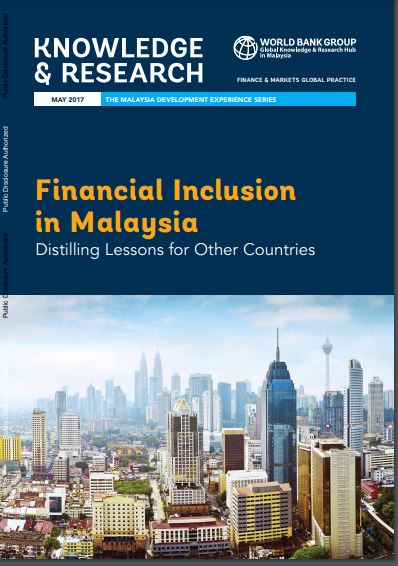
Financial Inclusion in Malaysia Distilling Lessons for Other Countries

By World Bank Group The World Bank Group’s current partnership with Malaysia is focused on knowledge-sharing. It is centered on support for Malaysia’s vision to join the ranks of high-income economies by 2020 through inclusive and sustainable growth, and to share its lessons with developing countries. In March 2016, the World Bank Group officially launched its Global Knowledge and Research Hub in Malaysia. The new Hub is the first of its kind, serving both as a field presence in Malaysia and...

January 2021

Malaysia. Better social protection needed for delivery riders, gig workers, says MP

Those in the informal sector, particularly delivery riders, need better social protection as they are among the hardest hit by the Covid-19 pandemic. DAP’s Charles Santiago laments the plight of these frontliners whom he says have yet to be given the required support from the government. “Food delivery services gained prominence during the Covid-19 crisis. Young men and women on motorcycles deliver food and other household products to the doorsteps of our homes. They are frontliners of sorts. “They work under vulnerable...

November 2020

Malaysia is ageing, raise retirement age to 65 gradually, says World Bank

Rapid ageing will be one of the most crucial megatrends affecting Malaysia in the coming decades, raising policy challenges in areas such as employment, income security, health care, and aged care, the World Bank has said. In its report titled “A Silver Lining: Productive and Inclusive Ageing for Malaysia”, it said a gradual increase of the retirement age to 65 was needed as the country’s institutional framework for providing income security for older persons remained largely unchanged in...