September 2025

Greece. Is this a country for young people?

“Life can only be understood by looking back,” Danish philosopher Soren Kierkegaard once wrote, and looking back on my own life I realize how lucky my generation was, growing up in the 1970s and 80s to have lived in a more peaceful, safer, and more optimistic era than the present. On the contrary, our children’s generation will have to live in a much bleaker world: with wars on our doorstep, the specter of irreversible climate catastrophe looming, and the...
August 2025

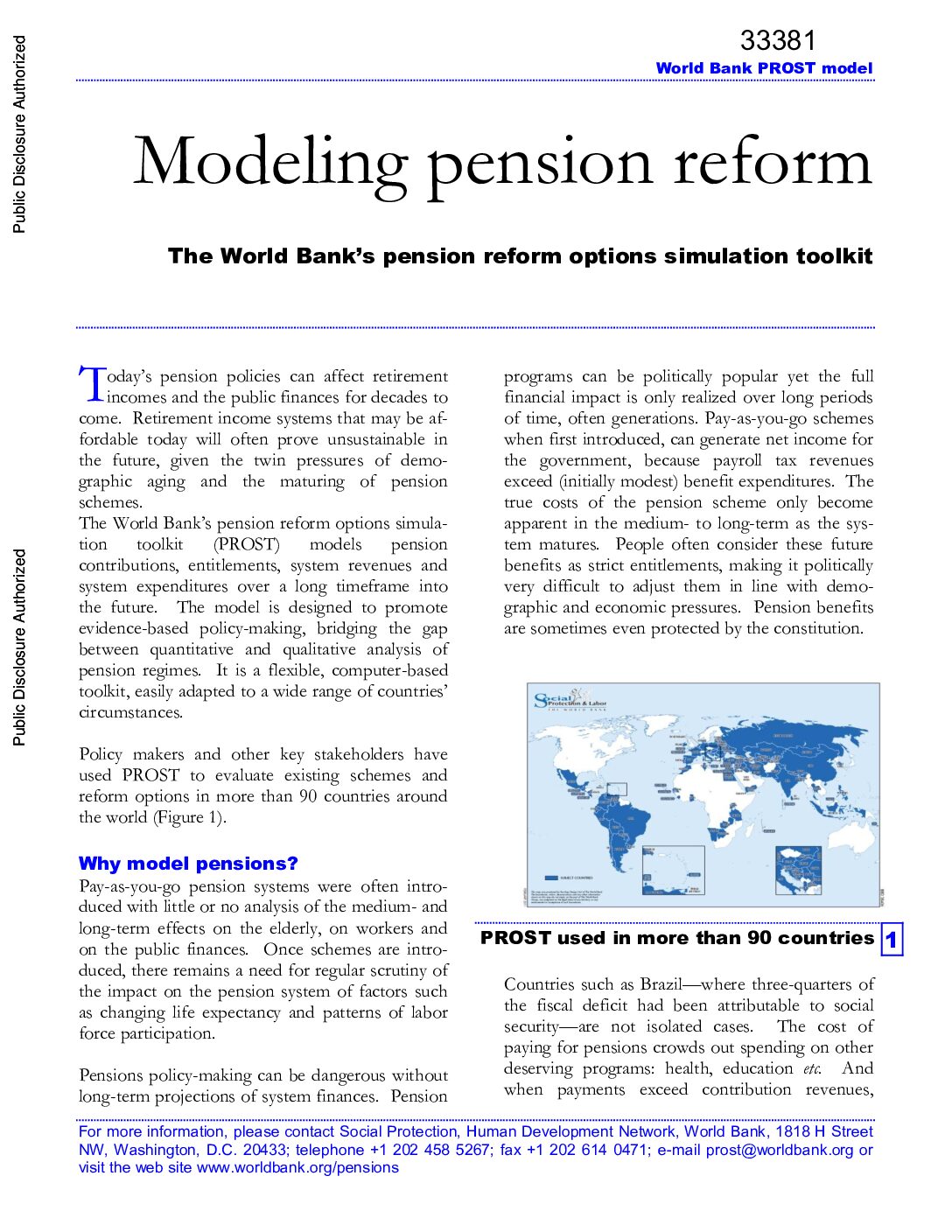
Modeling pension reform: The World Bank’s pension reform options simulation toolkit

By World Bank Group Today's pension policies can affect retirement incomes and the public finances for decades to come. Retirement income systems that are affordable today, will often prove unsustainable in the future, given the twin pressures of demographic aging and the maturing of pension schemes. The World Bank's pension reform options simulation toolkit (PROST) models pension contributions, entitlements, system revenues, and system expenditures over a long time frame. The model is designed to promote informed policymaking, bridging the gap between...

Pensions in Aging Asia and the Pacific: Policy Insights and Priorities

By Rafal Chomik, Philip O’Keefe & John Piggott This paper looks at how pension systems across Asia and the Pacific can overcome common challenges of low contributory coverage, inadequate social pensions, and failure to include the informal sector. Pension systems in the region also exhibit gender inequities, a lack of policy flexibility and attention to labor incentives, and underdeveloped governance. The paper reviews the structure and performance of regional pension systems, and makes proposals for an expanded role for social pensions...

The Path to 2075 — The Positive Story of Global Aging (Daly/Njie/Allen)

By Jan Hatzius, Joseph Briggs, Kevin Daly, Johan Allen, Sarah Dong & Megan Peters The global population is aging, driven by a combination of increased longevity and declining fertility. This phenomenon is most pronounced in developed (DM) economies, where the ‘working-age ratio’ (ages 15-64) has already decreased from 67% in 2000 to 63%, and is projected to fall to 57% by 2075. In emerging economies, the 15-64 share is close to a peak (66%) and is expected to decline to...

July 2025

Retirement Then, Now, and Next

By Teresa Ghilarducci & The SCEPA Team  Late Baby Boomers (age 59-67), Generation X (age 43-58) and Millennials (age 27-42) are retiring under much worse conditions than Early Baby Boomers (between age 68-76 in 2022). This fact gets obscured by research that paints an optimistic picture of retirement security that only really existed for Early Baby Boomers. Later generations have been impacted by changes to the conditions of retirement that Early Baby Boomers did not experience. This includes: the shift...

Russia launches controversial scheme to boost birth rate, offers money to schoolgirls for having children

Amid a sharp decline in birth rates, Russia has launched a controversial new initiative that offers financial incentives to school and college-going girls to become pregnant and raise children. The program, currently being piloted in select regions, provides over 100,000 rubles (approximately Rs 90,000) to adult schoolgirls who agree to give birth and care for a child. The scheme is part of a broader demographic strategy adopted in March 2025 aimed at reversing Russia’s population decline. It is being implemented...

June 2025

The At Retirement Reckoning: Barnett Waddingham’s investigation into the UK’s retirement landscape

By Barnett Waddingham The British pensions industry is, once again, at a critical juncture. It seems every provider, regulator, and adviser is watching with bated breath as the time bomb of UK retirement saving ticks closer to detonation. And with every new day, the likely ripple effects of the impending disaster get bigger. The past 14 years of Conservative rule saw the pension landscape shift notably. The introduction of auto-enrolment in 2012 successfully widened the UK’s saving base and helped tackle...

Iridescent Life Course: LGBTQ Aging Research and Blueprint for the Future – A Systematic Review

By Karen I. Fredriksen Goldsen, Sarah Jen & Anna Muraco  LGBTQ* (lesbian, gay, bisexual, trans, and queer) older adults are demographically diverse and growing populations. In an earlier 25-year review of the literature on sexual orientation and aging, we identified four waves of research that addressed dispelling negative stereotypes, psychosocial adjustment to aging, identity development, and social and community-based support in the lives of LGBTQ older adults.  The current review was designed to develop an evidence base for the field...

LGBT Older Adults: Chosen Family and Caregiving

By Nancy J. Knauer In the United States, informal eldercare is principally the responsibility of younger relatives. Adult children perform the majority of eldercare and nonrelatives perform only fourteen percent of care. Caregiving in the LGBT community follows a very different pattern that reflects the importance of “chosen family” in the lives of LGBT older adults. Instead of relying on relatives, LGBT older adults largely care for each other. Relatives provide only eleven percent of all eldercare. This article explores the...

May 2025

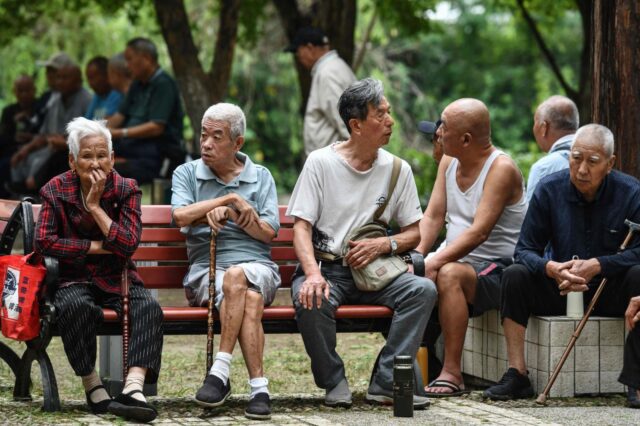
China steps up support for social participation of seniors amid population aging

From promoting volunteer service and expanding lifelong learning opportunities to developing senior-friendly tourism offerings, China is taking proactive steps to enhance social engagement among the elderly and support their pursuit of active, meaningful lives. These measures, laid out in a guideline released recently by 19 government departments, came as the country grapples with a rapidly aging population. Home to the world's largest elderly demographic, China had over 310 million people aged 60 and above by the end of 2024, accounting for...