June 2025

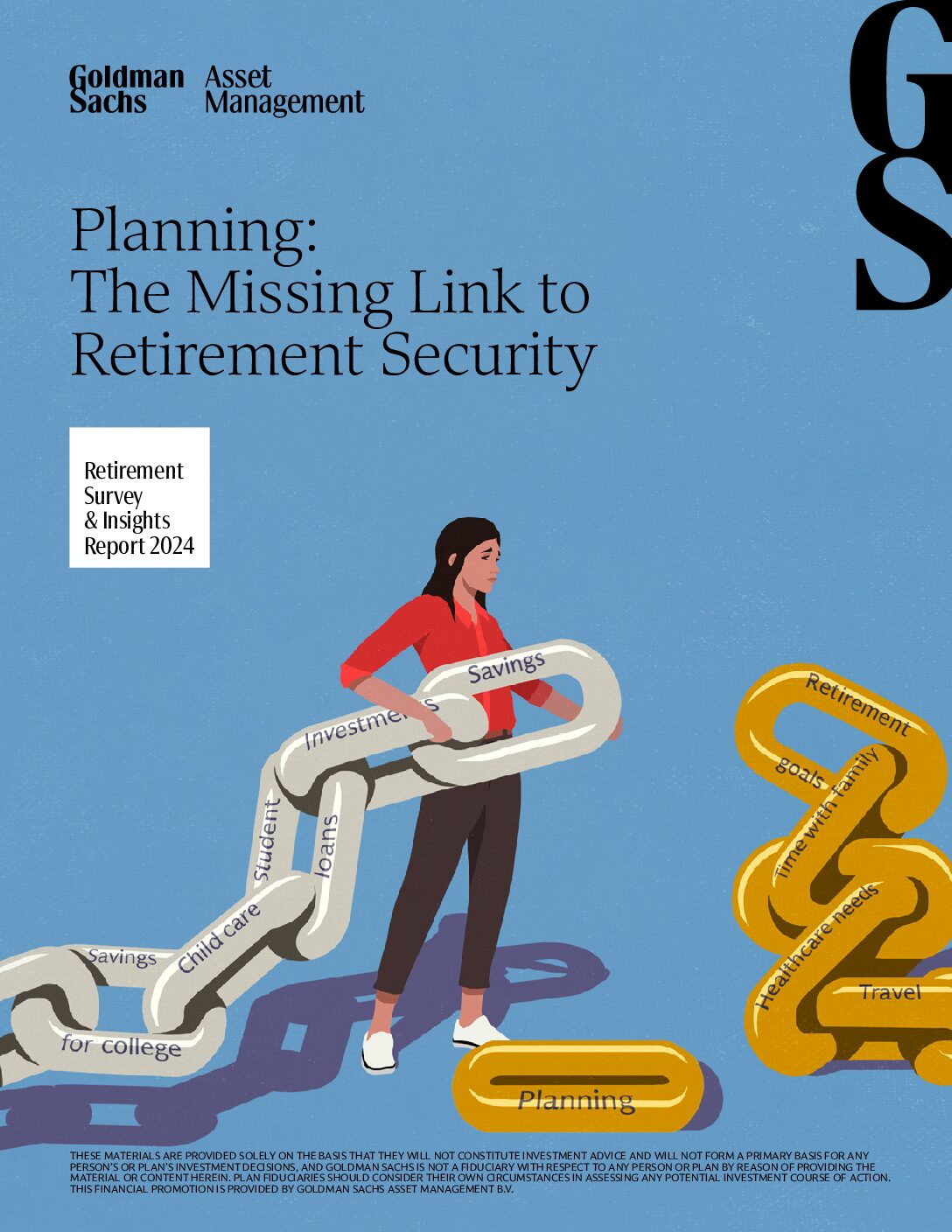
Planning: The Missing Link to Retirement Security. Retirement Survey & Insights Report 2024

By Goldman Sachs Michael Moran, a pension strategist in Goldman Sachs Asset Management, explains how the current macro environment is changing the retirement picture for both savers and retirees. Mike and his team are out with a new report that describes what they see as a missing link to retirement security. Get the report here

February 2025

The Biggest Challenges Facing Older Americans: Insights from the Aging Advisory Group

Adults aged 50 and older are the fastest-growing age group of those experiencing homelessness, making up nearly half of the single-adult homeless population, which is estimated to triple over the next decade. Older adults are especially vulnerable to becoming homeless, as many live on fixed incomes that are insufficient to cover the cost of housing and other expenses. Aging Advisory Group To address the rapid increase of older adults experiencing homelessness, the National Alliance to End Homelessness, in partnership with the RRF...

The effect of Covid pension withdrawals and the Universal Guaranteed Pension on the income of future retirees in Chile

By Carlos Madeira Chile implemented large pension withdrawals during the Covid pandemic. Afterwards, Chile increased non contributory beneÖts in a quasi-universal scheme. Simulating future pensions, I show that the average loss in contributory pension income is 27.9%, with losses of 23.9% and 31.4% for men and women, respectively. After accounting for public transfers, the average loss in total pension income is just 6.2%, with losses of 7.5% and 5.2% for men and women, respectively. Current retirees lost just 1.1% of...

Smaller than We Thought? The Effect of Automatic Savings Policies

By James J. Choi, David Laibson, Jordan Cammarota, Richard Lombardo & John Beshears Medium- and long-run dynamics undermine the effect of automatic enrollment and default savings-rate auto-escalation on retirement savings. Our analysis of nine 401(k) plans incorporates the facts that employees frequently leave firms (often before matching contributions from their employer have fully vested), a large percentage of 401(k) balances are withdrawn upon employment separation, and many employees opt out of auto-escalation. Steady-state saving rates increase by 0.6% of income due to automatic enrollment and...

January 2025

US. What We Need to Do to Protect Retirees’ Financial Security

As Americans live longer, the challenge of safeguarding the financial well-being of older and vulnerable populations — particularly those facing cognitive decline — has grown more urgent. For retirees who have spent decades contributing to pension plans or hoping to manage their financial futures via 401(k) plans, the golden years should provide peace of mind. However, without proper protections in place, some of these people may be at risk of losing their financial security at the most vulnerable stage of life. As...

November 2024

UK. Pensions savings confidence hits seven-year low, says BlackRock

Three-quarters of UK defined contribution pensions savers say they are not on track to achieve a “reasonable standard of living” in retirement, according to asset manager BlackRock, marking the lowest level of confidence in long-term savings prospects since the survey began in 2017. The survey of 1,000 savers across the UK found half of those questioned said they could not afford to save enough for retirement, while over a third of DC members said their “biggest concern” was not having...

Are You One of 38 Million Seniors Who Fear Your Retirement Income Won’t Be Enough? You’re Not Alone.

Social Security is one of the most crucial functions of the U.S. government. Last year, the program paid roughly $1.5 trillion to 68 million Americans, 51 million of whom were retired. Many of these retired Americans rely on the program for a significant portion of their incomes. Originally intended as one of three income sources for retirees along with employer pensions and personal savings, Social Security's role has grown as pensions have become rare for most. Many lower-income earners are unable...

October 2024

Why the US lags globally in retirement security

The United States ranks 29th out of 48 countries Mercer and the CFA Institute evaluated for their global pension index published this week. That equates to a C-plus letter grade, with a peer group of the United Arab Emirates, Kazakhstan, Hong Kong, Spain, Colombia, and Saudi Arabia. All of those countries have systems with “some good features but also ha[ving] major risks and/or shortcomings that should be addressed,” the report stated. “Without these improvements, its efficacy and/or long-term sustainability can be...

September 2024

2024 Global Retirement Index

By Natixis Investment Managers Despite positive progress for many countries in the Global Retirement Index (GRI), retirement security remains on shaky ground in 2024. More and more individuals across the globe are realizing that they’re on their own when it comes to funding their retirement. Results from the long-running Natixis Global Survey of Individual Investors reveal that the number of people who say it’s increasingly their responsibility to fund retirement on their own—rather than relying on public and private pensions—has grown...

The future of retirement security: An international comparison through the lens of adequacy, sustainability, equity and plan design

By Surya Kolluri, Catherine Reilly & David Richardson The average retiree can now expect to spend about two decades in retirement, roughly double the time from 50 years ago. Along with extended lifespans, the number of workers per retiree is declining around the world and ever fewer workers have access to defined benefit (DB) plans that promise a guaranteed income in retirement. Instead, most workers save for retirement through defined contribution (DC) plans, which do not automatically convert savings into...