November 2025

U.S. pension giants exposed to risky assets: Fitch

U.S. defined benefit (DB) pension plans are increasingly exposed to private credit and other risky alternative assets that could lead to funding troubles that ultimately strain government finances too, says Fitch Ratings. In a report issued Monday, the rating agency said that in the wake of the global financial crisis, sponsors of public DB pensions took a variety of steps to improve the their plans’ solvency, such as increasing contribution rates, reducing benefits to new employees and adopting more conservative...
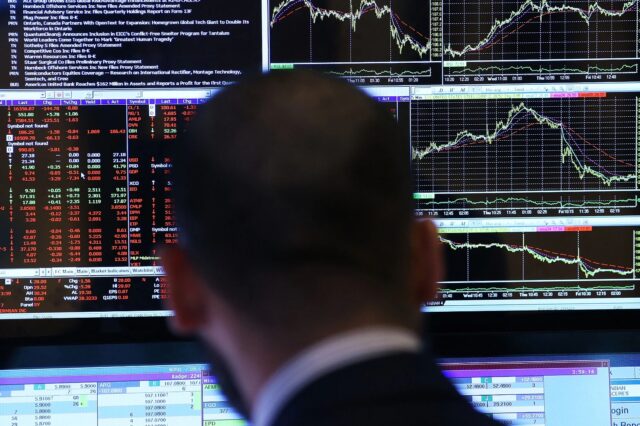

US Public Pension Market Bubble Exposure Remains High

Robust market valuations in recent years have supported funding progress for U.S. state and local defined benefit pension plans. However, public pensions remain underfunded and fundamentally exposed to market volatility. A market shock could increase the burden of state and local pension liabilities and drive contributions higher, says Fitch Ratings. Governments with weaker liability metrics and high carrying cost burdens could be most vulnerable to rating pressure. Post-global financial crisis, plan sponsors took various policy actions such as reducing benefits...

US. State And Local Pensions Must Confront AI’s Systemic Risks

Stock prices are soaring due to investor enthusiasm about the potential for Generative AI to transform the economy. Dismissing concerns about GenAI’s lack of profitability to date, many investors are celebrating. But pension fiduciaries, charged with protecting the financial security of workers and retirees, do not have the luxury of complacency. Their duties of prudence and loyalty require assessing and mitigating risks, and GenAI unquestionably poses portfolio-wide risks. One of those risks is the U.S. tech industry’s approach to...

October 2025

The Future of Retirement Security An International Comparison through the Lens of Adequacy, Sustainability, Equity and Plan Design

By Surya Kolluri, Catherine Reilly & David P. Richardson Countries around the world are considering and implementing reforms to their retirement systems for a variety of reasons, including increasing demographic and economic pressures. A key demographic driver is human longevity. For example, the average retiree can expect to spend about two decades in retirement, roughly double the time from 50 years ago. In the United States, life expectancy has risen by 17 years since the Social Security program debuted nearly 90...

US. Uncertainty about retirement growing increasingly

Americans are growing increasingly uncertain about their retirement plans amid persistent inflation and mounting concerns about the future of Social Security. In a trio of recent surveys from Charles Schwab, Fidelity, and Northwestern Mutual, Americans' confidence in their ability to retire, retire comfortably, and the exact age at which different generations expect to retire varied widely. And in both the Schwab and Fidelity surveys, the number of Americans who said they're confident in their retirement plans fell from the same surveys conducted last...

US. State Pension Funding Levels Stayed Stable Despite Volatility

The reported funding gap for state pension plans—the disparity between promised benefits and available assets—was $1.32 trillion in 2023, according to 50-state data collected by The Pew Charitable Trusts. This represents a $44.7 billion increase over 2022, driven primarily by increases to liabilities from benefit changes and differences between what plans assumed for salaries, longevity, and similar workforce and demographic trends and what actually happened. However, even amid volatile markets, state funds showed signs of resilience. The overall funded ratio—the...

Risks escalate for U.S. retirement plans due to unregulated private credit funds and new rules opening them up to retirement savings accounts

When the privately owned auto parts manufacturer First Brands Group earlier this month began to be unable to service its $6.1 billion debt load, the financial press began to pick up on the story—not because it was so unique or important to the U.S. economy, but rather because various financial institutions, including the Swiss banking giant UBS Group AG, were admitting that their exposure to the company was higher and more complicated than they had previously shared, through their...

US. After 4 Weeks, How the Government Shutdown Is Affecting Retirement Plans

On Tuesday, Day 28 of the government shutdown, federal agencies and departments were unable to make important updates that, if delayed much longer, could affect retirement plans and their participants. The Internal Revenue Service, for example, operated as normal in the early days of the shutdown, but eventually needed to furlough employees and to further reduce operations as the government closure dragged on. As it stands now, the agency is unable to publish critical information that normally would be released in fall....

US. Are Workers Warming Up to In-Plan Annuities?

“Today, 40 percent of retirees have access to a pension plan. The numbers go down substantially each generation,” Hodgens says. “Just 24 percent of Gen X workers have access to a pension, and only 16 percent of millennials will have a pension.” He and other financial professionals say recent federal legislation focused on retirement security could help fill the pension gap. The Setting Every Community Up for Retirement Enhancement (SECURE) Act, passed in 2019, and SECURE 2.0, which followed three...

Rising birth rates no longer tied to economic prosperity

Fertility rates began falling in most of the world starting in the last century. By the 1970s, the U.S. had dipped under the replacement rate of 2.1 children per woman, a trend that has continued on a declining slope. In her new working paper, “The Downside of Fertility,” Claudia Goldin, the Henry Lee Professor of Economics, takes a deeper dive into the cultural changes around gender that are driving down fertility rates. The economic historian and 2023 Nobel laureate introduced a model in a previous...