August 2020

Are Dutch Old-Age Pensions Taxed Fairly and Efficiently?

By Bernd Genser, Robert Holzmann The Dutch pension system is internationally top-ranked as a well-designed three-pillar system. Moreover, almost all forms of pension benefits are expenditure taxed in line with the European Commission's recommendations. Consequently, the Dutch pension policy approach could be regarded as a welcome blueprint for pension policy reform, currently on the agenda of all EU member countries. This paper focuses on the taxation of Dutch pensions and identifies two classes of problems that challenge the suitability...


Ranked: The Best and Worst Pension Plans, by Country

The global population is aging—by 2050, one in six people will be over the age of 65. As our aging population nears retirement and gets closer to cashing in their pensions, countries need to ensure their pension systems can withstand the extra strain. This graphic uses data from the Melbourne Mercer Global Pension Index (MMGPI) to showcase which countries are best equipped to support their older citizens, and which ones aren’t. The Breakdown Each country’s pension system has been shaped...

July 2020

Social Protection for All: The Next Step for the Malaysian Welfare

By Evangelos Koutronas This report aims to support policymakers, program designers, and evaluators to develop a comprehensive social protection mechanism. The past decade has seen a marked spike in policy momentum around the importance of social protection policies and programs yet there has been very little attention to social protection’s role in tackling experiences of poverty and vulnerability. Social protection is recognized as a key policy tool to help achieve the Malaysia Development Goals; as a policy approach underpinned by...

Supporting Seniors: How Low-Income Elderly Individuals Respond to a Retirement Support Program

By Sumit Agarwal, Wenlan Qian, Tianyue Ruan, Bernard Yin Yeung Insufficient savings for retirement expose individuals to financial vulnerability in the post-retirement years and prompt governments to consider support measures. We study a government cash subsidy program for the low-income elderly population in Singapore. Using comprehensive, high-frequency transaction data, we find that elderly individuals increase spending by 0.7 dollars per dollar of subsidy received. We also show that they increase food expenditure and the variety of retail purchases. The...

June 2020

How People React to Pension Risk

By Nicolas Salamanca, Andries de Grip, Olaf Sleijpen We show that people exposed to greater pension risk are less likely to invest in risky assets. We exploit a reform that links people’s future pension benefits to their pension funds’ funding ratio — a measure of the fund’s financial health — making funding ratios a fund-specific measure of pension risk. The effect of pension risk is stronger for people who are better informed about their pensions, for retirees and...

Wealth Distribution and Retirement Preparation Among Early Savers

By: Alice Henriques, Lindsay Jacobs, Elizabeth Llanes, Kevin B. Moore, Jeffrey P. Thompson. This paper develops a new combined wealth measure using data from the Survey of Consumer Finances, by augmenting data on net worth with estimates of defined benefit (DB) pension wealth and expected Social Security wealth. We use this combined wealth concept to explore retirement preparation among groups of households in their pre-retirement years (40-49 and 50-59) and also to explore the concentration of wealth. We find...

May 2020

The 2018 Pension Adequacy Report: current and future income adequacy in old age in the EU

By European Commission The 2018 edition of the triennial Pension Adequacy Report analyses how current and future pensions help prevent old-age poverty and maintain the income of men and women for the duration of their retirement. Volume I is devoted to comparative analysis of pension adequacy in the EU- 28. It examines the current living standards of older people and how they are shaped by pension systems, proceeds with an overview of recent pension reforms and concludes by analysing...

Have Cash Transfers Succeeded in Reaching the Poor in Latin America and the Caribbean?

By Marcos Robles, Marcela G. Rubio, Stampini Marco We present novel estimates of the quality of targeting of conditional cash transfer (CCT) and non-contributory pension (NCP) programs in Latin-America and the Caribbean. Our contribution is novel in that we use both national and international poverty lines, provide differentiated estimates for urban and rural areas, and compare CCT and NCP programs. We show that leakage to the non-poor coexists with pervasive under-coverage of all poor, including the extreme poor. On average,...

April 2020

Melbourne Mercer Global Pension Index 2019 (MMGPI)

By Mercer, Monash University, MELBOURNE Ageing populations continue to be a significant issue for many economies as we are living longer and fertility rates continue to decline. Pension systems are becoming more important than ever as households want to maintain their living standards throughout retirement. But how is this possible, especially within the economic environment of low interest rates and reduced economic growth? There are implications for employers, employees, governments, as well as the pension funds....

February 2020

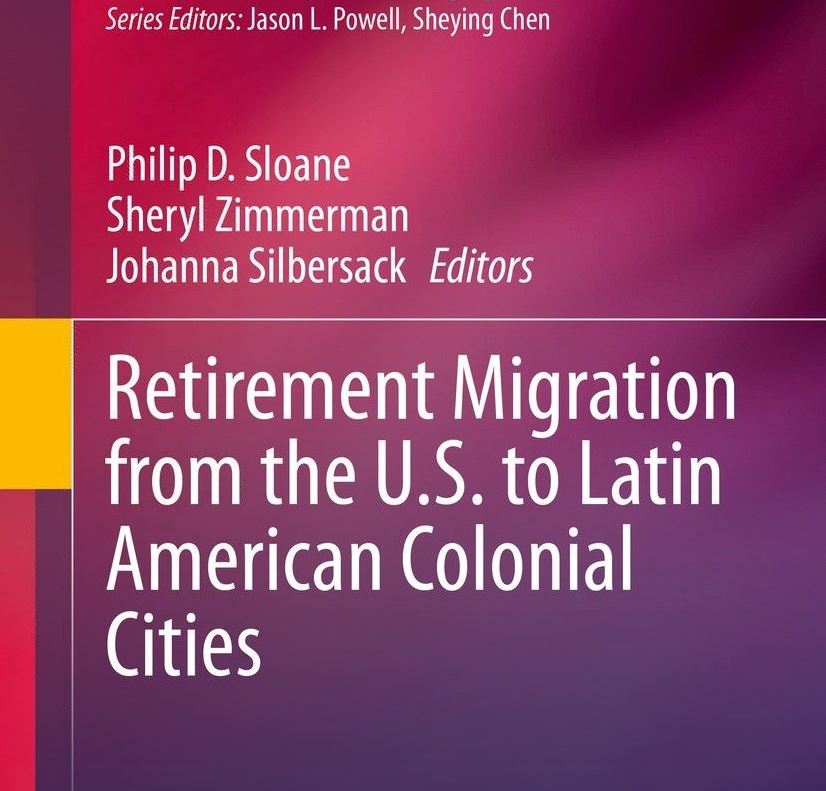
Retirement Migration from the U.S. to Latin American Colonial Cities (International Perspectives on Aging Book 27)

By Philip D. Sloane, Sheryl Zimmerman, Johanna Silbersack This book provides a comprehensive overview of a growing phenomenon in migration: retired Americans moving to Latin America. Through in-depth profiles of two of the most popular destinations – Cuenca, Ecuador and San Miguel de Allende, Mexico, the book provides a unique commentary on the social forces shaping this new diaspora and its impact on the settings to which retirees relocate.  Sections of the book address the lives and activities of retirees themselves; their...