April 2020

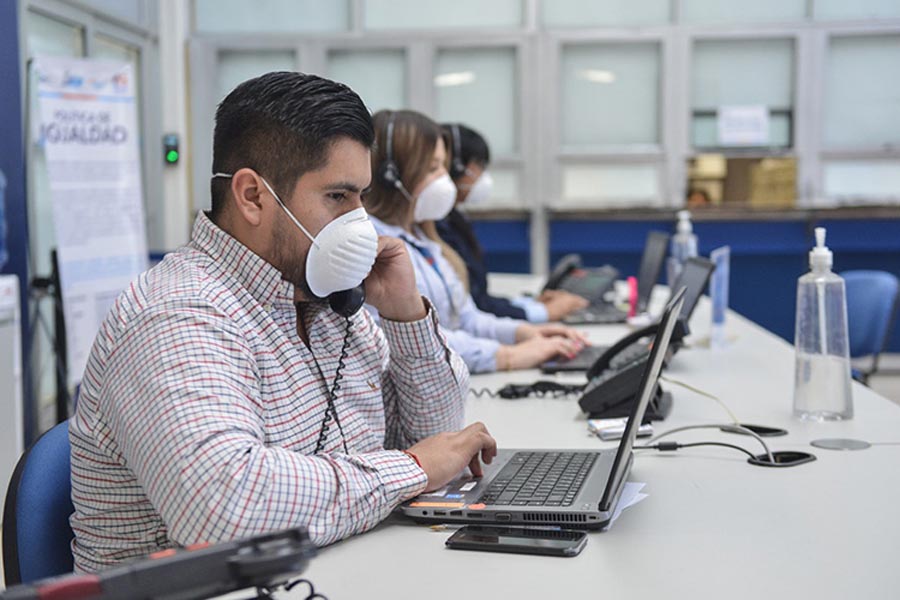
Informal employment in Mexico: Current situation, policies and challenges

By ILO Informal employment is a persistent problem in Latin America and the Caribbean. Following a decade of economic growth and decline in unemployment rates, there are still 130 million workers holding informal jobs, deprived of social protection and labour rights. This does not mean, however, that there has not been any progress made on the issue of formalization. Formal employment, wage labour and social protection coverage have increased in Latin America and the Caribbean. Now, it is important...

The Future of Social Protection

By OECD Social protection systems are often still designed for the archetypical full-time dependent employee. Work patterns deviating from this model – be it self-employment or online "gig work" – can lead to gaps in social protection coverage. Globalisation and digitalisation are likely to exacerbate this discrepancy as new technologies make it easier and cheaper to offer and find work online, and online work platforms have experienced spectacular growth in recent years. While new technologies and the new forms...

Dimensions of Human Resource Management Evolved with the Outbreak of COVID-19

By Jyoti Koirala, Suman Acharya The COVID-19 can be blamed for the greatest workplace transformations after 2020. This outbreak in this 21st century will break the existing system i.e. working, exercising, shopping, communicating, educating, and learning. This change will slowly force the organization to make modification to our human resource policies and strategy. The point need to be noted that this “social distance” is the change factor that created in the history for transformation. The work from home is...

Does Retirement Affect Voluntary Work Provision? Evidence from England, Ireland and the U.S

By Peter Eibich, Angelo Lorenti, Irene Mosca Voluntary work is an important contribution for many non-profit organizations, such as charities, political and religious organizations. Older individuals make up a sizable share of the volunteer workforce, and volunteering is often regarded as an example of "active ageing". In this study, we examine whether retirement has a causal effect on the frequency of voluntary work provision in three English-speaking countries - England, Ireland and the U.S. We draw on data from...

Labor Markets During the Covid-19 Crisis: A Preliminary View

By Olivier Coibion, Yuriy Gorodnichenko, Michael Weber We use a repeated large-scale survey of households in the Nielsen Homescan panel to characterize how labor markets are being affected by the covid-19 pandemic. We document several facts. First, job loss has been significantly larger than implied by new unemployment claims: we estimate 20 million lost jobs by April 8th, far more than jobs lost over the entire Great Recession. Second, many of those losing jobs are not actively looking to...


Culture and Gender Allocation of Tasks: Source Country Characteristics and the Division of Non-Market Work among US Immigrants

By Francine D. Blau, Lawrence M. Kahn, Matthew Comey, Amanda Eng, Pamela Meyerhofer, Alexander Willen There is a well-known gender difference in time allocation within the household, which has important implications for gender differences in labor market outcomes. We ask how malleable this gender difference in time allocation is to culture. In particular, we ask if US immigrants allocate tasks differently depending upon the characteristics of the source countries from which they emigrated. Using data from the 2003-2017 waves...

Income and Wealth Shocks and Expectations during the COVID-19 Pandemic

By Tobin Hanspal, Annika Weber, Johannes Wohlfart In early April 2020 we conducted a survey on a representative sample of more than 8,000 US households to study the effect of the coronavirus crisis on household income and retirement wealth, households' expectations about the recovery, and the impact of the shock on individuals' economic choices. Wealth shocks are large across the population, but more pronounced for middle-age households and those higher in the wealth and income distributions. This contrasts with...

Enlisting Employees In Improving Payroll-Tax Compliance: Evidence From Mexico

By Todd Kumler, Eric Verhoogen, Judith A. Frías A growing body of research suggests that difficulties in collecting taxes are an important constraint on economic performance in developing countries. Evidence from rich countries points to third- party reporting — in particular, employer reports of employees' wages — as a potential remedy. To what extent does the accuracy of third-party reporting carry over to developing countries, with their weaker enforcement regimes? In this paper, we compare two sources of wage information...

March 2020

Opting Out of Social Security: An Idea That’s Already Arrived

By David P. Richardson Under current law, workers can partially opt out of Social Security and reduce Medicare tax liability by accepting compensation in forms exempt from payroll taxes. Changing forms of compensation has an ambiguous effect on a worker's lifetime consumption possibilities. With respect to Medicare, all households are better off since they reduce tax contributions to a fixed benefit. For Social Security, the effect is ambiguous since the tax reduction implies future benefit reductions. Analyzing a hybrid...

Society at a Glance 2019

By OECD The OECD biennial report providing internationally comparable data on demography and family characteristics, employment and wealth, mobility and housing, health status, social expenditure, subjective well-being, social cohesion, and other social measures. Included are such interesting variables as suicides, child care costs, prisoners, gender wage gaps, poverty and mothers in employment. Get the book here