March 2025

Minimum Wage Policy and the Gender Wage Gap

By Hang Anh Nguyen, Martin O'Brien & Alfredo Paloyo Minimum wage policies have become a nearly universal feature of modern labour markets, with over 90% of countries implementing statutory wage floors since 2012 (Del Carpio & Pabon, 2014). Yet, despite their widespread adoption, the economic effects of minimum wages remain highly contested. Advocates argue that they boost earnings for lowwage workers, reduce income inequality, and mitigate poverty, while critics contend that they suppress productivity, distort wage structures, and incentivise firms...
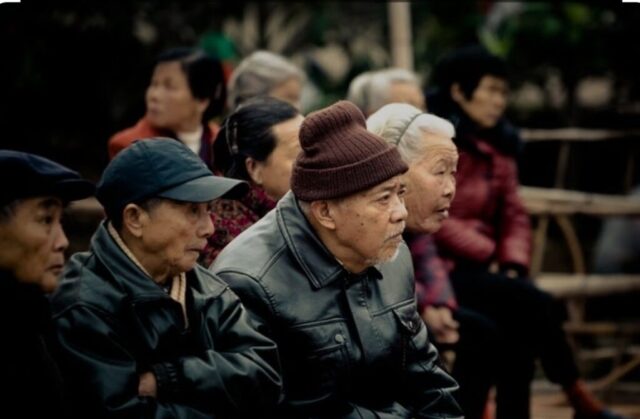

How and Why the Gender Pension Gap in Urban China Decreased between 1988 and 2018

By Björn Gustafsson, Peng Zhan & Hanrui Jia In urban China, gender gaps in employment and earnings have steadily increased since the 1990s. Such gender gaps are important because pension rights and amounts are based on labor force participation and wages. However, as this study demonstrates, despite the rise in gender differences in the urban labor market, the average gender pension gap decreased between 1988 and 2018. In this paper, we describe the evolution of the fragmented pension system in...

The Macroeconomy After Tariffs

By Davide Furceri, Swarnali A Hannan, Jonathan D Ostry & Andrew K Rose What does the macroeconomy look like in the aftermath of tariff changes? This study estimates impulse response functions from local projections using a panel of annual data that spans 151 countries from 1963 to 2014. Tariff increases are associated with persistent, economically and statistically significant declines in domestic output and productivity, as well as higher unemployment and inequality, real exchange rate appreciation, and insignificant changes to the...

Gender pension gaps in a private retirement accounts system: A dynamic model of household labor supply and savings

By Clement Joubert & Petra E. Todd  This paper develops and estimates a dynamic model of individuals’ and couples’ labor supply, savings, and retirement decisions to analyze how the design of Chile’s privatized pension system and a reform undertaken in 2008 affect gender pension gaps and old-age poverty. Chile has one of the longest-running private retirements accounts systems in the world, which has served as a model for many countries. The paper estimates the dynamic model using pre-reform data...

February 2025

2025 Employee Sentiment Study

By AON Successful organizations recognize the critical importance of their people and what is valuable to them. Investing in their potential, aspirations and resilience, and providing them with choice and flexibility that caters to their diverse needs is not just a necessity — it is the foundation for delivering long-term sustainable growth. This study is based on findings from Aon’s Employee Sentiment survey and insights from Aon’s team of human capital specialists. It equips senior business, human resources, and people leaders...

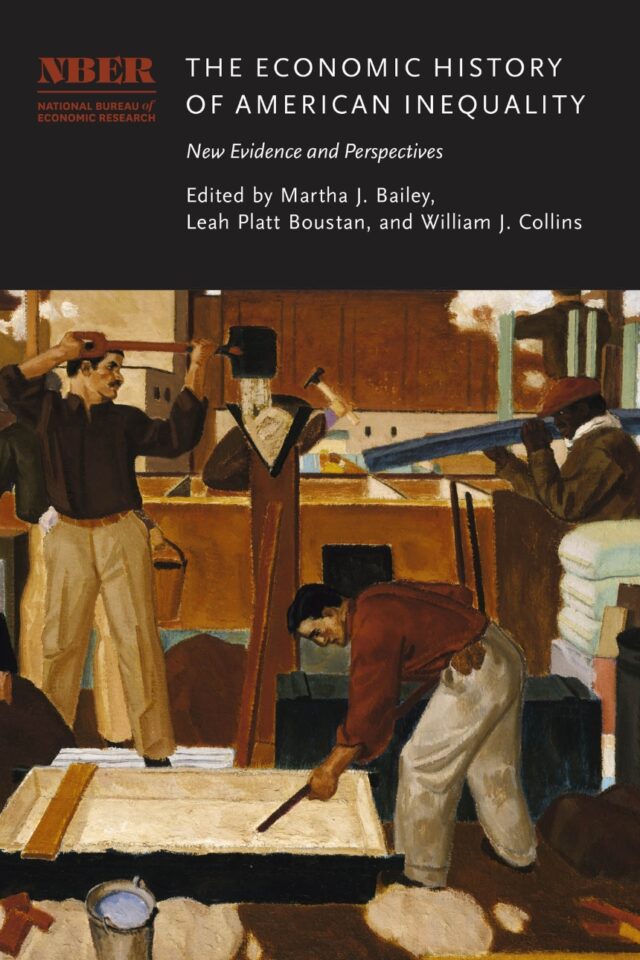
The Economic History of American Inequality: New Evidence and Perspectives

By Martha J. Bailey, Leah Platt Boustan & William J. Collins This volume refines and extends the economic history literature on economic inequality in the United States. Economic inequality manifests itself on various dimensions, including access to resources and to economic security, as well as access to education and opportunities for migration, marriage and other important life decisions. Measuring inequality and studying its variation over time and in response to economic shocks such as recessions and wars deepen our understanding of how the...

Places versus People: The Ins and Outs of Labor Market Adjustment to Globalization

By David Autor, David Dorn, Gordon H. Hanson, Maggie R. Jones & Bradley Setzler This chapter analyzes the distinct adjustment paths of U.S. labor markets (places) and U.S. workers (people) to increased Chinese import competition during the 2000s. Using comprehensive register data for 2000–2019, we document that employment levels more than fully rebound in trade-exposed places after 2010, while employment-to-population ratios remain depressed and manufacturing employment further atrophies. The adjustment of places to trade shocks is generational: affected areas recover primarily by adding workers to...

January 2025

Designing Benefits for Platform Workers

By Jonathan Gruber Designing benefits for the growing platform workforce in the U.S. poses significant challenges. While platform workers need protection against unforeseen shocks, work that is often part time and spread across multiple platforms makes the traditional benefits model untenable. This paper reports the results from a survey of drivers and couriers working with Uber to help understand their benefits preferences. We find that there is a wide diversity across these workers in platform earnings, the share of platform...

Collective Bargaining, Unions, and the Wage Structure: An International Perspective

By Simon Jäger, Suresh Naidu & Benjamin Schoefer In this paper, we assess the recent economics literature on collective bargaining. Despite a declining trend in the OECD in coverage and especially union membership, a large share of formal workers around the world are still covered by collective bargaining agreements. We describe the substantial institutional variation across a variety of countries, highlighting research done with modern research designs and recently available administrative datasets. We then estimate a canonical empirical model of individual-level coverage effects...

December 2024

Do Pensions Enhance Worker Effort and Selection? Evidence from Public Schools

By Michael Bates & Andrew C. Johnston Why do employers offer pensions? We empirically examine two theoretical rationales, namely that pensions improve worker effort and worker selection. We test these hypotheses using rich administrative measures on effort and output for teachers around the pension-eligibility notch. When workers cross the notch, their effective compensation falls by roughly 50 percent of salary, but we observe no reduction in worker effort or output. This implies that pension payments do not increase effort. As for selection, we find...